

Quick Takeaway:
The next wave of upcoming tech innovations is moving beyond chatbots and simple automation. AI is becoming more capable of planning tasks, working with other AI systems, understanding physical environments, controlling robots, running directly on devices, and helping people interact with technology in more natural ways.
The biggest changes to watch are AI agents, physical AI, world models, AI-powered robotics, edge AI, smart wearables, autonomous systems, AI security, AI-powered healthcare, and next-generation computing. Some are already being tested in real products, while others still need more development before they become common.
Introduction:
The phrase upcoming tech innovations ai describes more than new AI models. The real change is happening when artificial intelligence connects with robotics, sensors, computing hardware, healthcare, transportation, wearable devices and physical machines.
For years, most people experienced AI through a screen. They typed a question, received an answer, generated an image, or used an AI assistant to complete a digital task. The next stage is different. AI systems are increasingly being designed to understand situations, make plans, use tools and take actions.
This shift creates an important question: which technologies are genuinely worth watching, and which are simply surrounded by hype?
This guide focuses on technologies with a clear path toward practical use. Instead of treating every futuristic idea as a guaranteed breakthrough, we will look at what each technology does, where it can be useful, what problems remain, and why it could matter in the next few years.
1. AI Agents Will Move From Assistants to Digital Workers
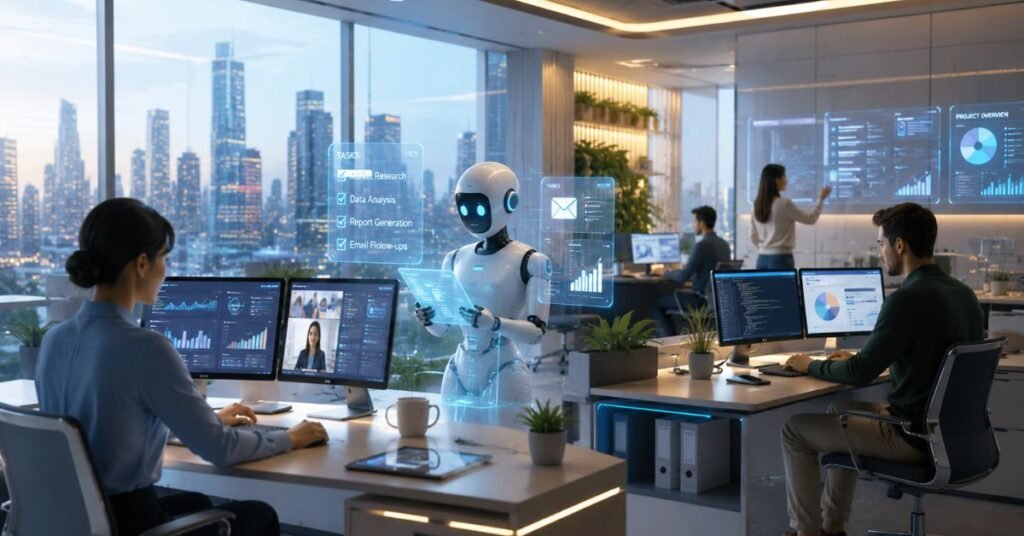
One of the most important upcoming tech innovations and developments is the growth of AI agents.
A normal chatbot waits for a question and provides an answer.An AI agent can independently take steps to achieve a specific objective.It can break a large task into smaller steps, use connected tools, check results and continue working.
How AI Agents Are Different
Imagine asking an AI system to research ten competitors, organize their information, prepare a comparison and create a report.
A basic chatbot may explain how to do the work.
An AI agent can handle many parts of the process on its own.
This makes agentic AI useful for research, customer service, software development, data processing, business operations and repetitive office work.
Why Multi-Agent Systems Matter
The next step may involve several specialized agents working together.
One agent could research information. Another could analyze it. A third could check the result. A fourth could prepare the final output.
This approach could make AI systems more flexible because every agent can focus on a specific job instead of forcing one model to handle everything.
The challenge is control. Businesses will need permissions, monitoring and human approval for important decisions.
2. Physical AI Will Bring Intelligence Into the Real World
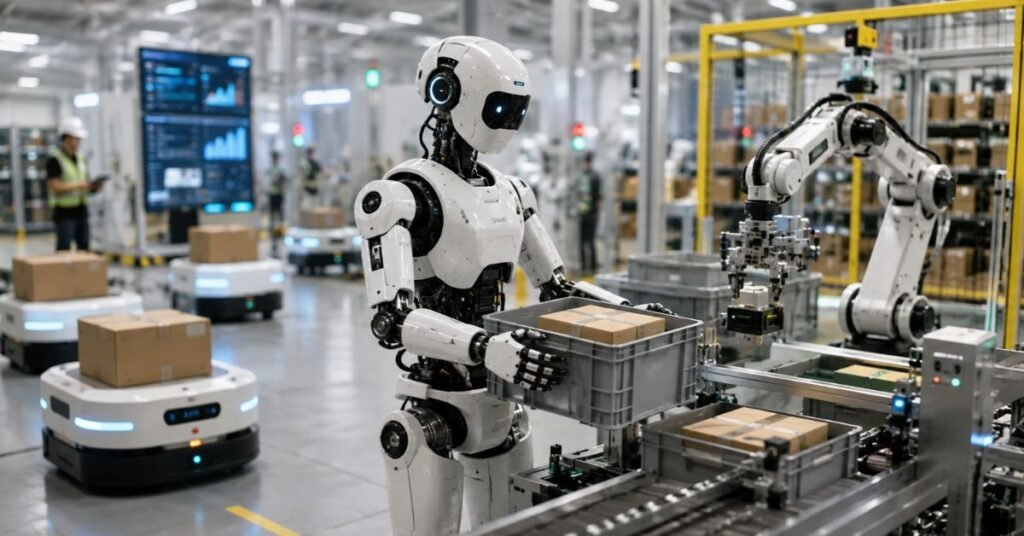
AI is no longer limited to software.
Physical AI combines artificial intelligence with sensors, cameras, robotics and control systems. This allows machines to perceive their surroundings and respond to changing conditions.
From Digital AI to Physical Intelligence
A chatbot can tell you how to pick up a fragile object.
A physical AI system needs to actually understand the object, locate it, estimate its weight, control movement and adjust when something changes.
That is a much harder problem.
Physical AI could influence factories, warehouses, agriculture, healthcare, logistics and transportation.
Why This Technology Is Difficult
The physical world is unpredictable.
A robot may encounter different lighting, surfaces, object shapes or unexpected human movement. AI therefore needs more than language understanding. It needs perception, spatial awareness, timing and safe action.
This is why physical AI is likely to develop gradually rather than appearing everywhere overnight.
3. World Models Could Give AI a Better Understanding of Reality
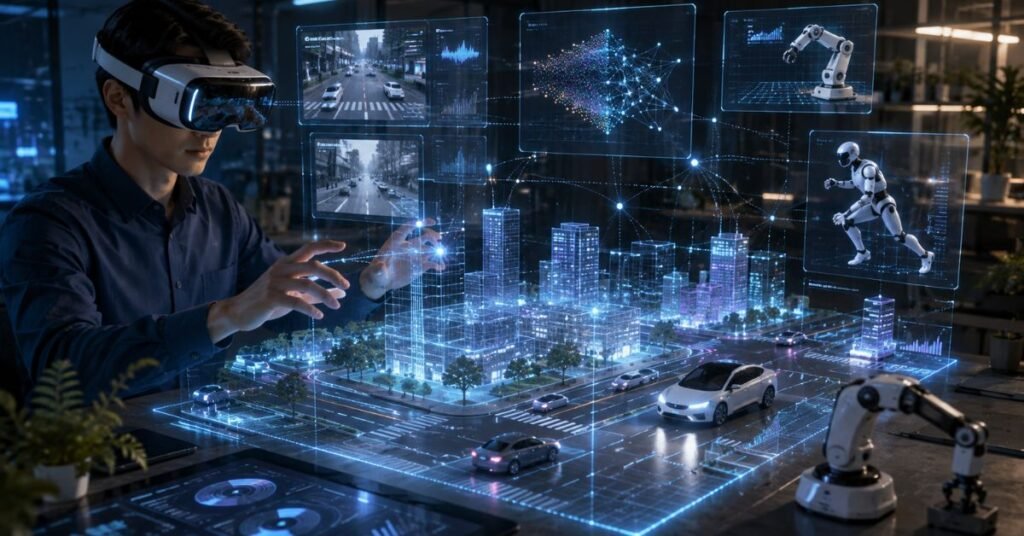
World models are another major area to watch.
A world model is designed to understand and predict how different environments may change and respond.Instead of only generating an answer, the system can model possible changes and outcomes.
How World Models Could Help
Imagine a robot learning how an object moves without testing every possible action in the real world.
A simulated environment could allow the robot to practice first.
This could reduce costs and make training safer.
World models may become useful for robotics, autonomous vehicles, gaming, virtual environments, industrial simulation and scientific research.
The Biggest Challenge
A simulation is only useful when it represents reality accurately enough.
Small differences in friction, weight, movement or environmental conditions can produce incorrect results. Therefore, impressive simulations should not automatically be treated as proof that an AI system understands the physical world.
4. AI-Powered Robotics Could Change Everyday Work

Robotics is entering a new stage because modern AI can give machines greater flexibility.
Traditional robots usually perform predefined actions in controlled environments. New AI-powered robots aim to understand instructions, recognize objects and adapt to different situations.
Where AI Robots Could Be Used
Manufacturing is an obvious area.
Warehouses could use intelligent robots for sorting and movement. Hospitals could use robotic systems for assistance. Agriculture could use machines for inspection and harvesting. Homes may eventually use robots for selected household tasks.
The most important development will not be how impressive a robot looks.
It will be how reliably it performs useful work.
Humanoid Robots: Hype vs Reality
Humanoid robots attract huge attention because their shape allows them to work in environments designed for people.
However, walking is not the main challenge.
Reliable manipulation, safety, battery life, cost, maintenance and long-term autonomy are much harder problems.
The winners will be the systems that solve useful tasks consistently rather than simply producing impressive demonstrations.
5. Edge AI Will Make Devices More Intelligent
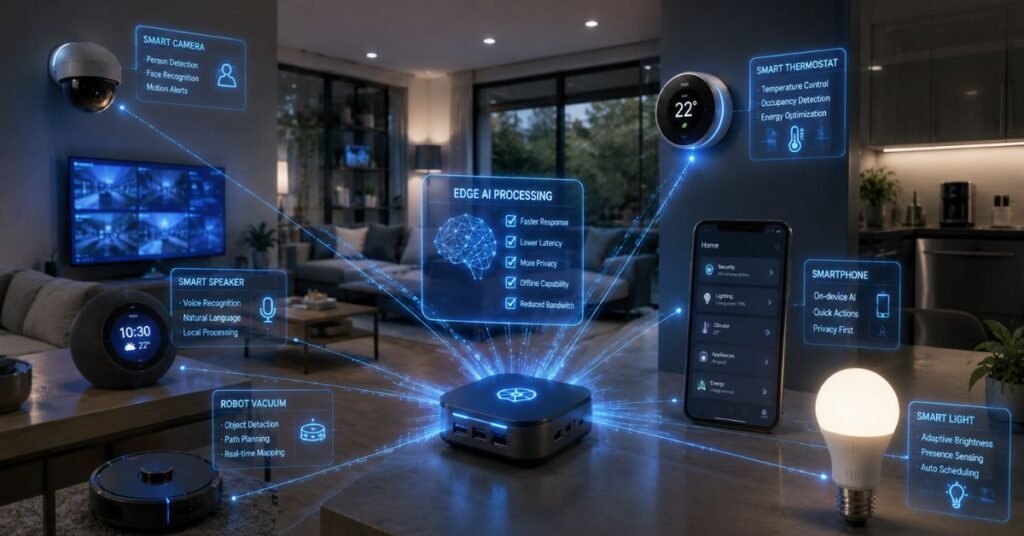
Another important direction in upcoming tech innovations ai is edge AI.
Edge AI allows AI processing to happen closer to the device instead of sending every task to a remote cloud server.
Why Edge AI Matters
Local processing can reduce delay.
It can also improve privacy because certain information may remain on the device.
This is useful for smartphones, cameras, vehicles, industrial equipment and wearable technology.
For example, an intelligent camera could analyze a situation locally and respond immediately instead of waiting for a cloud service.
Smaller Models Will Become More Important
Smaller, efficient models can perform specific jobs while using less computing power.
This could make advanced AI practical on more devices and reduce dependence on large data centers.
6. AI Wearables Could Change Human-Computer Interaction

The next generation of technology may reduce our dependence on traditional screens.
AI-powered glasses and other wearable devices could combine cameras, microphones, sensors and intelligent assistants.
What AI Wearables Could Do
A wearable device could potentially recognize objects, translate speech, provide directions, summarize information or help users interact with digital services without constantly looking at a phone.
The bigger change is the interface.
Instead of opening an app, finding a button and typing a command, users may interact with technology through speech, vision, gestures and context.
Privacy Will Become a Major Issue
Wearable AI can see and hear the world around the user.
That creates serious questions about recording, consent, data storage and privacy.
The future of AI wearables will therefore depend not only on hardware quality but also on responsible design.
7. AI Healthcare Could Make Treatment More Personal

Healthcare is another area where AI innovation could have major impact.
AI can help researchers analyze large amounts of medical information, identify patterns and support clinical decision-making.
Personalized Healthcare
Future systems may become better at combining information such as medical history, imaging, laboratory data and other patient information.
This could help doctors identify risks earlier and choose more personalized treatment strategies.The upcoming tech innovations ai will continue to shape smarter tools, connected devices, and automated systems.
AI can also support drug discovery by helping researchers explore potential molecules and biological relationships.
Human Expertise Still Matters
Healthcare should not become an area where AI simply replaces professionals.
Medical decisions require context, accountability and careful validation.
The strongest model is likely to be human expertise supported by reliable AI tools.
8. AI Cybersecurity Will Become a Necessity

As AI becomes more powerful, security must evolve at the same speed.
Attackers can use AI to automate research, create convincing messages, identify weaknesses and scale certain attacks.
Defenders can also use AI to detect unusual activity, analyze large security logs and respond faster.
AI vs AI Security
The future of cybersecurity may involve automated systems constantly looking for suspicious behavior.
One AI system may monitor activity while another investigates potential threats.
This can reduce response time, but it also introduces new risks.
AI systems themselves can become targets.
Organizations will therefore need strong access controls, monitoring and human oversight.
9. Autonomous Transportation Will Keep Expanding
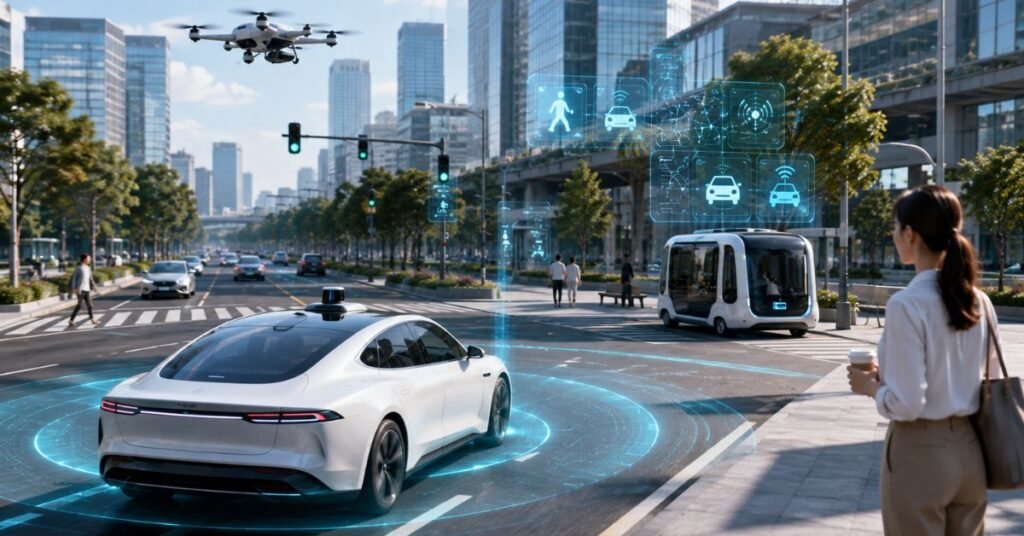
Self-driving technology is another area connected to upcoming tech innovations ai.
Autonomous systems depend on cameras, sensors, mapping, machine learning and real-time decision-making.
Beyond Self-Driving Cars
Autonomy can also appear in delivery robots, drones, industrial vehicles, agricultural machines and logistics systems.
The long-term goal is not simply removing the driver.
It is creating transportation systems that can understand their environment and make safe decisions.
Why Full Autonomy Takes Time
Roads are complex.
Weather changes. People behave unpredictably. Construction can alter routes. Sensors can fail.
A reliable autonomous system must handle unusual situations rather than only normal conditions.
This makes safety testing one of the most important parts of autonomous technology.
10. AI and Next-Generation Computing Will Work Together

AI requires enormous computing resources.
That makes chips, accelerators, memory, networking and energy efficiency just as important as software innovation.
AI-Specific Hardware
Future processors will increasingly be designed around AI workloads.
Instead of using general-purpose hardware for every task, specialized accelerators can improve performance and efficiency.
This could make AI systems faster while reducing the amount of energy required for certain workloads.
Where Quantum Computing Fits
Quantum computing is still different from everyday AI computing.Keeping track of upcoming tech innovations ai can help businesses and users understand which technologies may shape the future.
It is not a replacement for GPUs or standard computers.
However, future quantum systems may help with selected problems in areas such as optimization, chemistry and scientific simulation.
The key point is to avoid treating quantum computing as an immediate replacement technology. Its useful applications are still developing.
11. AI Will Become More Context-Aware

One of the most interesting future directions is AI that understands context instead of responding only to isolated prompts.
From Questions to Situations
A context-aware system could understand what a person is doing, what information they have already seen and what they are trying to accomplish.
For example, instead of asking an assistant to explain a document, a user might simply open the document and ask for help.
The AI could use the available context to provide a more relevant response.
The Personal AI Concept
Personal AI could eventually combine memory, preferences, schedules, documents and connected services.
That could make AI much more useful.
But it also creates a difficult trust problem.
The more an AI knows about a person, the more important privacy and data control become.
Step-by-Step: How to Evaluate an Upcoming AI Technology

Not every new AI announcement deserves attention.
Use this simple evaluation method before believing that a technology is ready for the mainstream.
Step 1: Identify the Real Problem
Ask what problem the technology solves.
If there is no clear problem, the innovation may be more marketing than practical value.
Step 2: Check the Current Capability
Look beyond promotional demonstrations.
Ask what the system can consistently do today.
Step 3: Look at the Infrastructure
A technology may work in a laboratory but require expensive hardware, massive data or special environments.
That can delay widespread adoption.
Step 4: Measure Reliability
A useful AI system needs consistent results.
One impressive demonstration is not enough.
Step 5: Consider Cost
Technology becomes mainstream when its value makes sense compared with its cost.
Step 6: Check Safety and Privacy
AI systems that interact with people, money, healthcare or physical machines need stronger safeguards.
Step 7: Watch Adoption
The strongest signal is often not a viral demo.
It is repeated in real environments.
The Biggest Upcoming AI Technologies at a Glance
| Technology | Main Purpose | Potential Impact | Main Challenge |
| AI Agents | Complete multi-step tasks | High | Control and reliability |
| Physical AI | Act in the real world | Very High | Safety and perception |
| World Models | Simulate environments | High | Real-world accuracy |
| AI Robotics | Automate physical work | Very High | Cost and dexterity |
| Edge AI | Run AI locally | High | Hardware limits |
| AI Wearables | Natural interaction | High | Privacy |
| AI Healthcare | Support diagnosis and research | Very High | Validation |
| AI Cybersecurity | Detect and respond to threats | Very High | AI-powered attacks |
| Autonomous Systems | Perform tasks without constant human control | Very High | Safety |
| AI Hardware | Improve AI performance | Very High | Energy and supply |
| Quantum Computing | Solve selected complex problems | Long-term | Technical maturity |
Common Mistakes People Make When Following AI Innovation
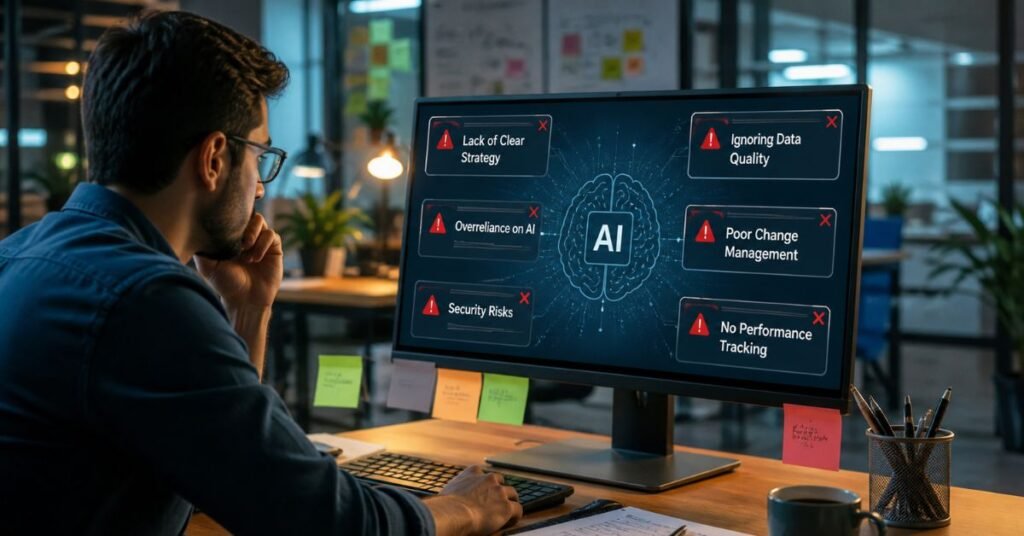
Mistake 1: Believing Every AI Demo Is Production Ready
A demonstration proves that something can work under certain conditions.
It does not prove that it will work reliably at scale.
Mistake 2: Thinking Bigger Models Solve Everything
Model size matters, but useful AI also depends on data, tools, hardware, integration and system design.
Mistake 3: Ignoring Security
An AI system that can act independently also needs strong permissions.
Giving an agent access to important systems without proper controls can create unnecessary risk.
Mistake 4: Confusing Hype With Adoption
A technology can receive billions in investment and still take years to become practical.
Mistake 5: Ignoring the Human Role
The best AI systems will often support people rather than simply remove them from the process.
Human judgment remains important when decisions are complex, sensitive or high-risk.
Real-Life Example: What the Next AI Workflow Could Look Like

The upcoming tech innovations ai are creating new opportunities across software, robotics, healthcare, and smart devices. Imagine a small online business launching a new product.
Today, the owner may research competitors, analyze customer feedback, prepare marketing content, answer emails and track performance manually.
In a more advanced AI environment, different AI systems could assist with each stage.
A research agent could gather market information. A data agent could identify customer patterns. A writing agent could prepare drafts. A security system could check unusual account activity. A human could review important decisions before anything goes live.
The important point is that AI does not need to replace the owner.
Instead, the owner becomes the person directing a group of intelligent digital tools.
This is a more realistic way to think about the future of AI than imagining a single machine doing everything.
What Could Slow Down These Innovations?

The future of AI is promising, but progress is not guaranteed to happen at the same speed.
Energy and Computing Costs
Advanced AI requires significant computing resources.
As demand increases, companies will need more efficient chips, cooling systems, data centers and energy infrastructure.
Data Quality
AI systems depend heavily on useful data.
Poor, biased or outdated data can reduce performance.
Regulation
Governments are increasingly examining AI safety, privacy, security and accountability.
New rules may slow some deployments while creating clearer standards for others.
Public Trust
People will not widely adopt technologies they do not trust.
Companies will need to explain how systems use data and how users can control them.
How Businesses Should Prepare for the AI Future
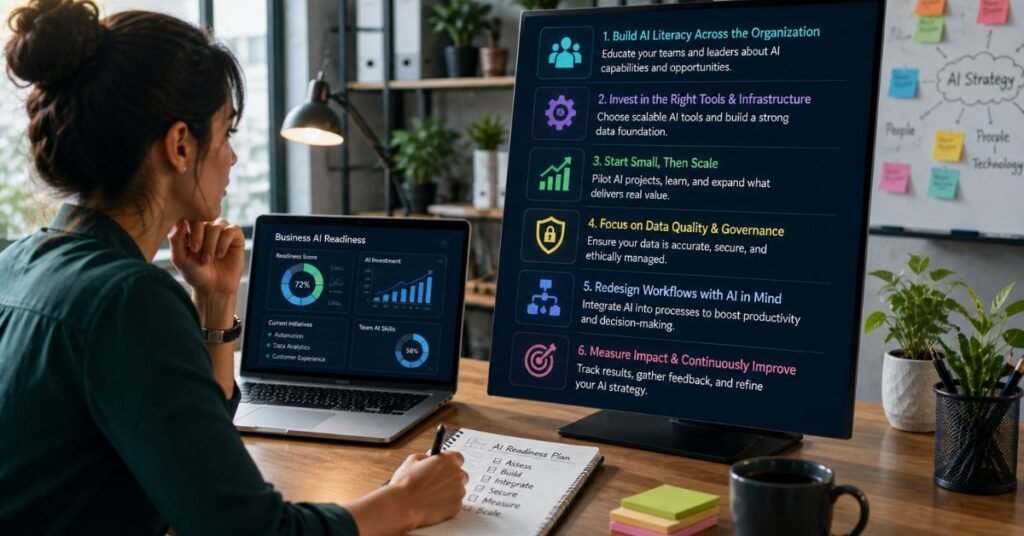
A better approach is to identify repetitive tasks and areas where AI can provide measurable value.
Start with low-risk workflows.
Test the technology.
Measure the result.
Then expand only when the system proves reliable.
Companies should also prepare their employees for AI-assisted work. Training people to supervise, evaluate and work with AI can be more valuable than simply purchasing another AI tool.
Author Note
AI innovation is developing too quickly for anyone to predict every future breakthrough with certainty.
The most useful approach is to separate demonstrated progress from speculation.
The technologies discussed in this guide were selected because they represent meaningful directions in AI, computing and automation. Some are already moving into real-world applications, while others still need major improvements.
For AI Deep Visions readers, the goal is not to predict the exact future. The goal is to understand the technologies that are most likely to shape it and recognize the difference between a useful breakthrough and temporary hype.
Disclaimer
Important Information
This article is for general informational and educational purposes. Technology development changes quickly, so capabilities, timelines, products and applications may change after publication.
Predictions about future AI systems are not guarantees. Readers should verify important technical, financial, business or safety decisions with appropriate professionals and current information.
Conclusion:
The next generation of AI will be about much more than better chatbots. The most important upcoming tech innovations ai will connect intelligence with action. AI agents will handle multi-step workflows, physical AI will control machines, world models will help systems simulate environments, and edge AI will bring more intelligence directly to devices.
At the same time, AI will become more connected with robotics, healthcare, transportation, cybersecurity, wearables and advanced computing. The biggest opportunities will not necessarily come from the most impressive demonstrations. They will come from technologies that solve real problems reliably, safely and at a reasonable cost.
The future should therefore be watched with both excitement and caution. AI innovation is moving quickly, but adoption depends on trust, infrastructure, safety and real world value. Understanding these factors gives businesses, developers and everyday users a much better way to prepare for what comes next.
FAQs About Upcoming Tech Innovations AI
What are the most important upcoming AI technologies?
AI agents, physical AI, AI robotics, world models, edge AI, AI wearables, autonomous systems, AI cybersecurity and AI-powered healthcare are among the most important areas to watch.
Will AI agents replace human workers?
AI agents are more likely to automate specific tasks and workflows first. Many jobs will continue to require human judgment, creativity, communication and responsibility.
What is physical AI?
Physical AI refers to AI systems that can perceive and interact with the physical world through machines, sensors, robots and other devices.
Why are world models important?
World models aim to help AI systems understand and simulate environments. They could become useful for robotics, autonomous systems, training and scientific applications.
Will AI work without the cloud in the future?
More AI processing is likely to happen directly on phones, computers, vehicles and other devices. This is known as edge AI and can improve speed and privacy for suitable tasks.
Are humanoid robots ready for everyday use?
Some humanoid robots are already being developed and tested, but widespread everyday use still depends on improvements in reliability, cost, safety, battery life and dexterity.
What should businesses do about future AI technology?
Businesses should start by identifying useful, low risk workflows where AI can save time or improve quality. They should test results, protect sensitive data and expand AI adoption only after measuring real value.