

Quick Takeaway
An NFT marketplace trading guide should do more than explain what NFTs are. You need to know how to choose a marketplace, connect a wallet, check an NFT before buying, understand floor price and fees, complete a trade, and avoid common scams. This guide walks you through the full process in simple steps so you can make better trading decisions instead of buying an NFT based only on hype.
Introduction
NFT trading can look confusing at first. Different marketplaces use different interfaces, blockchain networks, payment methods, listing systems, and fees. The basic process, however, is easier to understand when you break it into clear stages.
This NFT marketplace trading guide focuses on the practical side of NFT trading. You will learn how marketplaces work, what to check before a purchase, how offers and auctions work, how to sell an NFT, and how to protect your wallet.
What Is an NFT Marketplace Trading Guide Really About?
An NFT marketplace is a platform where people can discover, buy, sell, list, and sometimes bid on non-fungible tokens. An NFT can represent digital art, collectibles, gaming assets, memberships, virtual items, tickets, or other digital ownership records.
The important point is that the marketplace interface is only one part of the transaction. The blockchain records ownership and transaction activity, while your crypto wallet gives you control over your assets and transaction approvals.
A good NFT marketplace trading guide should therefore explain the complete journey rather than focus only on clicking a Buy button.
How NFT Trading Works
A typical NFT trade follows this basic path:
- You choose a marketplace and compatible blockchain.
- You connect a crypto wallet.
- You fund the wallet with the required cryptocurrency.
- You research a collection or individual NFT.
- You check price, history, creator information, and other details.
- You buy, bid, or make an offer.
- You approve the required wallet transaction.
- The blockchain records the transaction.
- The NFT appears in your wallet after successful completion.
The exact steps can vary between marketplaces and networks, but the basic logic remains similar.
Why the Marketplace Matters
Not every marketplace offers the same features. Some focus on broad NFT categories, while others target specific communities, chains, games, or digital art.
Before trading, check whether the platform supports your preferred blockchain, wallet, NFT type, and payment method. Also review its current fee structure and safety information.
How to Choose the Right NFT Marketplace for Trading
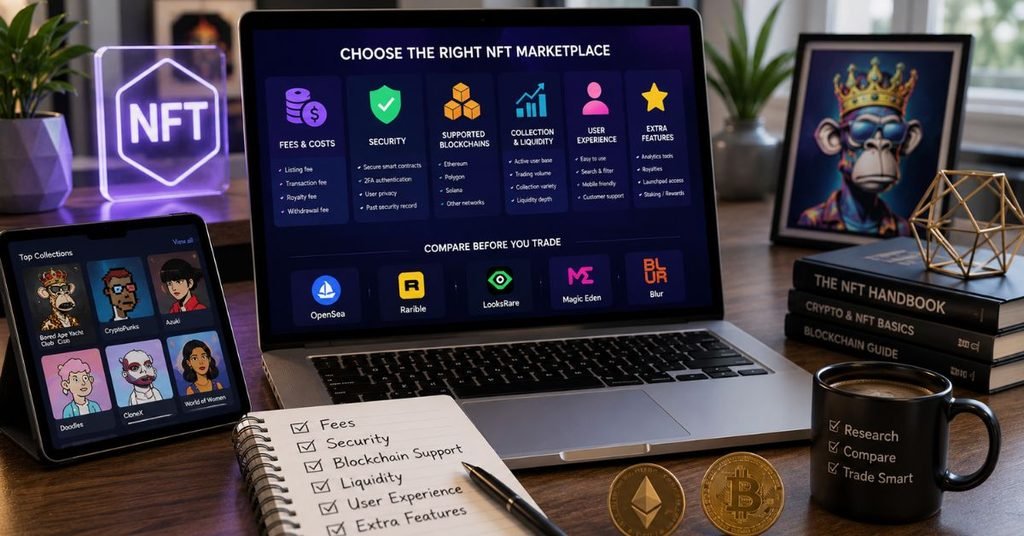
Choosing a marketplace is one of the most important decisions in this NFT marketplace trading guide because the platform affects your available collections, fees, trading tools, and overall experience.
Do not choose a platform simply because you saw its name on social media. Start by checking the features that directly affect your trading.
Check Blockchain Compatibility
First, identify the blockchain used by the NFT you want to trade. Ethereum, Polygon, Solana, Bitcoin, Arbitrum, and other networks can have different NFT ecosystems.
Your wallet must support the required network. You also need the correct cryptocurrency for transaction fees and purchases.
Compare Trading Features
Look for useful features such as fixed-price purchases, offers, auctions, collection information, sales history, filters, rarity data, and wallet activity.
A marketplace with better data can help you research an NFT before spending money.
Review Fees Before Trading
NFT transactions may involve more than the displayed NFT price. Depending on the transaction, you may encounter marketplace fees, blockchain gas costs, creator earnings, or other charges.
Always calculate your estimated total cost before confirming a transaction.
| Trading Factor | What to Check | Why It Matters |
| Blockchain | Supported network | Determines wallet and token compatibility |
| NFT Price | Current asking price | Shows your basic purchase cost |
| Floor Price | Lowest comparable listing | Helps with collection-level comparison |
| Sales History | Previous transactions | Shows actual market activity |
| Gas Fee | Estimated network cost | Can increase total spending |
| Marketplace Fee | Platform charge | Reduces your final proceeds |
| Creator Earnings | Applicable resale amount | May affect seller returns |
| Liquidity | Recent trading activity | Helps estimate how easily you may resell |
| Security | Official marketplace and wallet connection | Reduces scam risk |
The cheapest-looking NFT is not automatically the best trade. Total cost and resale potential matter more than the displayed price alone.
NFT Marketplace Trading Guide: How to Set Up Your Wallet Safely
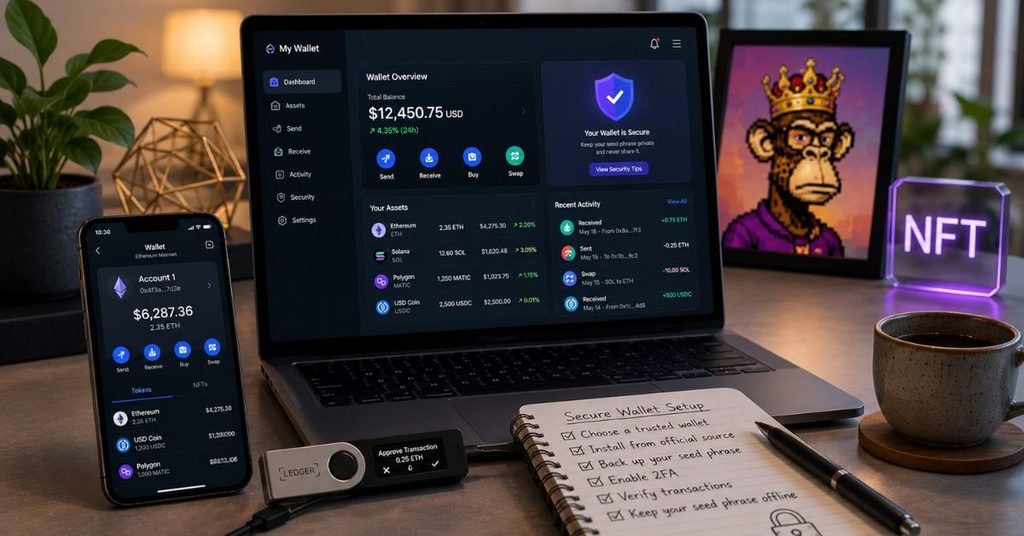
Your wallet is the key tool for interacting with NFT marketplaces. It can hold cryptocurrency and NFTs and allows you to approve blockchain transactions.
Before using a marketplace, create or connect a wallet that supports the blockchain you plan to use.
Step 1: Choose a Compatible Wallet
Research wallets that support your chosen blockchain. Check whether the wallet works with your preferred marketplace and whether it provides the security features you need.
Avoid downloading wallet software from random links shared in comments, messages, or social media posts.
Step 2: Protect Your Recovery Phrase
During wallet setup, you may receive a recovery phrase. Treat it as extremely sensitive information.
Never share it with a marketplace representative, online stranger, support account, or anyone claiming they need it to fix your wallet.
A legitimate support process should not require you to hand over your secret recovery phrase.
Step 3: Fund the Wallet
Transfer only the amount you need for your planned activity. Keep additional funds available if the network requires transaction fees.
Before sending cryptocurrency, verify the receiving address and blockchain network carefully.
Step 4: Connect the Wallet
Visit the marketplace through its verified website or official application. Select the wallet connection option and review what the wallet is asking you to approve.
Do not blindly sign every request.
NFT Marketplace Trading Guide: How to Research an NFT Before Buying
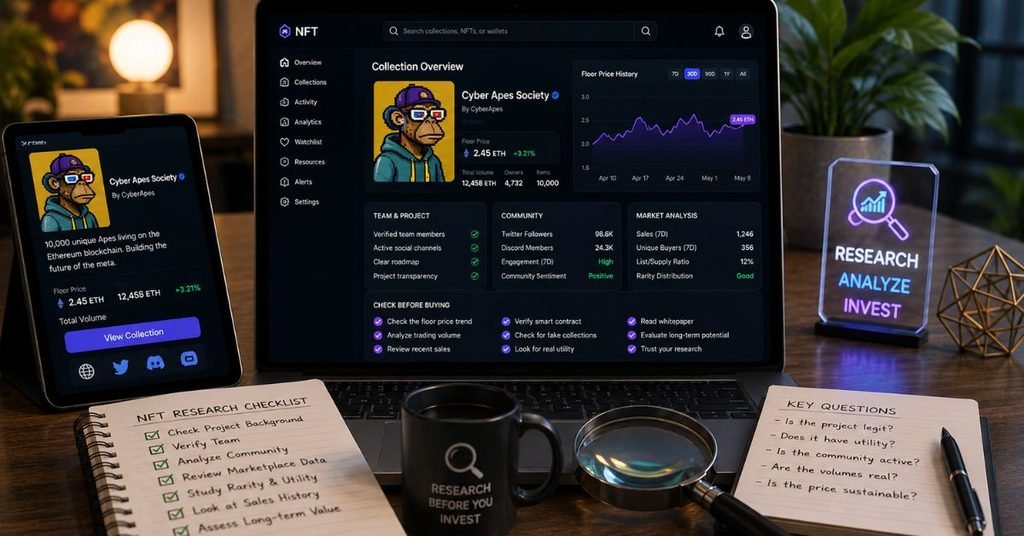
The biggest beginner mistake is buying an NFT because it looks attractive or because someone predicts that its price will rise.
A better approach is to treat an NFT purchase as a research decision.
Check the Collection
Look at the collection’s overall activity. Review the number of owners, recent sales, listing activity, and price movement where reliable marketplace data is available.
A collection with lots of listings but very few recent sales may not provide the liquidity you expect.
Study the NFT’s History
Check previous sale prices when available. Compare the current asking price with recent transactions involving similar NFTs.
One old sale at a very high price does not automatically prove that the asset is still worth the same amount.
Understand Floor Price
Floor price usually refers to the lowest listed price within a collection. It can help you compare listings, but it should not become your only buying signal.
A rare NFT with valuable traits can trade above the collection floor.
Inspect Rarity and Traits
If the collection uses different traits, check how common or uncommon those traits are. Compare similar NFTs rather than assuming every rare-looking item has the same market value.
Verify the Creator and Collection
Fake collections can copy artwork, names, and descriptions. Confirm the collection through trusted official channels and check the contract information when appropriate.
Step by Step NFT Marketplace Trading Guide for Your First Trade
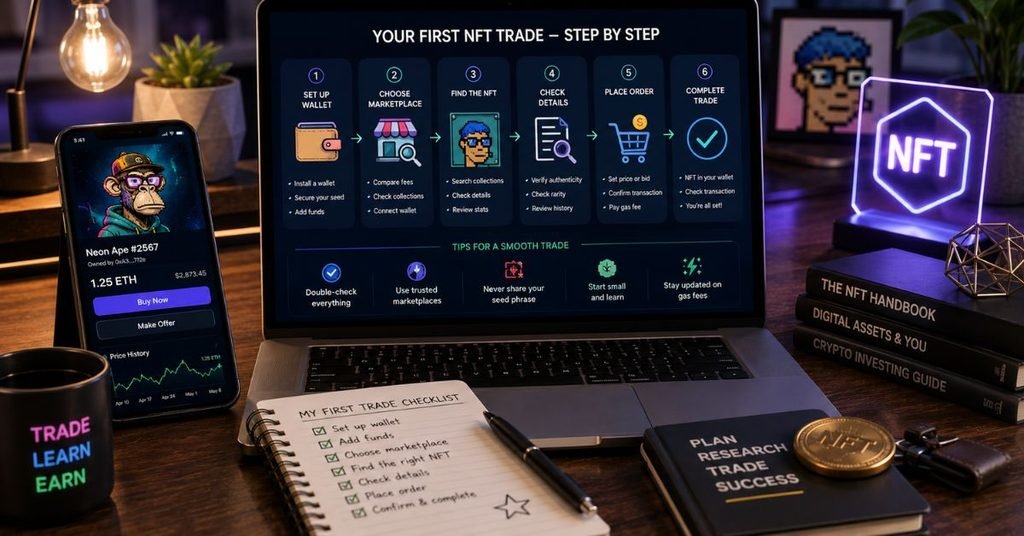
If you are new to NFT trading, use this process instead of making a rushed purchase.
Step 1: Select Your Market
Choose a marketplace that supports the NFT and blockchain you want to use.
Step 2: Connect Your Wallet
Connect your compatible wallet and confirm that you are using the correct account and network.
Step 3: Find the NFT
Search for the collection or asset. Use marketplace filters to narrow results by price, traits, status, or other available information.
Step 4: Research Before Buying
Review the creator, collection activity, ownership information, sales history, current listings, and relevant traits.
Step 5: Calculate the Full Cost
Do not look at the NFT price alone. Consider marketplace fees and expected blockchain transaction costs.
Step 6: Choose a Trading Method
You may have several options depending on the marketplace:
Buy Now: Purchase at the listed price.
Make an Offer: Propose a price that the owner can accept or reject.
Auction: Compete with other bidders during a defined auction period.
Step 7: Review the Wallet Transaction
Before confirming, read the transaction details carefully. Check the amount, network, destination, and requested approval.
Step 8: Confirm the Transaction
Approve the transaction only when the details match your intended trade.
Step 9: Verify Ownership
After confirmation, check your wallet and marketplace profile to ensure the NFT has been transferred successfully.
This step by step process reduces impulsive decisions and gives you a repeatable trading routine.
NFT Marketplace Trading Guide: How to Buy NFTs More Carefully
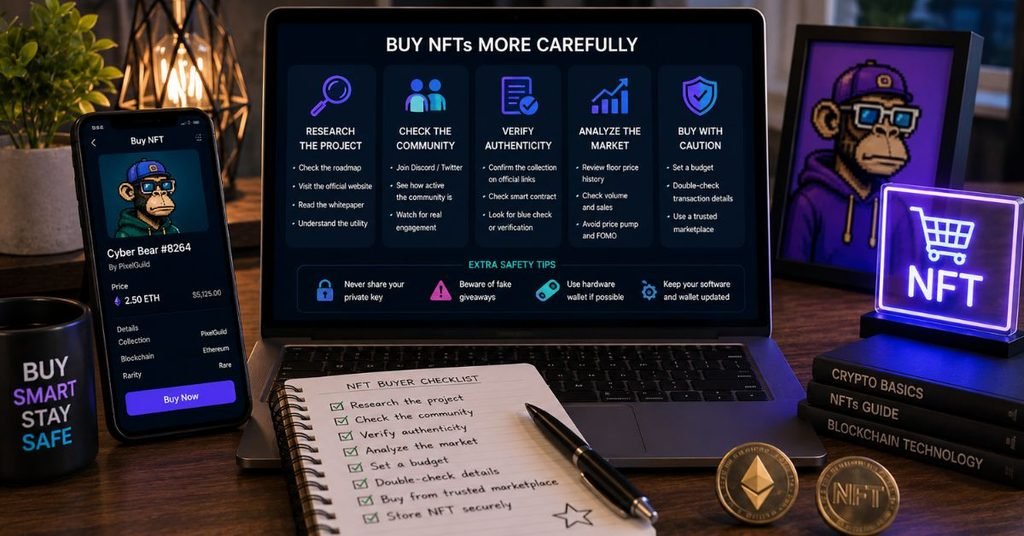
Buying an NFT is simple technically, but deciding what to buy requires more work.
Start by separating personal interest from investment expectations. You may like an NFT because of its artwork, gaming use, community access, or collectible value. That does not guarantee that someone else will pay more for it later.
Fixed-Price Purchases
A fixed-price listing allows you to purchase the NFT at the seller’s stated price, assuming the listing is active and the transaction succeeds.
This method is straightforward, but you should still compare the listing against recent sales and similar items.
Making an Offer
An offer allows you to propose your own price when the marketplace supports that feature.
Before making an offer, check the offer duration, currency, expiration, and any approval requirements. Never assume an offer is identical to a direct purchase.
Auction Bidding
Auctions can create competitive pricing. Set your maximum budget before bidding.
Do not increase your bid simply because another buyer has outbid you. A higher price does not automatically make the NFT more valuable.
NFT Marketplace Trading Guide: How to Sell an NFT
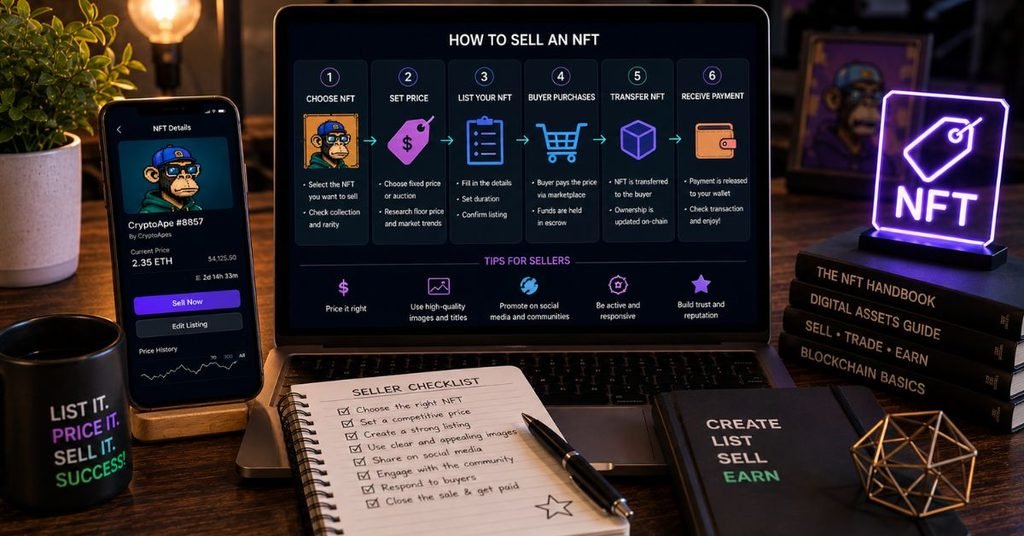
Selling requires the same level of research as buying.
First, choose an appropriate asking price. Look at recent sales, similar listings, collection activity, and your own acquisition cost.
Set a Realistic Listing Price
A very high price may attract attention but produce no sale. A very low price may result in an unnecessary loss.
Use comparable recent transactions rather than relying on a single headline sale.
Review Your Expected Proceeds
Before listing, calculate how much you may receive after applicable marketplace charges, creator earnings, and transaction costs.
The final amount can be different from the displayed sale price.
Accepting an Offer
If someone sends an offer, review the amount and terms carefully before accepting it.
Check that the transaction appears inside the legitimate marketplace interface. Be especially cautious if someone contacts you privately and claims you must send extra cryptocurrency to unlock a sale.
How to Judge NFT Value Without Following Hype
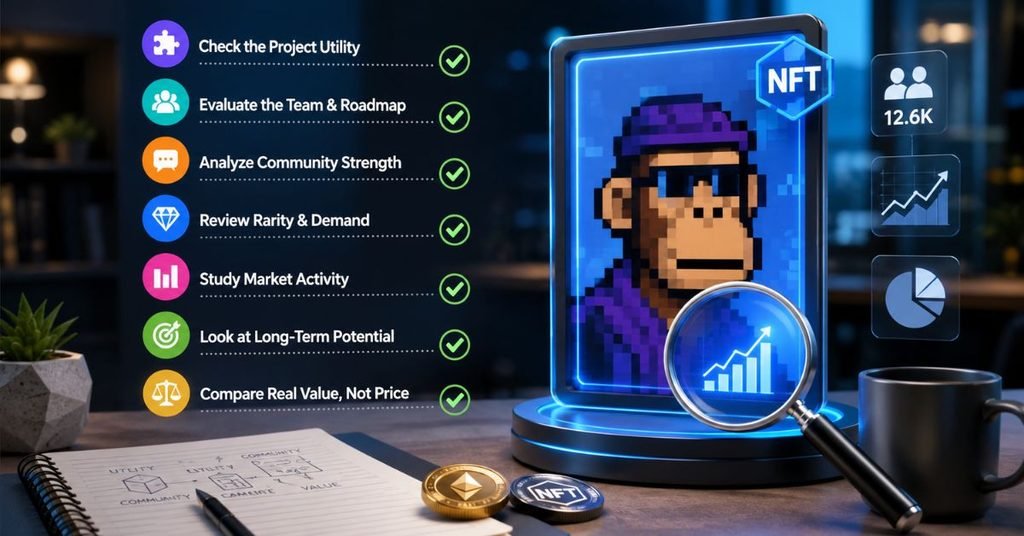
There is no single formula that can predict an NFT’s future price.
Instead, combine several signals.
Demand
Look for evidence of real buyer activity rather than social media excitement alone.
Liquidity
A collection can have high listed prices but weak actual sales. Recent transaction activity can provide a better picture of liquidity.
Community
An active community can support long-term interest, but follower counts alone do not prove demand.
Utility
Some NFTs provide access to games, memberships, events, digital experiences, or other features. Understand what the NFT actually provides.
Creator Reputation
Research the creator and project history. Consistent communication and transparent information can provide stronger confidence than anonymous hype.
Common NFT Marketplace Trading Mistakes Beginners Should Avoid
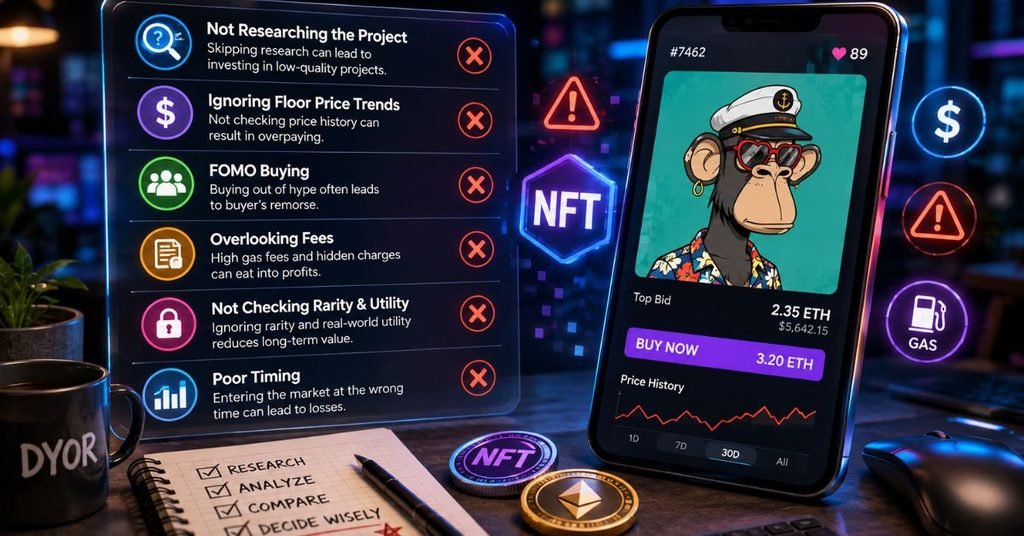
Many NFT losses happen because traders rush rather than because the technology is impossible to understand.
Buying Only Because the Price Is Rising
Rapid price increases can attract buyers who fear missing out. Price movement alone does not prove sustainable demand.
Ignoring Transaction Fees
A low-cost NFT can become expensive when network and marketplace charges are added.
Using an Unverified Website
Fake marketplaces and phishing pages can imitate legitimate platforms. Always verify the website before connecting your wallet.
Signing Without Reading
Wallet prompts can involve approvals and transactions. Read what you are signing instead of clicking through automatically.
Sending Funds to a Stranger
If someone claims you need to send cryptocurrency to complete a sale, stop and verify the process through the marketplace itself.
Ignoring Liquidity
An NFT can be difficult to resell even when its displayed value looks high.
Spending More Than You Can Afford to Lose
NFT markets can be highly volatile. Never treat a speculative digital asset as guaranteed income.
Real Life Example: A Safer NFT Trading Decision
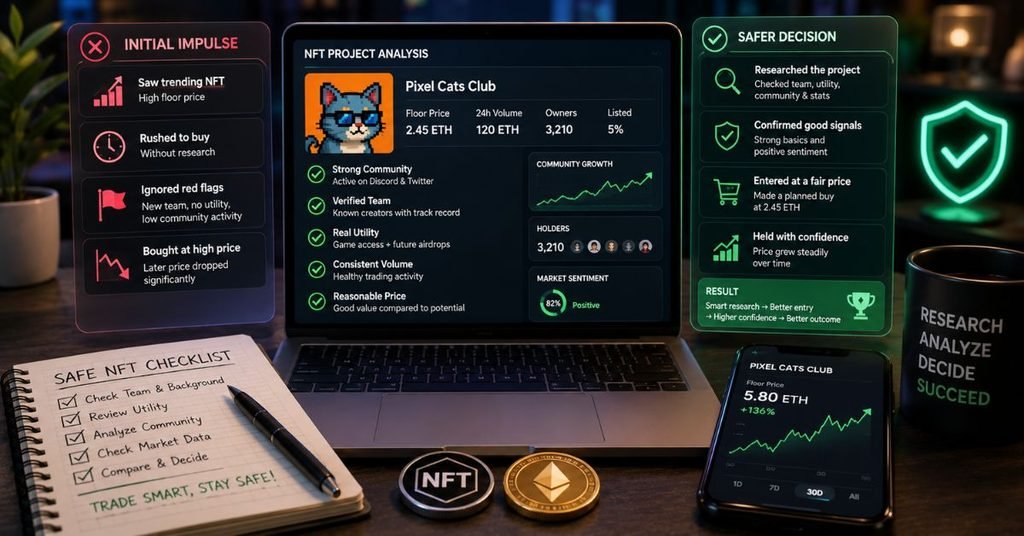
Imagine a beginner finds an NFT listed for 0.4 ETH. A social media post claims that the collection is about to explode in value.
Instead of buying immediately, the trader checks recent sales and discovers that similar NFTs recently sold between 0.25 and 0.35 ETH. The collection has many listings, but only a small number of recent purchases.
The trader then checks the NFT’s traits and finds that the item has no unusual characteristics. After calculating marketplace and network costs, the total purchase would be higher than the recent market range.
The trader decides not to buy at 0.4 ETH.
Later, a similar NFT becomes available at a lower price. The trader has already researched the collection, understands the costs, and can make a more informed decision.
The lesson is simple: research first, transaction second.
How to Build Your Own NFT Trading Checklist
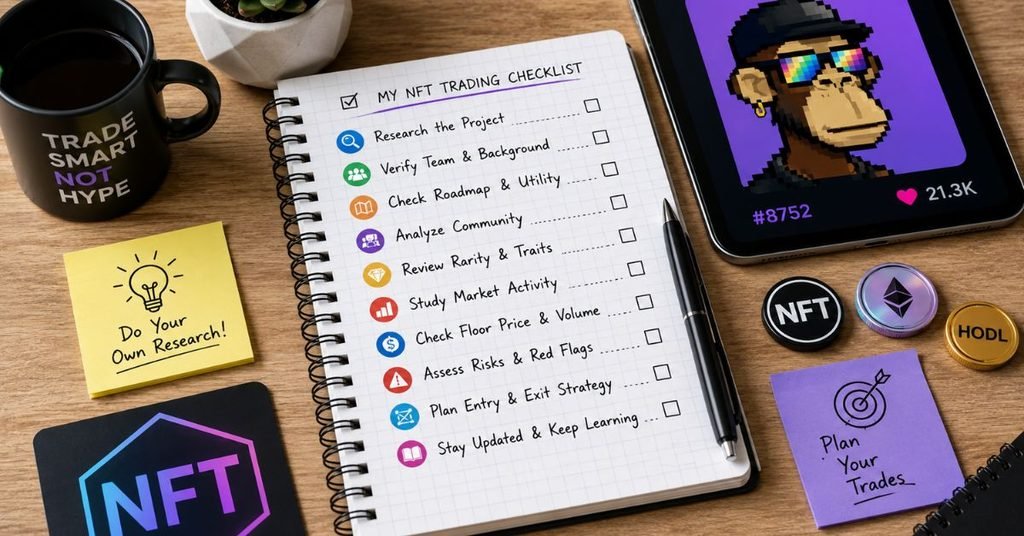
A repeatable checklist can make your decisions more consistent.
Before buying, ask:
Before the Trade
Is this the correct collection?
Is the marketplace legitimate?
Is the creator verified through trusted channels?
What blockchain does the NFT use?
What are the recent sale prices?
What is the current floor price?
How active is the collection?
What are the total fees?
Can I afford the full cost?
What is my reason for buying?
Before Confirming
Is the wallet connected to the correct website?
Is the transaction amount correct?
Is the blockchain network correct?
Am I approving the transaction I intended?
Have I checked the NFT’s contract and collection information where appropriate?
This checklist can prevent simple mistakes that become expensive once a blockchain transaction is confirmed.
NFT Marketplace Trading Guide: Security Rules You Should Never Ignore
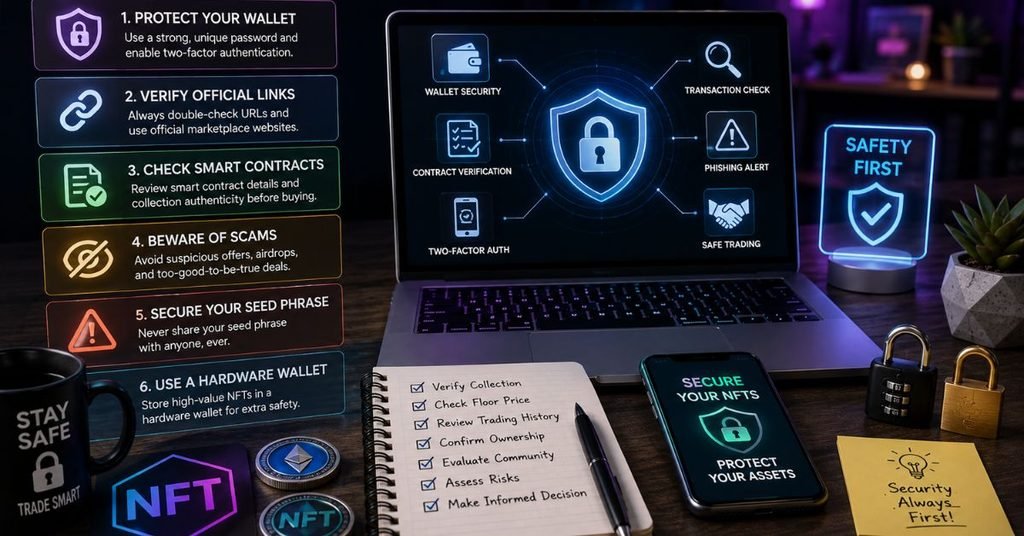
Security should remain part of every NFT transaction.
Keep your recovery phrase offline and private. Use strong wallet security and consider additional protection for valuable assets.
Bookmark verified marketplace websites instead of following random links. Be careful with direct messages, fake support accounts, giveaway claims, and urgent messages that pressure you to act immediately.
Watch for Phishing
A phishing website may look almost identical to a legitimate marketplace. Its goal is usually to convince you to connect your wallet or sign a malicious transaction.
If something feels rushed or unusual, stop.
Separate Trading Funds
If you trade regularly, consider keeping only the funds needed for active trading in the connected wallet. Valuable long-term assets may require a different security approach.
Verify Before Every Signature
A wallet signature can have real consequences. Read transaction details and make sure you understand what you are approving.
Future of NFT Marketplace Trading
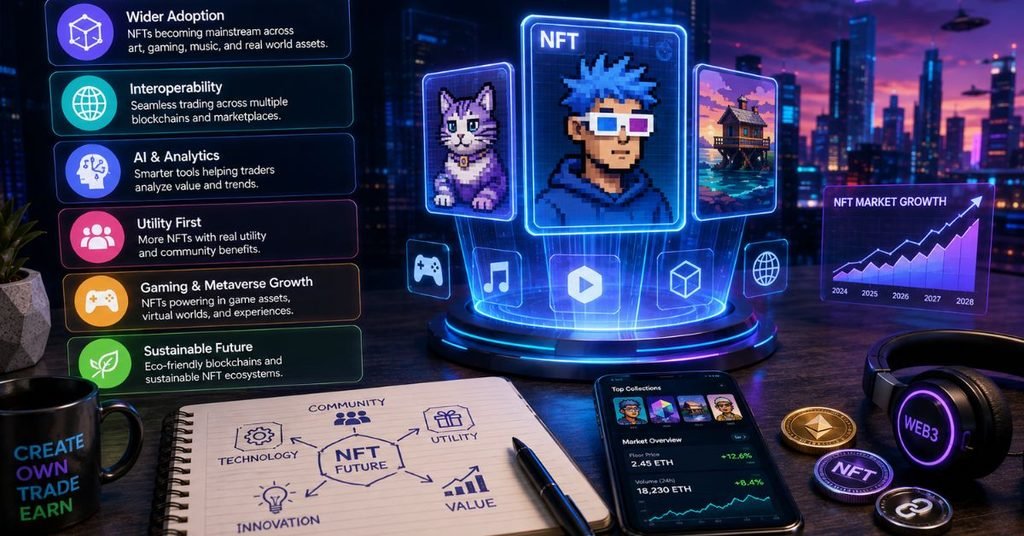
NFT marketplaces are moving beyond simple digital-art listings. Trading platforms can support gaming assets, memberships, digital collectibles, tokenized experiences, and other blockchain-based assets.
Better analytics can also make it easier for traders to compare sales, monitor collections, identify activity changes, and research assets before purchasing.
Another important development is the growth of multi-chain ecosystems. Traders may have more options across different blockchain networks, but this also means users must understand network compatibility, fees, wallets, and transaction requirements.
The future of NFT trading will likely favor users who combine technology knowledge with disciplined research rather than those who simply follow market hype.
Author Note
This guide is written for readers who want a practical starting point for NFT marketplace trading. The goal is not to encourage blind buying or promise profits. NFT markets can change quickly, so responsible traders should verify current prices, fees, marketplace rules, and blockchain conditions before completing a transaction.
The most useful habit is simple: research the asset, calculate the complete cost, verify the marketplace, and only then approve the transaction.
Disclaimer
This content is intended for general information and learning only and should not be considered professional financial, investment, legal, or tax guidance. NFTs and cryptocurrency markets can be highly volatile, and you may lose some or all of the money you spend. Always conduct your own research and verify current marketplace fees, blockchain costs, project information, and applicable laws before making any transaction.
Conclusion
NFT trading becomes much easier when you stop treating it as a simple Buy or Sell button and start following a clear process. Choose the right marketplace, secure your wallet, research the collection, compare recent sales, calculate all costs, and review every transaction before signing. These steps can help beginners avoid many common mistakes.
The strongest approach is not chasing every trending collection. A disciplined trader focuses on information, security, liquidity, price history, and risk. Use this NFT marketplace trading guide as a practical framework whenever you research a new NFT, make an offer, place a bid, or prepare an asset for sale.
FAQs
What is an NFT marketplace?
An NFT marketplace is a blockchain-based platform where users can discover, buy, sell, list, and sometimes auction NFTs. Different marketplaces may support different blockchains, wallets, NFT categories, and trading features.
How do I start trading NFTs?
Start by choosing a compatible marketplace and wallet. Fund the wallet with the required cryptocurrency, research an NFT carefully, calculate transaction costs, and then choose whether to buy, make an offer, or participate in an auction.
What is an NFT floor price?
The floor price generally refers to the lowest current listing price for an NFT within a collection. It can help with comparison, but it does not necessarily represent the value of every NFT in that collection.
Do I need cryptocurrency to buy NFTs?
Many NFT marketplaces use cryptocurrency for blockchain-based transactions, although some platforms may offer other payment methods for certain purchases. The payment options depend on the marketplace and asset.
Are NFT marketplace fees included in the NFT price?
Not always. Depending on the marketplace and transaction, additional costs can include blockchain gas fees, marketplace charges, and creator-related earnings. Always review the final transaction details before confirming.
How can I avoid NFT scams?
Use official marketplace websites, verify collections and creators, avoid suspicious links, never share your recovery phrase, and carefully review every wallet transaction. Be especially cautious when someone pressures you to send extra cryptocurrency to complete a sale.
Is NFT trading profitable?
NFT trading is not guaranteed to be profitable. Prices can rise or fall quickly, and some NFTs may have very limited liquidity. Research, risk management, and careful spending are important because you can lose money.