

Quick Takeaway
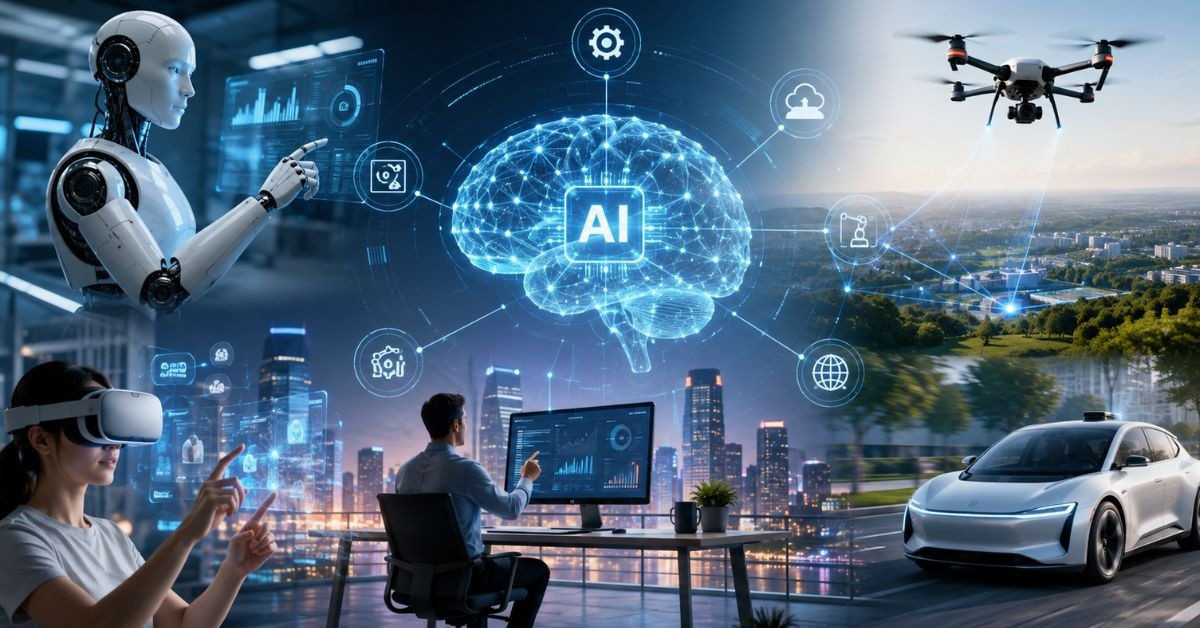
The upcoming AI tech trends are moving far beyond chatbots and simple content generation. AI agents are beginning to handle multi step tasks, physical AI is bringing intelligence into robots and machines, and multimodal systems are helping AI understand text, images, audio, video, and real world information together. At the same time, AI security, smaller models, edge computing, AI native software development, and stronger governance are becoming just as important as model performance.
For readers and businesses, the biggest change is simple: AI is moving from a tool that answers questions to a system that can understand, decide, act, and work inside real environments.
Introduction
The upcoming AI tech trends are changing the direction of artificial intelligence faster than many people expected. AI is no longer limited to writing text, generating images, or answering questions. New systems can connect with software tools, analyze different types of information, perform several steps toward a goal, and increasingly interact with physical environments.
That shift matters because the next stage of AI will not be judged only by how impressive a model sounds. It will be judged by what the system can actually accomplish. Businesses want faster workflows. Developers want smarter software tools. Healthcare teams want better research support. Manufacturers want more capable robots. Consumers want AI that can save time without creating new risks.
This guide looks at the most important developments worth watching and explains what they mean in practical terms.
What Are the Upcoming AI Tech Trends to Watch?
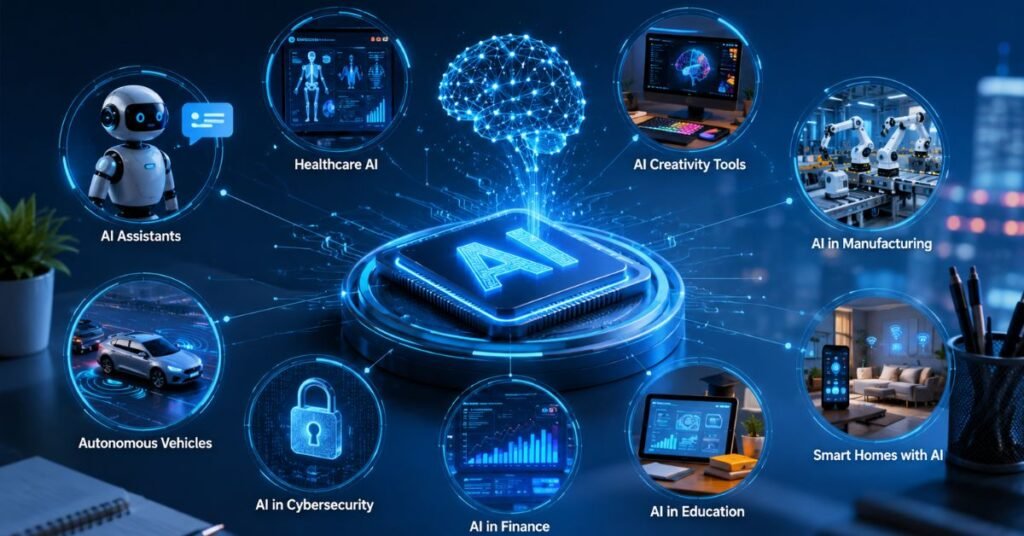
The next phase of AI is developing around several connected areas rather than one single technology. Some trends are already moving into real-world use, while others are still developing.
The most important areas include:
- Agentic AI and autonomous workflows
- Physical AI and intelligent robotics
- Multimodal AI
- Smaller and more efficient AI models
- AI native software development
- AI security and digital trust
- Edge AI and on device intelligence
- AI-powered healthcare and scientific discovery
- AI governance and responsible deployment
The key point is that these trends can work together. A robot, for example, may combine a multimodal model, edge computing, computer vision, physical sensors, and an AI agent. That combination is much more powerful than any individual technology.
Agentic AI Is Moving Beyond Simple Chatbots
One of the strongest upcoming AI tech trends is the move from conversational assistants toward AI agents.
A normal chatbot usually waits for a question and then produces an answer. An AI agent can receive a goal, break it into smaller tasks, use tools, check information, and continue working until it reaches an outcome.
How AI Agents Work
Suppose you ask an AI tool to create a weekly sales summary. A standard chatbot may only tell you the steps needed to prepare it.
An agent could potentially:
- Collect approved sales data.
- Organize the information.
- Find important changes.
- Compare results with previous periods.
- Create a report.
- Send it to the correct team.
- Flag unusual results for human review.
The important difference is action.
Businesses are already exploring agentic workflows in areas such as customer service, finance, software development, research, and internal operations. However, autonomous action also creates new security and accountability problems. Companies need clear permissions, logs, human review, and limits around what an agent can do.
Why This Trend Matters
Agentic AI could reduce repetitive digital work, but it will not make human oversight irrelevant.
The strongest implementations will probably combine AI autonomy with human control. Instead of replacing every employee, organizations may use agents as digital workers that handle defined tasks while people manage decisions, exceptions, and strategy.
Physical AI Will Bring Intelligence Into the Real World
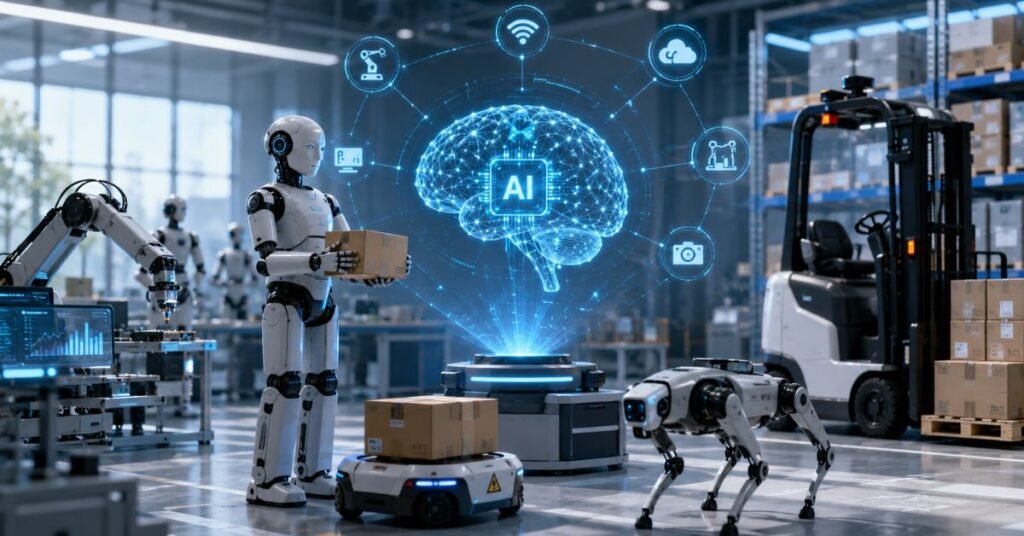
Another major direction is physical AI.
Traditional AI mainly operates inside digital environments. Physical AI connects intelligence with machines that can see, sense, move, and respond to the world.
Robots, autonomous vehicles, drones, industrial machines, and intelligent devices can all benefit from this approach.
From Digital Intelligence to Physical Action
A physical AI system needs more than a language model.
It may require:
- Cameras and sensors
- Computer vision
- Spatial understanding
- Motion planning
- Robotics models
- Real-time computing
- Simulation
- Safety controls
This combination allows a machine to respond to changing conditions instead of following only fixed instructions.
Current industry activity shows strong interest in humanoid robots, industrial automation, autonomous vehicles, and simulation-based robotics development.
A Practical Example
Consider a warehouse robot.
An older automated machine may follow a predefined route. A more advanced physical AI system could identify an object, understand where it belongs, detect another worker in its path, change its route, and complete the task.
That is a major shift from traditional automation.
The technology still faces challenges such as hardware costs, safety, training data, reliability, and real world edge cases. But the direction is clear: AI is gradually moving from screens into physical spaces.
Multimodal AI Will Make Machines More Aware
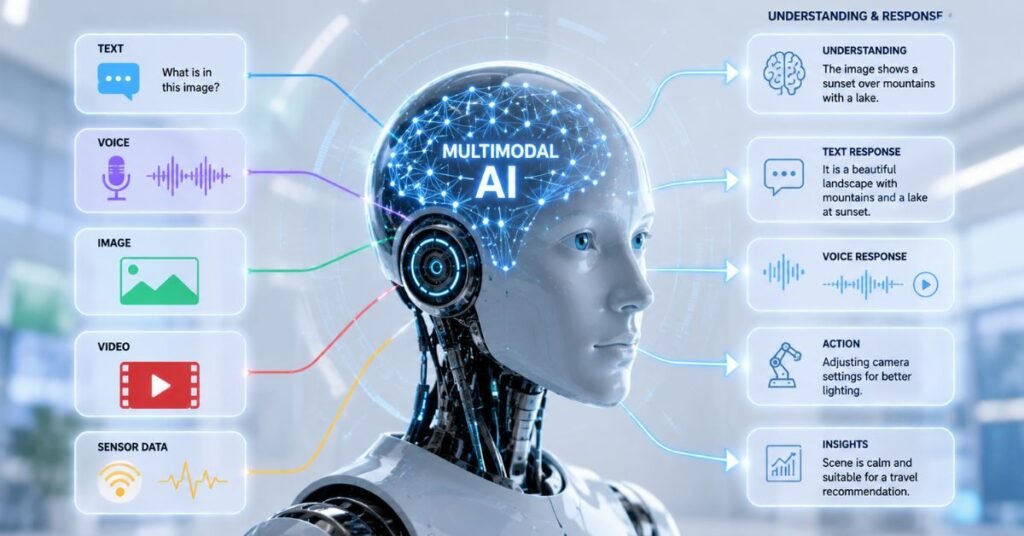
AI systems are becoming better at handling different forms of information at the same time.
Instead of working only with text, multimodal AI can combine:
- Text
- Images
- Audio
- Video
- Documents
- Visual scenes
- Sensor information
Why Multimodal AI Is Important
Human communication is naturally multimodal.
If someone shows you a broken machine and explains the problem while pointing to a specific component, you use visual and spoken information together.
Future AI systems can increasingly work in a similar way.
A technician could show an AI assistant a machine through a camera while explaining the problem. The system could analyze the visual information, listen to the description, identify possible causes, and suggest troubleshooting steps.
This can improve applications in education, customer support, accessibility, healthcare research, manufacturing, and field service.
Smaller AI Models Could Become More Useful

Bigger models receive much of the attention, but one of the more practical upcoming AI tech trends is the growth of smaller and specialized models.
A smaller model can sometimes perform a specific task faster and more efficiently than a huge general-purpose model.
Why Smaller Models Matter
Running AI requires computing power, memory, electricity, and network access.
A specialized model designed for one job may reduce these requirements.
For example, a company may not need a massive general model to classify documents or detect a particular manufacturing defect. A smaller model trained for that purpose may be faster, cheaper, and easier to control.
This trend also supports private AI deployments where organizations want more control over sensitive information.
Where Small Models Can Work
Small models may become increasingly useful on:
- Smartphones
- Laptops
- Cars
- Cameras
- Industrial devices
- Medical equipment
- Smart home products
- Edge computers
This creates a future where useful AI does not always need to send every request to a large cloud system.
AI Native Software Development Will Change How Apps Are Built

Software development is another area undergoing a major change.
AI coding assistants have already moved beyond simple autocomplete. Modern systems can help developers understand code, generate functions, find bugs, write tests, explain errors, and work through larger development tasks.
From AI Assistance to AI Native Development
The next step is not simply asking AI to write more code.
It is designing software development workflows around AI from the beginning.
Developers may increasingly describe the desired behavior while AI systems generate, test, modify, and document parts of the implementation.
This could reduce the time needed for routine development.
Writing code more quickly with AI does not always result in higher-quality software. Developers still need to review architecture, security, performance, dependencies, and business logic.
The role of developers may therefore shift toward designing, reviewing, testing, and directing AI generated systems.
Edge AI Will Make Intelligence Faster and More Private

Cloud AI is powerful, but it is not always the best solution.
Some applications need immediate responses or cannot continuously send data to remote servers.
That is where edge AI becomes important.
What Is Edge AI?
Edge AI processes AI workloads closer to where the data is created.
For example, a smart camera can analyze video locally instead of sending every frame to a distant cloud server.
This can provide several benefits:
- Lower latency
- Reduced bandwidth use
- Better offline performance
- Faster responses
- Greater control over sensitive data
Edge AI becomes especially valuable when AI is connected to vehicles, robots, industrial machines, security systems, and wearable devices.
The combination of smaller models and stronger edge hardware could make AI available in more places than traditional cloud-based systems.
AI Security Will Become a Core Technology

As AI becomes more powerful, security cannot remain an afterthought.
Organizations now need to protect not only their databases and applications but also their AI systems, models, agents, prompts, tools, and training data.
New AI Security Risks
AI systems can face problems such as:
- Prompt injection
- Data leakage
- Unsafe tool access
- Model manipulation
- Unauthorized agent actions
- Fake or manipulated AI content
- Poor access controls
Agentic AI makes these risks more serious because an AI system may have permission to perform actions instead of simply generating text.
For example, an agent that can access business documents should not automatically receive permission to delete files or make financial decisions.
Trust Will Become a Competitive Advantage
Companies that deploy AI safely may gain an advantage over businesses that rush into automation without controls.
Strong AI security should include access limits, monitoring, testing, human approval for high-risk actions, and clear records of important AI decisions.
AI Will Accelerate Healthcare and Scientific Discovery

Healthcare and scientific research are also becoming major areas for AI development.
AI can help researchers analyze large datasets, identify patterns, model complex systems, and speed up parts of the discovery process.
Where AI Can Help
Potential applications include:
- Drug discovery
- Medical imaging research
- Protein analysis
- Disease research
- Personalized treatment research
- Laboratory automation
- Scientific simulations
The important distinction is that AI should support qualified professionals rather than replace clinical or scientific judgment.
As models become better at reasoning over different data types, AI could become a powerful research partner.
AI Governance Will Become Impossible to Ignore
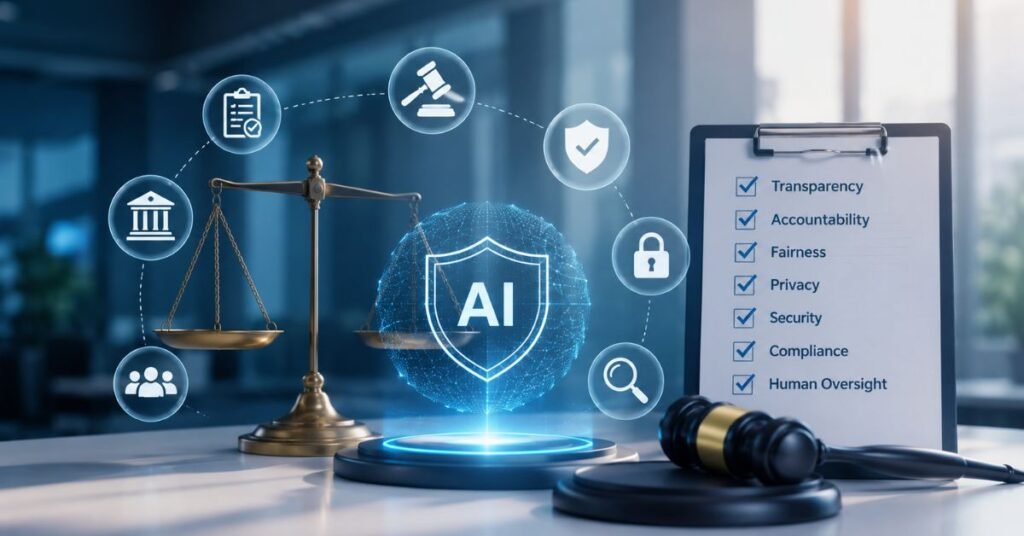
Technology can move quickly, but organizations still need rules.
As AI agents gain more authority and AI systems enter sensitive industries, companies need clear policies for data, security, transparency, accountability, and human oversight.
Why Governance Matters
Imagine an AI agent making a decision that affects a customer.
Who approved the system?
What information did it use?
Why did it make that decision?
Can the organization explain the result?
Can a human override it?
These questions become increasingly important as AI moves from experimentation into real workflows.
AI governance should therefore grow alongside AI capability rather than being added after deployment.
How These AI Trends Could Work Together
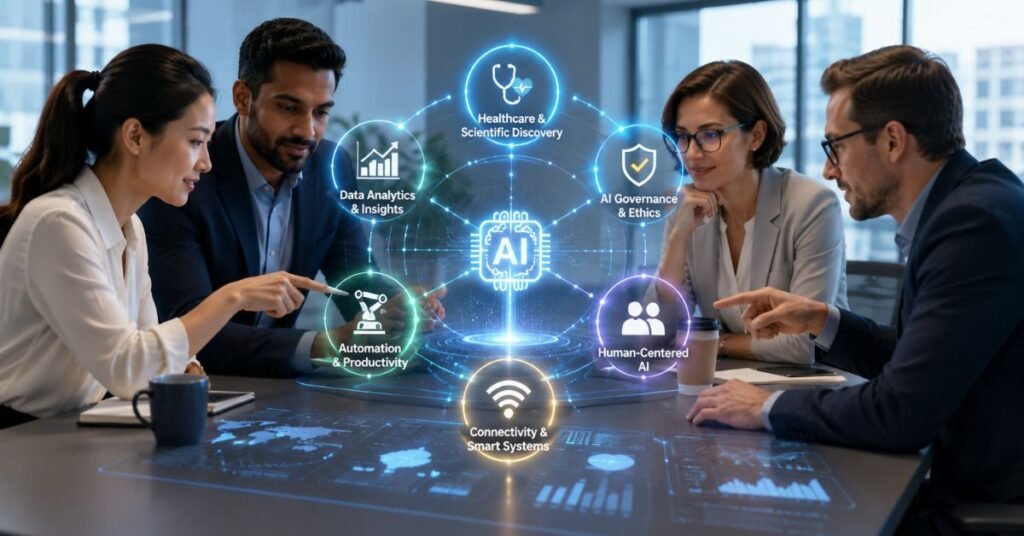
The real transformation will come from combination, not isolated technologies.
| AI Trend | What It Adds | Example Use |
| Agentic AI | Autonomous task execution | Business workflow automation |
| Physical AI | Real-world action | Intelligent robots |
| Multimodal AI | Understanding different data types | Visual support assistant |
| Small AI models | Efficiency | On-device assistants |
| AI-native development | Faster software creation | AI-assisted application building |
| Edge AI | Local processing | Smart cameras and vehicles |
| AI security | Protection and control | Secure enterprise agents |
| AI healthcare | Research support | Drug discovery |
| AI governance | Accountability | Regulated AI deployment |
This is why the future of AI should not be viewed as a race to build one perfect model.
The stronger opportunity is to build complete AI systems that combine models, tools, data, hardware, security, and human oversight.
A Real-Life Example: The Future AI Workplace

Imagine a small online business that sells products globally.
An AI agent monitors customer questions, identifies common complaints, prepares draft responses, checks inventory information, and creates a daily summary for the owner.
At the same time, another AI system analyzes sales patterns and identifies products that may need more stock.
A multimodal assistant reviews product images and descriptions.
An AI coding system helps the developer improve the website.
A security system monitors unusual activity.
The owner does not disappear from the workflow. Instead, the owner focuses on decisions that require judgment.
This example shows how several upcoming AI tech trends could operate together rather than functioning as separate technologies.
The biggest advantage comes from connecting them into one controlled workflow.
Step by Step: How Businesses Can Prepare for These AI Trends
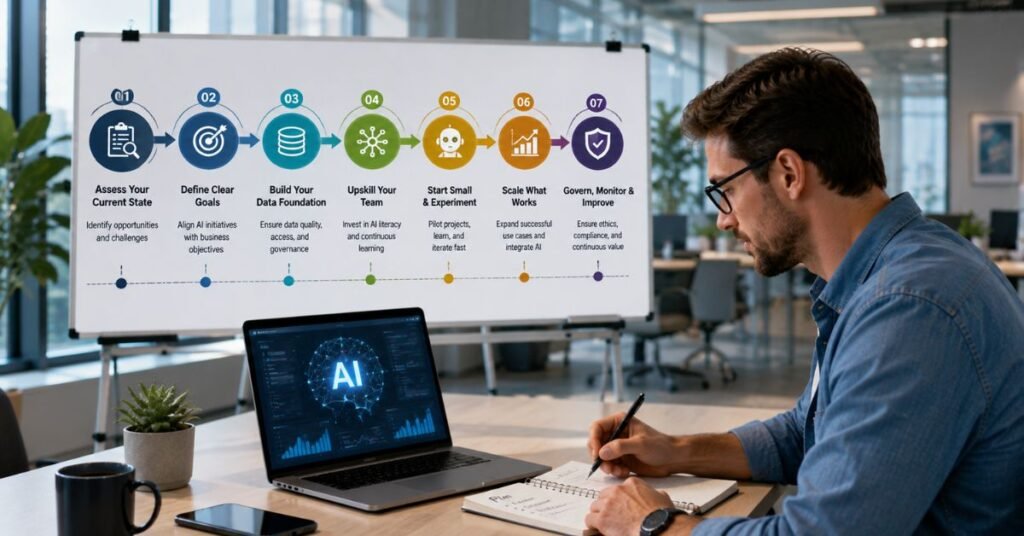
Businesses do not need to adopt every new AI technology immediately.
A smarter approach is to prepare step by step.
Step 1: Identify Repetitive Work
Find tasks that consume time but do not require constant human judgment.
Examples include reporting, document sorting, customer questions, scheduling, and data preparation.
Step 2: Choose One Clear AI Use Case
Start with a measurable problem.
Do not introduce AI simply because competitors are using it.
Step 3: Measure the Baseline
Record how long the current process takes and how often mistakes occur.
This gives you something to compare after AI adoption.
Step 4: Add Human Review
Keep people involved when mistakes could create financial, legal, safety, or customer problems.
Step 5: Improve Security
Control what the AI can access.
Use separate permissions for low-risk and high-risk actions.
Step 6: Test Before Scaling
Run the system on a limited workload first.
Look for errors, unexpected behavior, and weak points.
Step 7: Expand Only When Results Are Clear
If AI improves speed, quality, cost, or customer experience, then expand the workflow.
This approach reduces wasted spending and avoids adopting technology simply because it is popular.
Common Mistakes to Avoid With New AI Technology

The excitement around AI can lead businesses and individuals to make poor decisions.
Mistake 1: Chasing Every New AI Tool
A new model or platform is not automatically useful.
Focus on the problem first.
Mistake 2: Giving AI Too Much Control
An AI agent should not receive broad permissions without strong safeguards.
Mistake 3: Ignoring Data Quality
Poor input data can produce poor results even when the AI model is powerful.
Mistake 4: Assuming AI Responses Are Always Accurate
AI can make mistakes, misunderstand context, or produce convincing but incorrect information.
Human review remains important for important decisions.
Mistake 5: Measuring Activity Instead of Results
The number of AI prompts or generated documents does not prove success.
Measure actual outcomes such as time saved, errors reduced, revenue improved, or customer satisfaction.
Mistake 6: Forgetting Employees
Technology adoption works better when people understand why the change is happening and how their roles will evolve.
What Could Define the Future of AI?

The next phase will probably not be won by the company with the biggest model alone.
The stronger advantage may come from better systems, data, integration, hardware, security, and real world deployment.
Organizations will increasingly ask practical questions:
Will humans be able to understand and correct its decisions?
Can the AI complete a useful task?
Will it work with existing software?
Is there a way to control its permissions?
How can we measure its results?
Can sensitive information be trusted with it?
These questions are more important than simply asking how many parameters a model has.
For users, the same principle applies. Instead of chasing every AI trend, learn how different AI technologies solve real problems.
Author Note
AI is changing quickly, so predictions should always be treated as forward-looking rather than guaranteed outcomes. This article focuses on technology directions that are already showing meaningful development and practical use. The goal is to explain where AI is heading in simple language without presenting every new announcement as a guaranteed breakthrough.
For AI Deep Visions readers, the most useful approach is to watch how these technologies move from demonstrations into reliable everyday applications.
Disclaimer
This article is for general informational and educational purposes only. AI technologies, product capabilities, regulations, pricing, and availability can change quickly. Examples in this article describe possible or developing applications and should not be treated as guarantees of future performance. Businesses should evaluate security, privacy, legal, technical, and financial requirements before deploying AI systems.
Conclusion
The most important upcoming AI tech trends are not simply about making AI generate better answers. The larger shift is toward AI that can understand different types of information, perform multi-step tasks, interact with software, operate physical machines, and work closer to where data is created. Agentic AI, physical AI, multimodal systems, edge computing, smaller models, AI security, and AI-native development are all parts of this wider transition.
The future will also depend on trust. Powerful AI without security, human oversight, reliable data, and clear governance can create serious problems. For businesses and everyday users, the smartest strategy is not to follow every AI headline. It is to understand which technologies solve real problems, test them carefully, and build useful systems around measurable results. That is where the next generation of AI value is most likely to emerge.
FAQs
1. What are the upcoming AI tech trends?
The major trends include agentic AI, physical AI, multimodal systems, smaller AI models, AI-native software development, edge AI, AI security, AI powered scientific research, and stronger AI governance.
2. Will AI agents replace human workers?
AI agents are more likely to automate specific tasks than replace every human role. Their biggest impact may come from handling repetitive workflows while people manage judgment, creativity, relationships, and complex decisions.
3. What is physical AI?
Physical AI refers to AI systems that can understand and respond to the physical world through machines, robots, vehicles, sensors, and other devices.
4. Why is multimodal AI important?
Multimodal AI can work with different types of information such as text, images, audio, and video. This allows AI systems to understand situations more like humans do.
5. Will smaller AI models become more popular?
Yes. Smaller specialized models can offer advantages in speed, cost, privacy, and on device processing. They may become especially useful for smartphones, laptops, vehicles, industrial devices, and edge systems.
6. Why is AI security becoming important?
As AI systems gain access to business data and software tools, security risks increase. Organizations need controls that prevent data leaks, unauthorized actions, prompt attacks, and unsafe agent behavior.
7. How can a business prepare for future AI trends?
Start with one clear business problem, measure the current process, test an AI solution, keep human oversight, strengthen security, and scale only after the system produces measurable results.