


Quick Summary / Snapshot
The Latest Technology Trends in 2026 are moving beyond simple experiments. AI agents are starting to handle multi-step workflows, AI is moving closer to devices and physical machines, cybersecurity is adapting to AI-powered attacks, and robotics is becoming more intelligent.
At the same time, quantum computing, edge computing, advanced cloud infrastructure, sustainable technology, and next generation connectivity are gaining attention.
The biggest lesson is simple: the most important technology is not always the newest one. The technologies that create measurable value, solve real problems, and can operate safely are the ones most likely to matter long term.
This guide explains what is changing, why it matters, where each trend is being used, and what individuals and businesses can do next.
Introduction
The Latest Technology Trends are changing faster than many businesses and consumers can follow. Artificial intelligence is no longer limited to chatbots. AI systems can now support research, coding, analysis, customer service, and other multi-step workflows. At the same time, new computing systems, robotics, cybersecurity methods, and connected devices are changing how digital services work.
But following technology headlines is not enough. A useful technology trend should answer three questions: What problem does it solve? Who is actually using it? And what happens if it does not work as expected?
This guide takes that practical approach. Instead of simply listing popular technologies, we will look at their current role, real world applications, limitations, and the skills or infrastructure needed to benefit from them.
What Are the Latest Technology Trends in 2026?

The Latest Technology Trends in 2026 can be grouped into several connected areas: intelligent software, autonomous systems, advanced computing, cybersecurity, connected infrastructure, and sustainable technology.
One major change is the move from AI that only responds to users toward AI that can complete defined tasks. Another is the movement of intelligence from centralized cloud systems toward devices, machines, factories, vehicles, and other physical environments.
Quantum computing is also receiving more attention, although it remains an early-stage field for most organizations. Cybersecurity is becoming more important because AI can help both attackers and defenders. Meanwhile, edge computing and advanced cloud systems are supporting applications that require fast data processing.
The result is not one single technology replacing everything else. Instead, several technologies are becoming connected.
A Practical Way to Judge a Technology Trend
Before adopting a new technology, ask:
- Does it solve a real problem?
- Is the technology reliable enough for the intended use?
- What skills are required?
- How much infrastructure does it need?
- What security risks could it create?
- Can the results be measured?
This approach helps separate useful innovation from temporary hype.
1. Agentic AI Is Moving From Chatbots to Autonomous Workflows
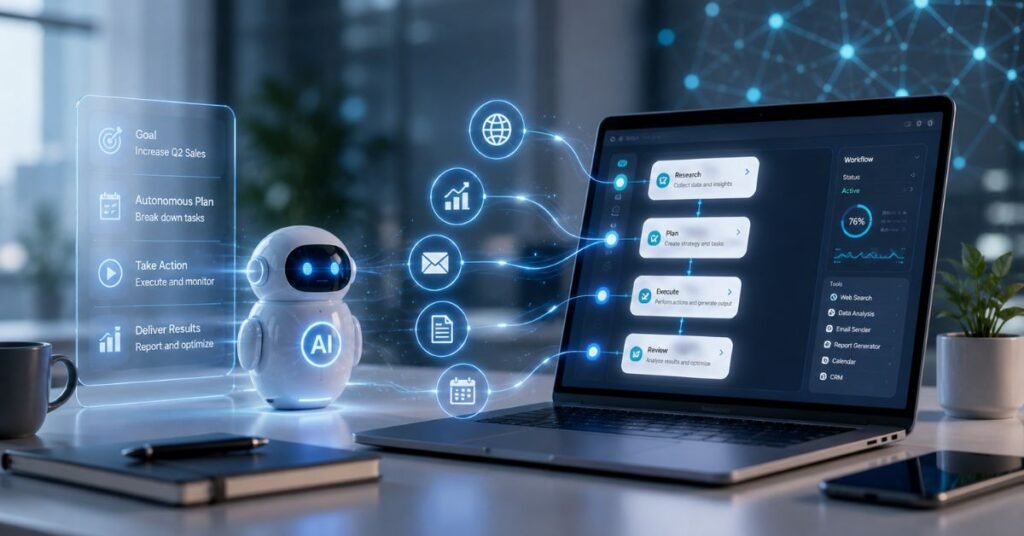
Agentic AI is one of the most important Latest Technology Trends because it changes how people interact with software.
Traditional generative AI usually waits for a prompt and produces an answer. Agentic systems can be designed to break a larger goal into smaller steps, use connected tools, evaluate results, and continue working within defined permissions.
For example, an AI agent could receive a customer support request, check an internal knowledge base, identify the issue, prepare a response, update a support record, and send the case to a human when the situation requires judgment.
Why Agentic AI Matters
The biggest value is not simply faster text generation. It is workflow automation.
Businesses can use agents for:
- Research and information gathering
- Customer support
- Software testing
- Data analysis
- Internal reporting
- IT ticket management
- Sales research
- Document processing
However, autonomy creates new risks. An agent with excessive permissions can make expensive mistakes or access information it should not see.
The Smart Adoption Model
Start with narrow workflows.
Give the agent limited permissions. Log its actions. Add human approval for sensitive decisions. Measure accuracy, completion time, cost, and error rates.
This makes agentic AI easier to control than giving an AI system unlimited access from day one.
2. Physical AI and Smarter Robotics Are Entering the Real World
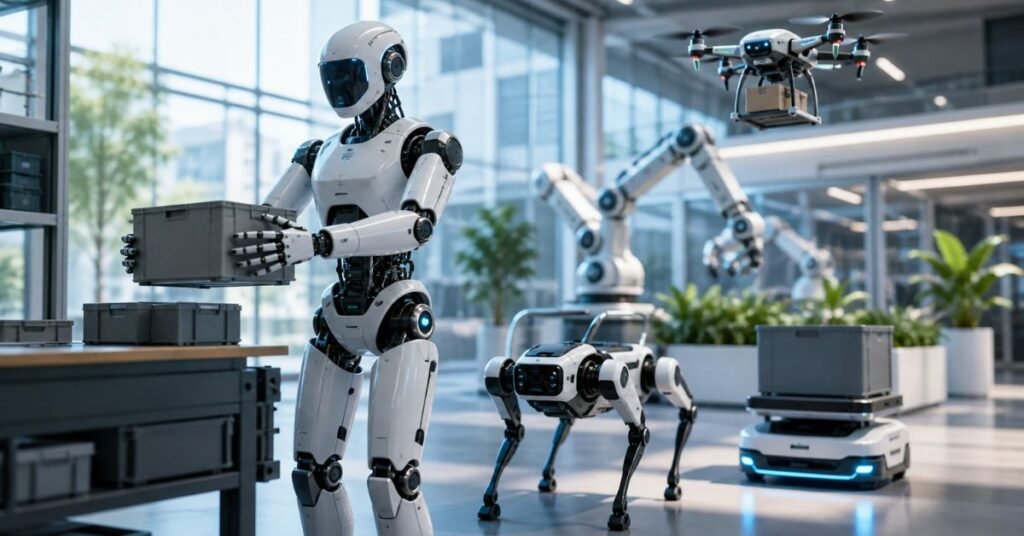
AI is increasingly moving beyond screens.
Physical AI brings AI-powered decision-making into real-world machines, allowing them to understand their surroundings and react to changes in their environment. Robotics is a major part of this shift.
Factories already use robots for repetitive production tasks, while warehouses use automated systems for movement and sorting. Newer systems aim to make robots more flexible so they can handle less predictable environments.
Where Physical AI Can Be Useful
Potential applications include:
Manufacturing: Robots can inspect products, move materials, and support production.
Warehousing: Autonomous machines can transport goods and optimize movement.
Healthcare: Robotics can assist with specific medical and rehabilitation tasks.
Agriculture: Intelligent machines can support crop monitoring and precision operations.
Home and service environments: Robots may eventually perform a wider range of routine physical tasks.
The important point is that physical AI is harder than software AI. A software mistake may produce a bad answer. A physical mistake can damage equipment or create a safety problem.
That means sensors, simulation, safety controls, testing, and human oversight remain essential.
3. AI Infrastructure and Specialized Computing Are Becoming Critical
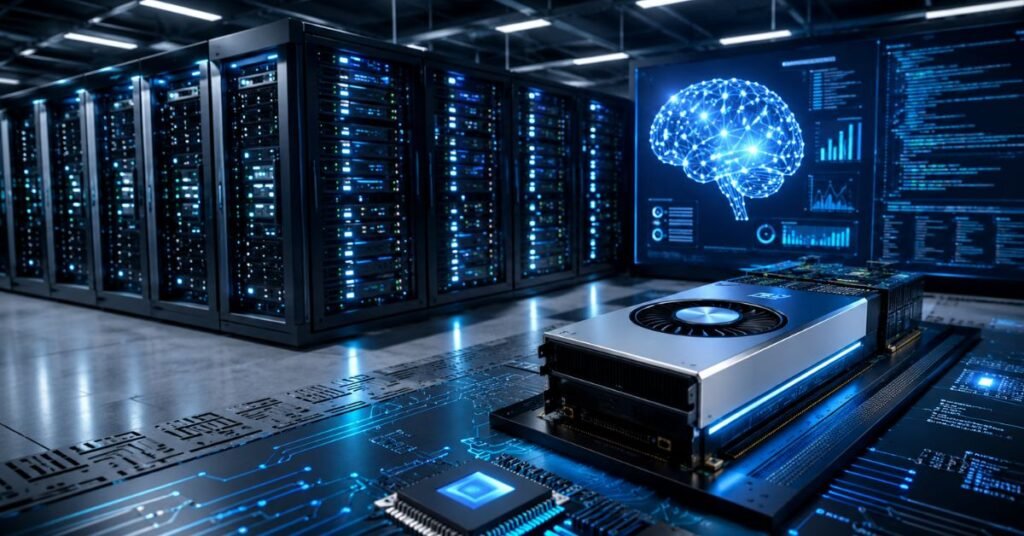
Powerful AI needs powerful infrastructure.
Training and running advanced models requires large amounts of computing power, memory, networking, storage, and energy. This is increasing demand for specialized processors and AI-focused infrastructure.
Cloud platforms remain important, but organizations are also exploring specialized infrastructure designed specifically for AI workloads.
Why AI Infrastructure Matters
AI performance depends on more than the model itself.
A system can be highly capable but still expensive or slow if the infrastructure is poorly designed.
Organizations need to consider:
- Compute requirements
- GPU or accelerator availability
- Data storage
- Network performance
- Cooling
- Electricity consumption
- Model inference costs
- Security controls
This creates an important shift: AI strategy is becoming an infrastructure strategy.
For smaller companies, the practical answer may not be building massive AI infrastructure. Using managed cloud services or optimized models can be more sensible.
4. AI-Powered Cybersecurity Is Becoming a Two Sided Race

Cybersecurity has become one of the most important areas in modern technology because attackers can also use AI.
AI can help defenders analyze large amounts of security data, detect unusual behavior, prioritize alerts, and support incident investigations. At the same time, attackers can use automation to create more convincing phishing attempts and discover weaknesses faster.
The New Security Reality
Organizations cannot treat AI as a separate security issue.
AI applications need:
- Strong authentication
- Access controls
- Data protection
- Activity monitoring
- Human oversight
- Secure APIs
- Regular testing
Agentic AI creates another challenge because an autonomous system may have permission to interact with business tools.
The more actions an AI system can take, the more carefully those permissions should be controlled.
Zero Trust and AI Security
Zero trust thinking is increasingly useful because systems should not automatically trust users, devices, applications, or AI agents.
Every important action should have the right level of verification.
This is especially important when AI systems can access company databases, customer records, financial information, or internal applications.
5. Edge Computing Is Making Technology More Responsive

Cloud computing changed how organizations store and process data. Edge computing takes part of that processing closer to where the data is created.
This can reduce delays and improve performance for applications that need quick responses.
Where Edge Computing Helps
Edge technology can support:
- Smart factories
- Connected vehicles
- Healthcare monitoring
- Smart cities
- Industrial IoT
- Real-time video analysis
- Retail systems
Imagine a factory sensor detecting a dangerous machine condition. Sending the data to a distant cloud server and waiting for a response may not be ideal.
An edge system can process the information closer to the machine and respond faster.
Edge and Cloud Will Work Together
Edge computing does not mean the cloud is disappearing.
A better model is a combination:
Device → Edge Processing → Cloud Platform → Central Analytics
The device collects data. Edge systems handle time-sensitive tasks. Cloud infrastructure supports large-scale storage and deeper analysis.
This hybrid approach can improve speed while keeping centralized systems useful.
6. Quantum Computing Is Moving From Theory Toward Practical Preparation

Quantum computing remains one of the most misunderstood emerging technologies.
It does not simply mean “a faster computer.” Quantum computers use different principles from classical computing and may eventually provide advantages for certain highly complex problems.
Potential areas include optimization, materials research, chemistry, cryptography, and some forms of machine learning.
Why Businesses Should Care Now
Most businesses do not need to buy a quantum computer today.
The more immediate issue is security.
Powerful future quantum systems could threaten some existing encryption methods. That is why organizations are beginning to think about post-quantum cryptography and long-term data protection.
What to Do About Quantum Technology
Businesses can start by identifying sensitive data that must remain protected for many years.
They can also review which encryption systems they currently use and track migration plans for post-quantum security.
Quantum computing may take time to reach broad commercial maturity, but preparation can begin before the hardware becomes mainstream.
7. Sustainable Technology Is Becoming a Technology Requirement

Technology consumes resources.
AI data centers, connected devices, cloud infrastructure, and high-performance computing can require significant electricity and cooling.
As digital workloads grow, efficiency becomes more important.
What Sustainable Technology Looks Like
Sustainable technology can include:
- Energy-efficient hardware
- Smarter data centers
- Renewable energy integration
- Efficient cooling systems
- Carbon-aware computing
- Longer-lasting devices
- Better resource management
- Intelligent energy systems
The goal is not simply to call a product “green.”
Companies should measure real outcomes such as energy consumption, resource use, hardware life, and operational efficiency.
AI and Sustainability Must Develop Together
AI can increase energy demand, but AI can also help optimize energy systems.
For example, intelligent software can help forecast demand, manage workloads, detect equipment problems, and improve resource allocation.
That creates an important relationship between AI and sustainable technology.
8. Advanced Connectivity, IoT, and Smart Systems Are Expanding

Connected devices continue to create large amounts of data.
IoT sensors can monitor machines, buildings, vehicles, health devices, energy systems, and other physical environments.
The next step is not simply connecting more devices. It is making those devices more useful.
From Connected Devices to Intelligent Systems
A basic sensor may only collect temperature data.
A smarter system can:
- Collect the temperature.
- Detecting an unusual pattern.
- Compare it with previous data.
- Predict a possible equipment problem.
- Alert the correct person.
- Trigger an approved action.
This combination of IoT, AI, edge computing, and cloud infrastructure is more powerful than any one technology alone.
9. Spatial Computing and Human Computer Interaction Are Evolving

The way people interact with computers is also changing.
Traditional computing relies heavily on screens, keyboards, and touch interfaces. Spatial computing aims to create more natural interactions between people and digital information.
AR, VR, mixed reality, voice interfaces, computer vision, and AI assistants are contributing to this shift.
Practical Uses of Spatial Technology
Businesses can use immersive technology for:
- Employee training
- Product visualization
- Remote collaboration
- Engineering design
- Education
- Healthcare training
- Retail experiences
The strongest applications are those where spatial interaction solves a problem better than a normal screen.
This is important because new hardware alone does not guarantee adoption.
Latest Technology Trends: Which Ones Matter Most?
Not every technology deserves the same level of attention.
| Technology | 2026 Direction | Main Opportunity | Main Challenge |
| Agentic AI | Rapid growth | Workflow automation | Control and reliability |
| Physical AI | Emerging | Robotics and automation | Safety and cost |
| AI Infrastructure | Strong growth | Faster AI workloads | Energy and expense |
| AI Cybersecurity | High priority | Faster threat detection | AI-powered attacks |
| Edge Computing | Growing | Low-latency processing | Complexity |
| Quantum Computing | Early stage | Advanced computation | Hardware maturity |
| Sustainable Tech | Increasing importance | Efficiency | Measuring real impact |
| IoT | Expanding | Smart systems | Data and security |
| Spatial Computing | Developing | Immersive experiences | Hardware adoption |
The best technology choice depends on the problem.
A company with slow customer support may benefit more from workflow automation than from quantum computing. A factory may gain more from edge computing and robotics. A security-focused organization may need stronger AI governance before adding autonomous agents.
How to Prepare for the Latest Technology Trends
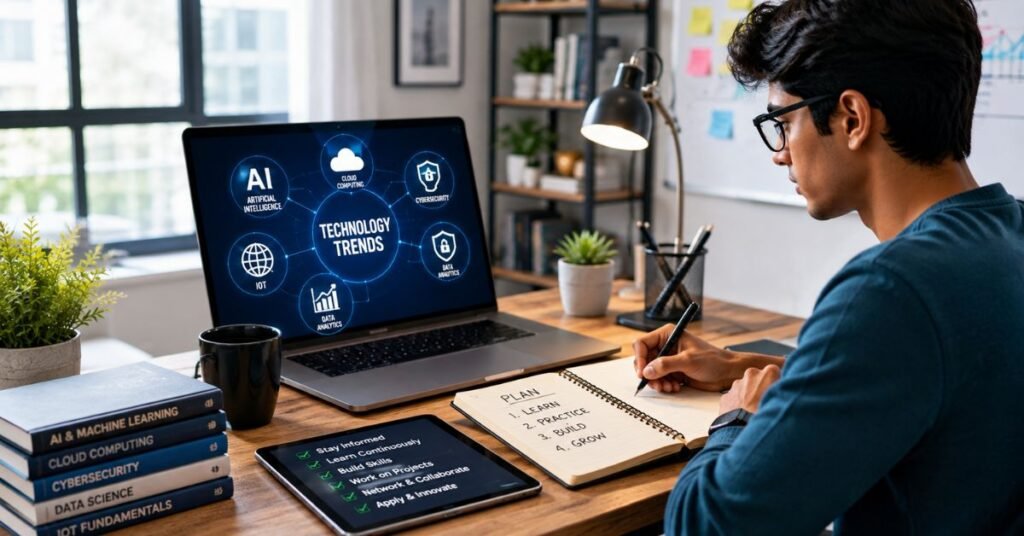
Understanding technology is useful. Knowing how to act on it is better.
Step 1: Identify the Problem
Do not start with technology.
Start with the problem.
Ask what is slow, expensive, repetitive, risky, or difficult to scale.
Step 2: Choose the Technology That Fits
Once the problem is clear, compare possible solutions.
AI may solve one problem. Automation may solve another. Better data infrastructure may be more valuable than a new AI model.
Step 3: Run a Small Pilot
Avoid large investments before testing.
Choose one measurable use case and define success before starting.
For example:
Current process: 5 hours per week
Target: 2 hours per week
Test period: 30 days
Success measure: Time saved + error rate
This gives the project a clear outcome.
Step 4: Measure Results
Track:
- Cost
- Speed
- Accuracy
- Security
- User satisfaction
- Maintenance effort
If the technology does not create measurable value, reconsider the implementation.
Step 5: Scale Carefully
Once the pilot works, expand gradually.
Add stronger security controls, documentation, monitoring, training, and governance before moving into larger workflows.
Real Life Example: A Small Business Adopts AI Automation
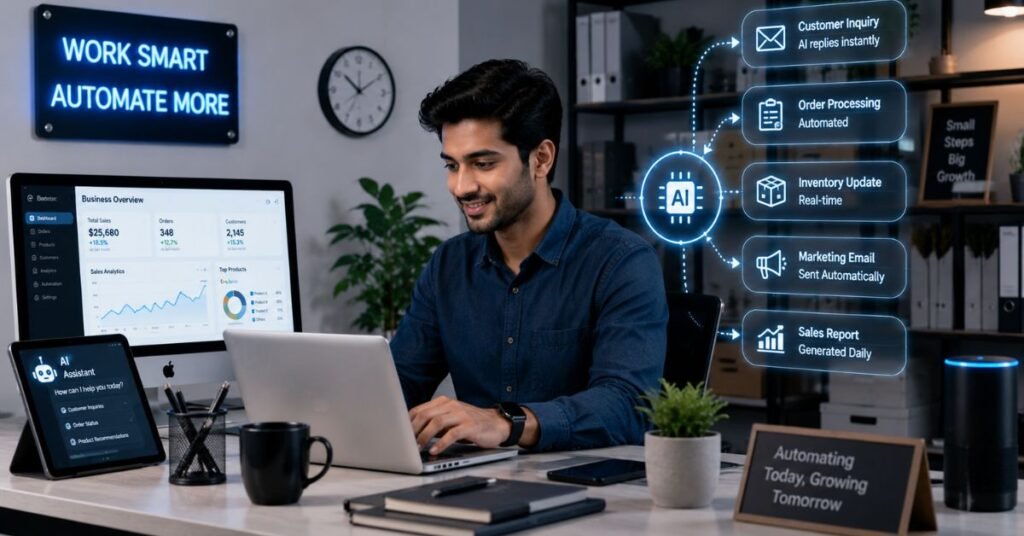
Consider a small online business that receives dozens of customer questions every day.
Initially, one employee answers every message manually.
The company introduces an AI-assisted workflow.
The system first categorizes incoming questions. It then searches approved information, prepares a suggested answer, and sends complex cases to a human.
The company does not give the AI unlimited control.
Instead, it creates rules around what the system can access and what requires human approval.
After testing, the business measures response time, incorrect answers, escalations, and customer satisfaction.
This example shows an important principle: successful technology adoption is not about using the most advanced system. It is about using the right system with the right controls.
Common Mistakes When Following Technology Trends

Technology adoption often fails because businesses focus on hype instead of outcomes.
Mistake 1: Chasing Every New Technology
Not every new tool deserves investment.
Choose technologies that solve a real problem.
Mistake 2: Giving AI Too Much Access
Autonomous systems should not automatically receive unlimited permissions.
Use least-privilege access and approval rules.
Mistake 3: Ignoring Security
A new AI or IoT system can create new attack surfaces.
Security should be included before deployment, not after an incident.
Mistake 4: Measuring Only Speed
Saving time is useful, but accuracy and quality also matter.
A system that works twice as fast but creates expensive errors is not a successful implementation.
Mistake 5: Ignoring People
Technology changes workflows.
Employees need training, clear responsibilities, and a way to report problems.
Author Note
As technology changes quickly, it is easy to confuse headlines with real progress.
A practical technology review should look beyond announcements and ask how a technology performs in real environments.
The approach used in this guide is simple: identify the technology, understand the problem it solves, examine its current maturity, evaluate its risks, and then decide whether it deserves attention.
That method is more useful than following every trend simply because it is popular.
Disclaimer
Technology trends can change quickly. Forecasts about adoption, market growth, commercial availability, and future capabilities are not guarantees.
Some technologies discussed in this guide are mature, while others are still developing. Readers should evaluate current technical requirements, security risks, costs, regulations, and vendor information before making business or investment decisions.
Conclusion
The Latest Technology Trends of 2026 show that technology is moving toward greater intelligence, automation, connectivity, and physical interaction. Agentic AI is changing software workflows, robotics is bringing intelligence into physical environments, and AI infrastructure is becoming a major part of modern computing.
At the same time, cybersecurity, sustainability, edge computing, quantum readiness, IoT, and spatial computing are becoming important parts of the wider technology ecosystem.
The biggest opportunity is not to adopt every trend. It is to understand which technologies solve meaningful problems and implement them responsibly. Businesses and professionals that combine technical skills with security, critical thinking, and continuous learning will be better prepared for what comes next.
FAQs
1. What are the latest technology trends in 2026?
The major trends include agentic AI, physical AI and robotics, AI infrastructure, AI-powered cybersecurity, edge computing, quantum computing, sustainable technology, IoT, and spatial computing.
2. Which technology trend is growing fastest?
Agentic AI is one of the fastest-moving areas because businesses are exploring AI systems that can perform multi-step workflows rather than only generate responses.
3. Is quantum computing ready for everyday business use?
Quantum computing is still an early-stage technology for most businesses. However, organizations can already prepare for its potential impact, especially around post-quantum cybersecurity.
4. Will AI replace human workers?
AI is more likely to change many tasks and workflows than replace every job. Workers who can use AI effectively, check its output, and make decisions where human judgment matters can remain highly valuable.
5. Why is cybersecurity important for new technology?
New technologies create new systems, connections, data flows, and permissions. These can create additional attack surfaces. Strong security helps reduce the risks created by digital transformation.
6. What technology skills should beginners learn in 2026?
Beginners can focus on AI literacy, cybersecurity basics, data analysis, cloud computing, automation, programming fundamentals, and critical thinking. Communication and problem-solving skills also remain important.
7. How can a business start using new technology safely?
Start with one clear problem, choose a small pilot, limit access, define success metrics, test security, train employees, and expand only after the results are proven.