

Quick Takeaway:
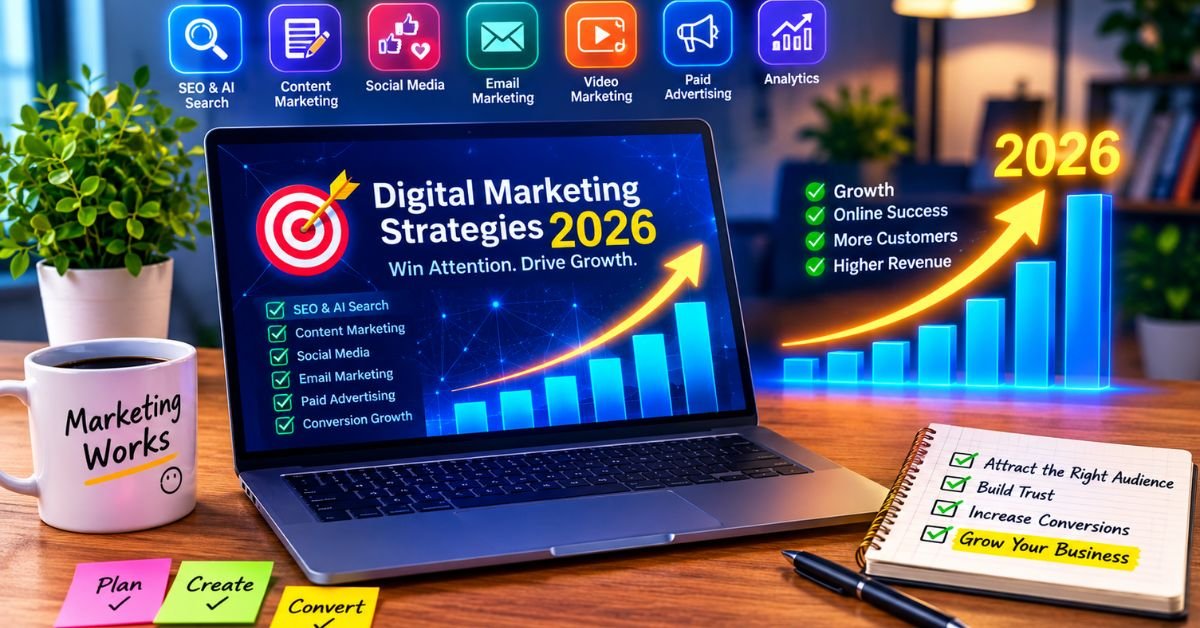
The best digital marketing strategies 2026 are no longer about being active on every platform. They are about being visible where your audience searches, answering real questions, building trust, creating useful content, and measuring what actually moves the business forward.
In 2026, businesses need a connected system rather than random marketing activities. SEO, AI search visibility, content, social media, email, video, paid advertising, automation, and analytics should support the same business goal.
The practical approach is simple:
Understand your audience → choose the right channels → create useful content → build trust → convert visitors → measure results → improve continuously.
Introduction
Digital marketing strategies 2026 are changing because the way people discover, compare, and choose businesses has changed. Customers can find information through search engines, social platforms, videos, online communities, AI tools, reviews, and brand websites before they ever speak to a salesperson.
That means publishing more content is not enough. A business needs a clear reason for every channel, every campaign, and every piece of content.
The strongest strategy combines visibility with trust and conversion. Instead of chasing every new trend, businesses should build a system that attracts the right people, answers their questions, proves expertise, and gives them an easy next step.
This guide shows you how to create the system step by step in a practical and effective way.
What Makes Digital Marketing Strategies Different in 2026?

The biggest change is that customers now have more ways to discover information.
A potential customer might see a short video, search Google, ask an AI assistant, check reviews, visit a website, compare competitors, and then return through an email or social post before making a decision.
This creates a more complex customer journey.
Search Has Evolved Beyond Traditional Rankings
Traditional search visibility still matters, but businesses also need content that can be understood and referenced across modern discovery systems.
This means creating clear answers, original insights, useful comparisons, strong brand information, and content that genuinely solves customer problems.
A page written only to insert keywords may struggle against a page that gives the reader a complete answer.
Trust Has Become a Marketing Asset
Customers have many choices. They can quickly compare brands and check what other people say.
Trust can come from:
- Real customer experiences
- Clear pricing information
- Helpful demonstrations
- Author expertise
- Original research
- Case studies
- Reviews
- Transparent policies
- Consistent brand messaging
The goal is not simply to get attention. The goal is to make the customer comfortable taking the next step.
Start With a Clear Customer and Business Goal
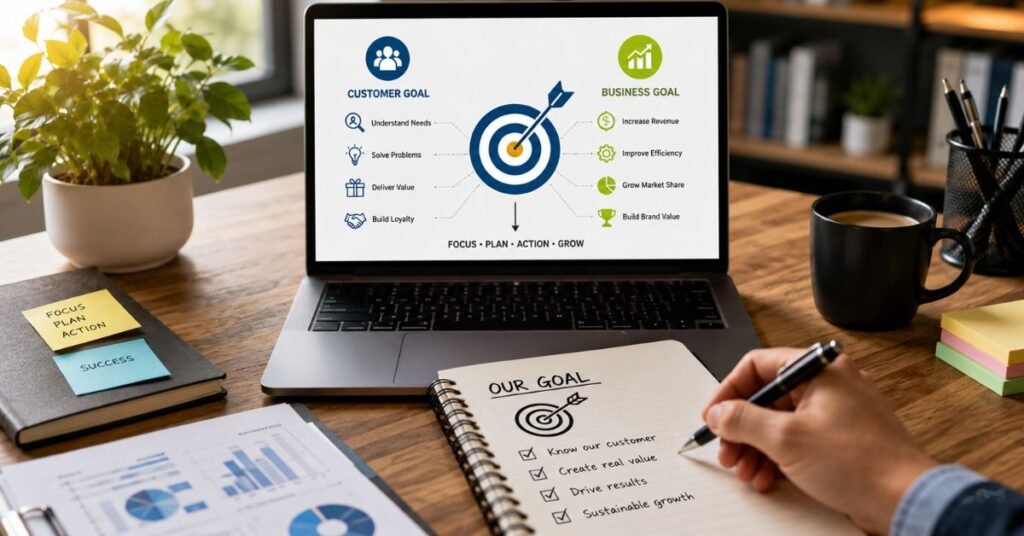
Before choosing a marketing channel, decide what the business actually wants to achieve.
A strategy becomes much easier when the goal is specific.
Define the Business Outcome First
A business may want:
- More qualified leads
- More online sales
- More phone calls
- More appointments
- More product trials
- More repeat customers
- Greater brand awareness
These goals require different approaches.
For example, an online store may focus heavily on product pages, shopping campaigns, email, reviews, and conversion optimization.
A service company may need educational content, local search visibility, case studies, lead forms, and sales follow-up.
Build the Strategy Around the Customer Journey
Think about four stages:
Discover → Consider → Decide → Return
During the consideration stage, explain the differences, benefits, costs, and possible solutions.
When customers reach the decision stage, reduce doubt through proof, reviews, comparisons, and clear calls to action.
After the purchase, email, support content, loyalty campaigns, and useful follow-ups can increase retention.
This customer-journey approach prevents a common problem: creating content that attracts visitors but gives them no reason to become customers.
Build an SEO Strategy for Search and AI Discovery

SEO remains an important part of digital marketing strategies 2026, but the goal should be broader than chasing one Google ranking.
The objective is to make your brand easy to discover and understand.
Create Topic Depth Instead of Isolated Articles
Instead of publishing unrelated posts, build topic clusters.
For example, a digital marketing website could have:
Main topic: Digital Marketing
Supporting topics could include:
- SEO strategy
- Content marketing
- Social media marketing
- Email marketing
- Paid advertising
- Conversion optimization
- Marketing analytics
- AI marketing
- Local marketing
Then connect related pages naturally.
This helps readers find deeper information and gives the website a clearer topical structure.
Optimize for Real Questions
Look at the questions customers ask before buying.
Instead of writing:
“Digital Marketing Services”
you can create useful content around questions such as:
What online promotion method can help a small company attract more customers?
At what point should a website consider investing in paid advertisements?
How does unpaid search visibility compare with advertising through search engines?
“How can a business measure marketing ROI?”
Question-based content often matches real search behavior better than generic promotional pages.
Create Content That Demonstrates Experience
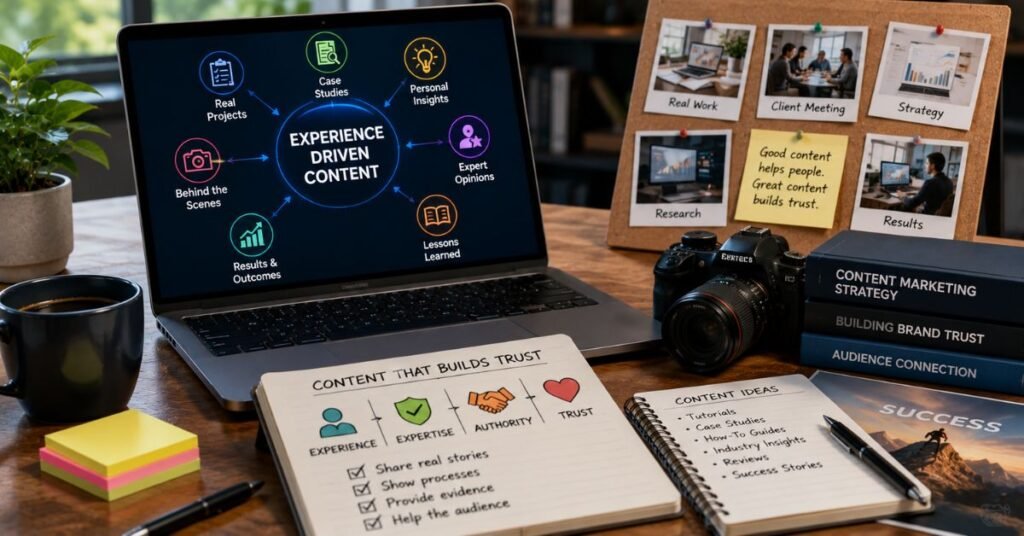
In 2026, generic information is easy to produce.
That makes real experience more valuable.
Use Original Examples
Do not simply explain that email marketing works.
Show how a campaign could work.
For example:
A small online store notices that many visitors view products but leave without purchasing. Instead of immediately increasing ad spending, the business creates a three-email sequence.
The first email answers common product questions.
The second explains product differences.
The third gives a clear reason to return.
The business then measures open rates, clicks, returning visitors, and purchases.
This example demonstrates how strategy connects with action.
Add First Hand Insights
If you have experience working with websites, campaigns, content, SEO, outreach, or analytics, explain what you learned.
Useful first-hand details include:
- What problem appeared
- What was tested
- What changed
- What failed
- What improved
- What should be avoided
This makes content more useful than a generic list of marketing tips.
Make AI Part of the Workflow, Not the Whole Strategy

AI is one of the biggest changes affecting digital marketing strategies 2026.
But using AI does not mean allowing it to run the entire marketing process.
Use AI for Research and Speed
AI can help marketers:
- Generate topic ideas
- Group customer questions
- Summarize large datasets
- Find content gaps
- Create first drafts
- Repurpose content
- Generate ad variations
- Analyze campaign patterns
- Build content outlines
Human review remains important.
The marketer should check accuracy, brand voice, originality, customer value, and business relevance.
Use Human Expertise as the Differentiator
A useful workflow is:
AI research → human judgment → original insight → expert review → publishing → performance analysis
This is stronger than simply generating large amounts of content.
The goal is not to produce more pages.
The goal is to produce better answers.
Use Video and Visual Content to Explain Faster

People often understand demonstrations faster than long explanations.
That makes video an important part of modern digital marketing strategies 2026.
Create Content From One Core Topic
One strong article can become several formats.
For example:
One article
↓
One YouTube video
↓
Three short videos
↓
Five social posts
↓
One email
↓
One infographic
This approach saves time while keeping the message consistent.
Show Instead of Only Telling
Technology businesses can show the product instead of only describing it.
Service businesses can demonstrate how the process works.
Ecommerce brands should demonstrate the product in action.
Educational websites can use diagrams and screen recordings to explain complex ideas.
Visual proof can make an explanation easier to understand and easier to remember.
Build a First Party Audience You Can Reach Directly

Depending entirely on social platforms or paid advertising creates risk.
Algorithms, costs, and visibility can change.
Email lists and other permission-based customer relationships give businesses a more direct communication channel.
Offer a Useful Reason to Subscribe
Do not ask visitors for an email address without explaining the benefit.
You can offer:
- A practical guide
- A checklist
- A template
- A useful report
- A discount
- A free consultation
- A helpful email course
The offer should match the page the visitor is reading.
Segment the Audience
Not every subscriber wants the same information.
A beginner may want educational content.
An existing customer may want product updates.
A previous buyer may respond better to complementary products.
Segmentation makes communication more relevant and can reduce unnecessary messages.
Use Social Media for Distribution, Not Just Posting
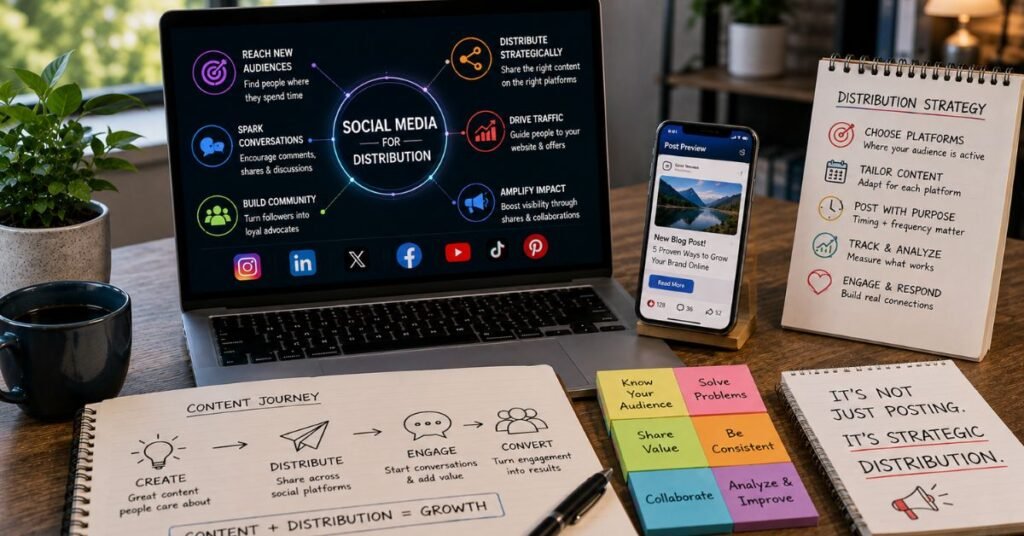
One of the common problems with social media marketing is measuring success by the number of posts.
Posting frequently does not automatically create business growth.
Give Every Post a Job
A social post can:
- Teach something
- Answer a question
- Demonstrate a product
- Build trust
- Start a conversation
- Send visitors to a useful page
- Generate leads
- Support an existing campaign
This creates the purpose behind publishing.
Choose the Online Channels Where Your Target Customers Spend Time
A B2B software company may gain more from LinkedIn and educational video than from spending equal effort on every social network.
A visual consumer brand may have stronger opportunities on image and short-video platforms.
The right platform is the one where your audience spends attention and where your business can consistently create useful content.
Improve Conversion Before Increasing Traffic
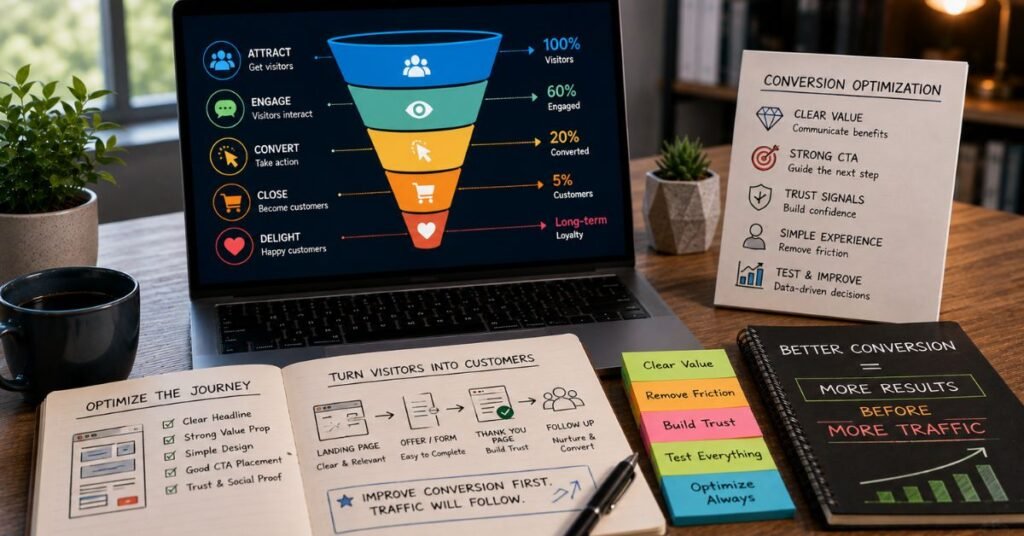
A higher number of visitors does not necessarily lead to greater earnings.
This is one of the most important lessons in digital marketing strategies 2026.
Suppose a website receives 10,000 monthly visitors but only 50 become leads.
Before spending more money to reach 20,000 visitors, investigate why existing visitors are not converting.
Check the Conversion Path
Look at:
- Page speed
- Mobile experience
- Headline clarity
- Offer relevance
- Trust signals
- Forms
- Calls to action
- Pricing information
- Product information
- Checkout process
A visitor should quickly understand:
What is this?
Why should I care?
Why should I trust you?
What should I do next?
If those answers are unclear, additional traffic may simply increase the number of people who leave.
Use Paid Advertising With a Clear Testing System
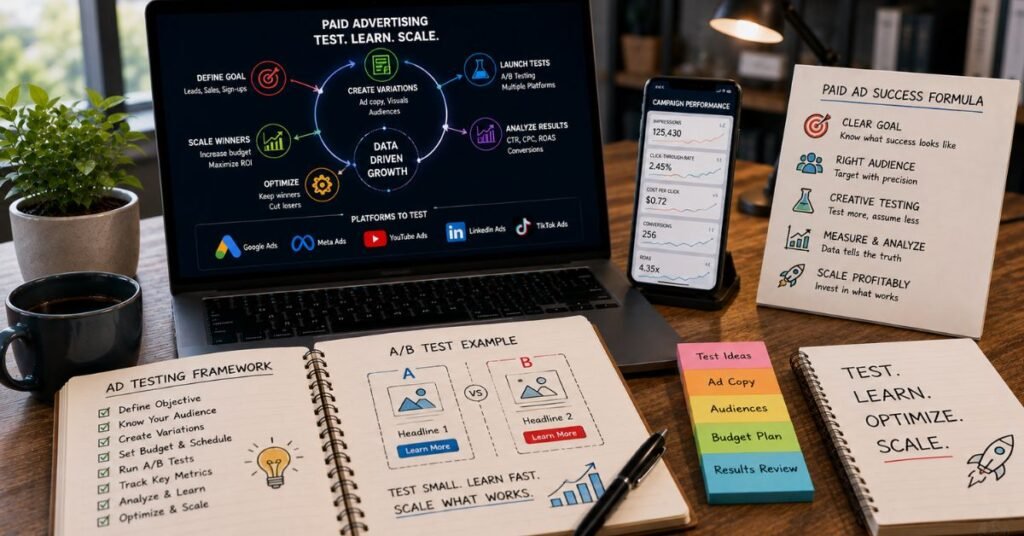
Paid advertising can produce fast visibility, but it can also waste money without proper tracking.
Test One Important Variable at a Time
You can test:
- Audience
- Headline
- Creative
- Offer
- Landing page
- Call to action
Do not change everything simultaneously if you want to understand what caused the result.
Track Business Metrics
A stronger measurement system can include:
| Marketing Area | Useful Metrics | Business Question |
| SEO | Organic clicks, rankings, conversions | Are we attracting valuable search traffic? |
| Content | Engagement, assisted conversions | Does content help people make decisions? |
| Social | Reach, engagement, referrals | Are we building useful attention? |
| Clicks, conversions, revenue | Does our audience respond? | |
| Paid Ads | CPA, ROAS, conversions | Is advertising profitable? |
| Website | Conversion rate, leads, sales | Does traffic turn into action? |
| Retention | Repeat purchases, customer value | Are customers returning? |
The most useful metric is usually connected to the business goal.
Build a Simple 90-Day Digital Marketing Plan
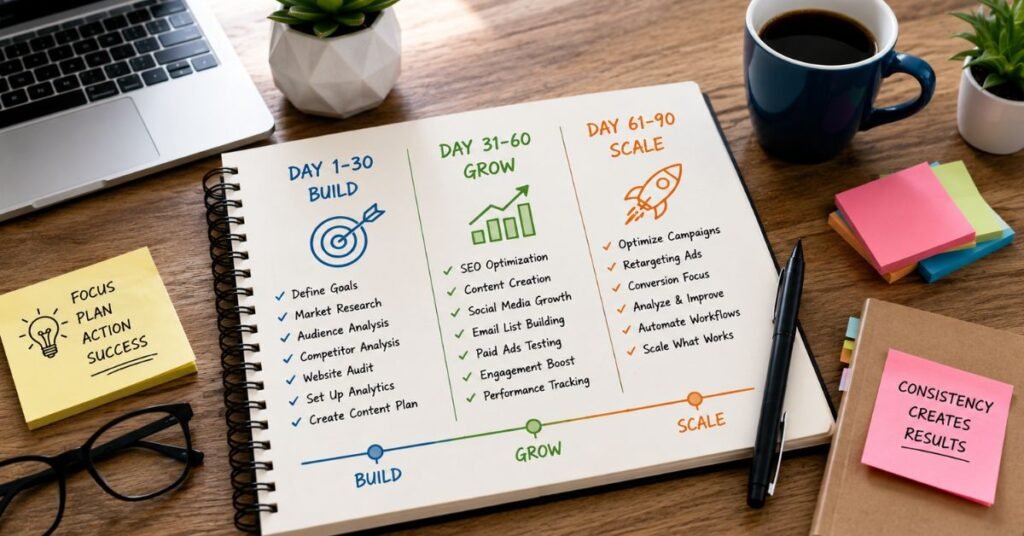
A practical strategy should lead to action.
Days 1–30: Build the Foundation
Start with:
- Define your ideal customer
- Set one main business goal
- Review competitors
- Audit your website
- Find important customer questions
- Identify existing content gaps
- Set up analytics and conversion tracking
- Select your primary marketing channels
Do not try to fix everything at once.
Days 31–60: Publish and Test
Now create:
- Core website pages
- Helpful SEO content
- Short-form content
- Email campaigns
- Video content
- Lead magnets
- Conversion-focused landing pages
Start testing different messages and formats.
Days 61–90: Measure and Improve
Review:
- Which pages attract qualified visitors?
- Which content generates leads?
- Which campaigns produce sales?
- Which channels waste resources?
- Which topics receive strong engagement?
- Where do users leave?
Then invest more in what works.
This creates a continuous improvement cycle instead of a one-time marketing campaign.
Measure What Actually Matters
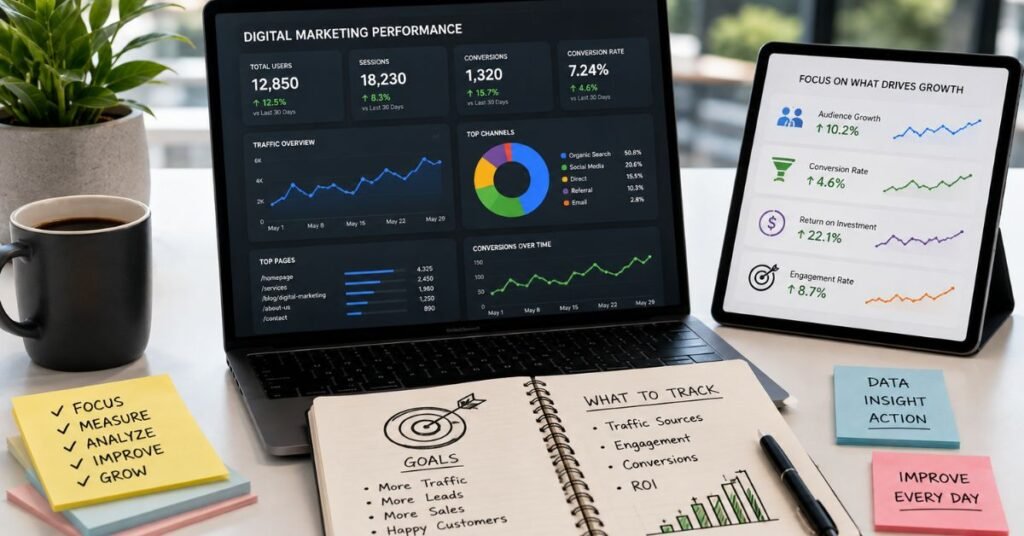
A major mistake is collecting dozens of metrics without knowing what they mean.
Connect Marketing Metrics to Business Results
For example:
Visitors → Prospects → Qualified Prospects → Buyers → Business Growth
This creates a clearer view of performance.
This creates a clearer view of performance.
When traffic increases but leads remain flat, the problem may be conversion.
A rise in leads without more sales can point to lead quality, offer positioning, or sales follow up issues.
If sales increase but profit does not, acquisition costs may need attention.
Create a Monthly Marketing Review
Once a month, ask:
- What produced the best result?
- What consumed time without producing value?
- Which audience responded best?
- Which content brought qualified visitors?
- Which conversion point needs improvement?
- What should we stop doing?
- What should we test next?
This turns analytics into decisions.
Common Mistakes That Can Weaken Your Strategy
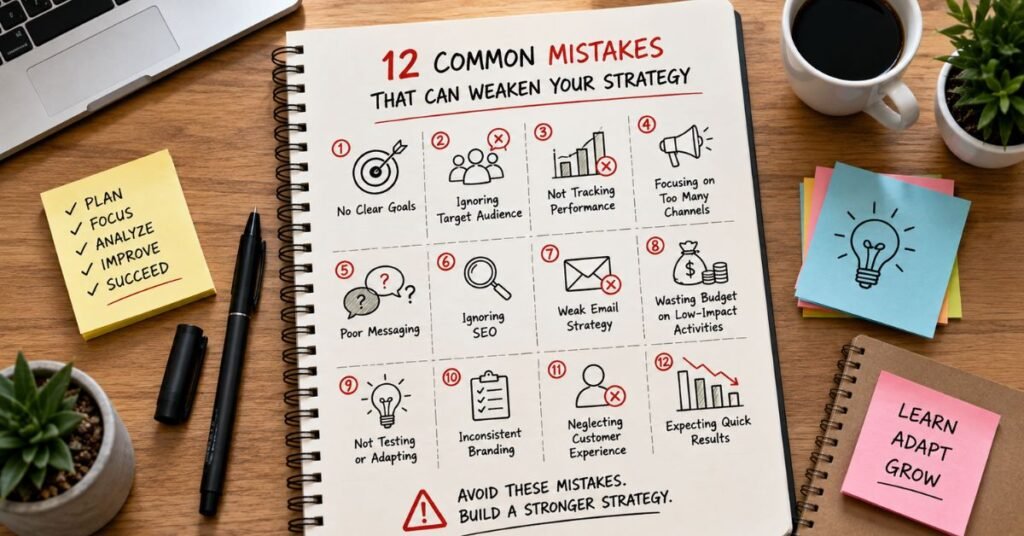
Even good digital marketing strategies 2026 can fail when execution becomes unfocused.
Trying Every Platform
Being everywhere can spread a small team too thin.
Choose channels based on audience, resources, and business goals.
Publishing AI Content Without Editing
AI can increase speed, but unedited content can feel generic.
Add original examples, expert opinions, useful data, and real business context.
Chasing Traffic Instead of Customers
High traffic means little if visitors never become leads or buyers.
Always connect traffic metrics with conversions.
Ignoring Existing Customers
Acquiring a new customer can require more effort than keeping an existing one.
Use email, helpful content, support, loyalty campaigns, and follow-up communication.
Changing Strategy Too Quickly
A campaign may need time to generate enough information.
Do not abandon every strategy after a few days simply because early numbers are weak.
Using the Same Message Everywhere
A website visitor, email subscriber, social follower, and existing customer may have different needs.
Adapt the message while keeping the core brand promise consistent.
Real-Life Example: A Small Business Growth Scenario

Imagine a small software company selling a project-management tool.
The company initially posts random social updates and runs occasional ads.
Traffic comes in, but few visitors sign up.
The company changes its approach.
First, it defines its audience as small teams struggling with task management.
Next, it creates useful content around project planning, team productivity, task tracking, and workflow problems.
It adds comparison pages, product demonstrations, customer questions, and short educational videos.
The website also receives clearer calls to action.
Instead of sending every visitor to the same sales page, different content leads visitors toward relevant demonstrations or trial pages.
The company then tracks:
Content → Website Visit → Trial → Activation → Paid Customer
The important lesson is not that one specific channel magically produces growth.
The lesson is that every marketing activity now supports the same customer journey.
That is the difference between random promotion and a real strategy.
A Practical Digital Marketing Framework for 2026

If you want a simple system to remember, use this framework:
R — Research
Understand customers, competitors, search behavior, pain points, and market changes.
A — Attract
Use SEO, content, social media, video, communities, and paid campaigns to reach relevant audiences.
T — Trust
Use expertise, demonstrations, reviews, case studies, transparent information, and useful content.
E — Engage
Use email, social interaction, personalized content, and helpful follow-ups.
C — Convert
Improve landing pages, offers, calls to action, forms, checkout, and sales processes.
H — Hold
Retain customers through support, education, loyalty, communication, and repeat-value offers.
This creates a full funnel approach instead of focusing only on traffic.
Author Note
A strong marketing strategy should never be built around trends alone.
AI, short-form video, search features, social platforms, and advertising systems will continue to change. The businesses that remain strong are the ones that understand their customers, create useful experiences, measure results, and adapt without losing their core message.
Use new tools to improve your workflow, but keep human judgment at the center of important marketing decisions.
Disclaimer
This content is intended to offer readers useful insights and practical knowledge.Digital marketing results can vary based on industry, audience, competition, budget, website quality, offer, market conditions, and execution. The strategies discussed here should be adapted to the specific goals and circumstances of each business.
Conclusion
The strongest digital marketing strategies 2026 are built around a simple idea: help the right people find you, understand you, trust you, and take action. SEO, AI, content, social media, email, video, advertising, and analytics are not separate islands. They work best when they support one connected customer journey.
Do not chase every new marketing trend. Build a clear foundation, publish useful content, test your ideas, track meaningful business results, and improve what works. When marketing becomes a measurable system instead of a collection of random activities, businesses can make better decisions and build more sustainable growth.
FAQs About Digital Marketing Strategies 2026
1.Which digital marketing approaches are delivering the strongest results in 2026?
The strongest approaches include SEO, AI search visibility, useful content, video marketing, email marketing, social media, paid advertising, conversion optimization, first-party data, personalization, and performance measurement. The best combination varies according to your target audience, business objectives, and marketing needs.
2. Is SEO still important in 2026?
Yes. SEO remains important, but businesses should think beyond traditional rankings. Helpful content, strong website structure, topical authority, user experience, brand trust, and visibility across changing search experiences all matter.
3. How can small businesses use digital marketing with a limited budget?
Small businesses can begin with customer research, local or niche SEO, useful educational content, email collection, organic social distribution, and conversion improvements. It is usually better to execute a few channels well than spread a small budget across many platforms.
4. How does AI affect digital marketing in 2026?
AI can support research, content production, personalization, analysis, automation, customer service, and campaign testing. However, human review remains important for accuracy, originality, brand voice, trust, and strategic decisions.
5. What should a digital marketing strategy include?
A complete strategy should include a target audience, business goals, customer journey, channel selection, content plan, SEO approach, conversion system, measurement framework, budget, testing process, and regular optimization.
6. How long does it take to see digital marketing results?
The timeline depends on the channel. Paid campaigns can generate data quickly, while SEO and content usually require more time to build visibility and authority. Consistent measurement helps identify early signals and determine whether a strategy needs adjustment.
7. What is the biggest digital marketing mistake businesses make?
One of the biggest mistakes is focusing on activity instead of outcomes. Publishing more posts, receiving more clicks, or gaining followers does not automatically mean business growth. Marketing should ultimately connect attention with leads, customers, revenue, or another meaningful business objective.