

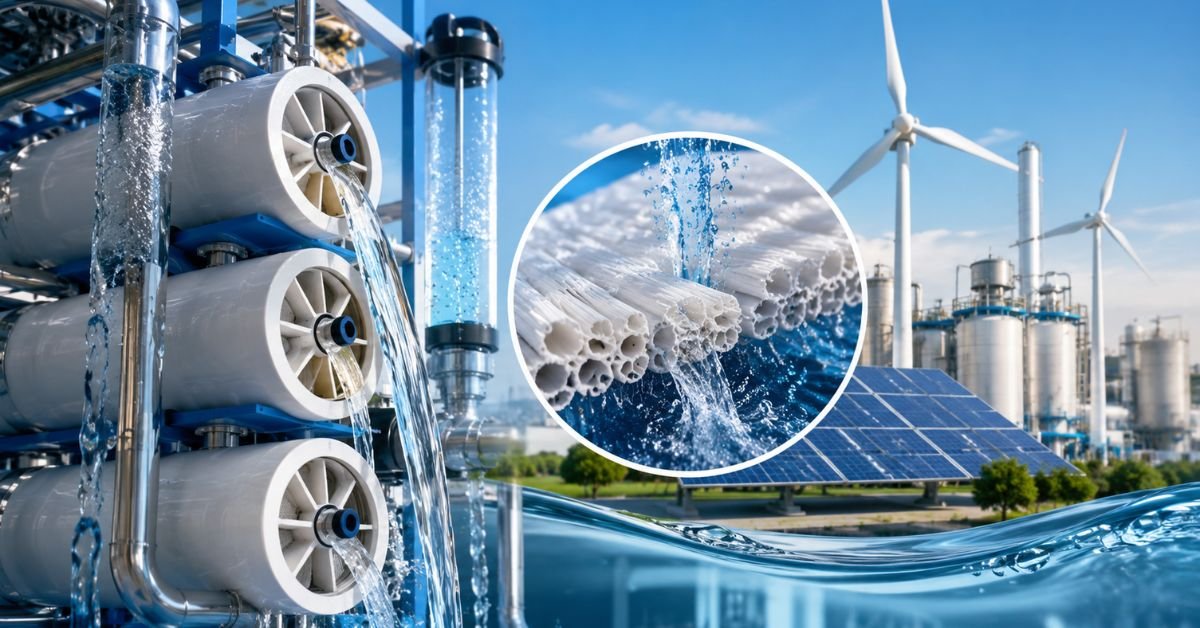
Quick Takeaway
Membrane technology news today is no longer limited to basic water filtration. In 2026, membrane research is moving toward smarter materials, lower-energy separation, better fouling control, cleaner desalination, wastewater reuse, and industrial recycling.
The biggest change is simple: researchers are not only trying to make membranes filter better. They are trying to make them last longer, use less energy, separate specific molecules more accurately, and work in difficult real world conditions.
This guide explains the latest direction of membrane technology in simple language. You will learn what is changing, why it matters, where membranes are being used, which innovations deserve attention, and what could happen next.
Introduction
Membrane technology news today shows how filtration is becoming a much broader technology for modern industry. A membrane acts as a selective barrier. Depending on its design, it can allow water, gases, ions, or certain molecules to pass while holding back unwanted materials. This basic idea supports applications ranging from drinking-water treatment to industrial separation and chemical processing.
The important development in 2026 is the push toward more selective and efficient membranes. Researchers are exploring advanced polymers, nanomaterials, mixed matrix structures, bio based materials, and highly controlled pores. At the same time, companies and research groups are working on practical problems such as membrane fouling, cleaning, durability, energy use, and large-scale manufacturing.
What Is Membrane Technology and Why Does It Matter?
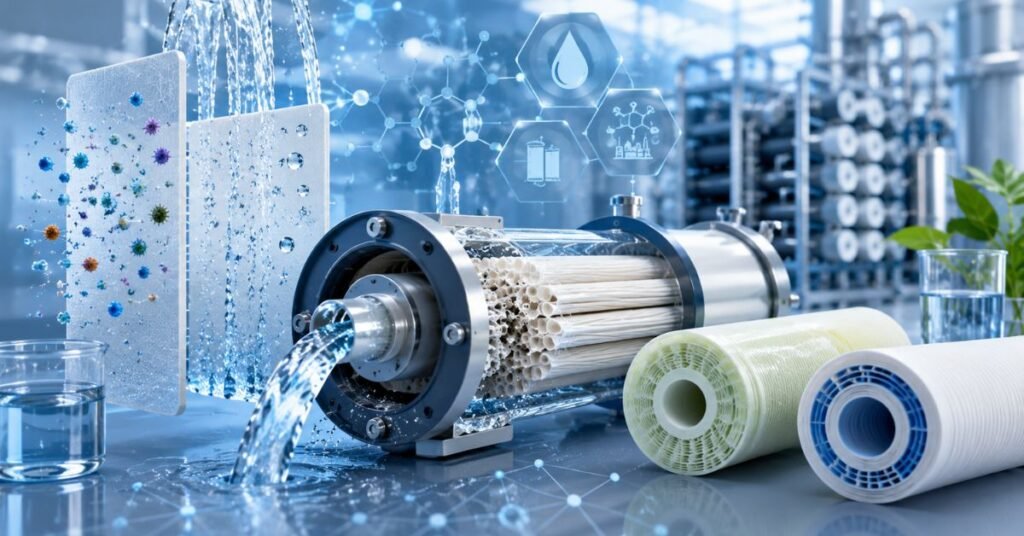
Membrane technology uses a thin material to separate substances based on properties such as size, charge, pressure, chemical interaction, or phase.
Instead of boiling a liquid or using a large chemical treatment process, a membrane can perform separation through a controlled barrier.
How a membrane works
A typical membrane system has three basic parts:
- Feed: The water, gas, or liquid that needs treatment.
- Membrane: The selective barrier that separates different components.
- Permeate and concentrate: The material that passes through and the material that remains behind.
The exact process changes according to the membrane type.
For example, reverse osmosis uses pressure to push water through a selective membrane while retaining many dissolved salts. Nanofiltration can provide more selective separation for certain ions and organic compounds. Ultrafiltration and microfiltration generally focus on larger particles, suspended solids, microorganisms, or other contaminants.
This flexibility explains why membrane technology is important across many industries.
Why 2026 is an important year
The current direction is moving away from simply asking, “Can the membrane remove the contaminant?”
Researchers increasingly ask:
- How much energy does it need?
- How long will it remain stable?
- Does it resist fouling?
- Can it be manufactured at scale?
- Can the material be recycled?
- Can it recover useful resources instead of creating waste?
That shift is making membrane engineering more practical and sustainability-focused.
Membrane Technology News Today: The Biggest Developments to Watch
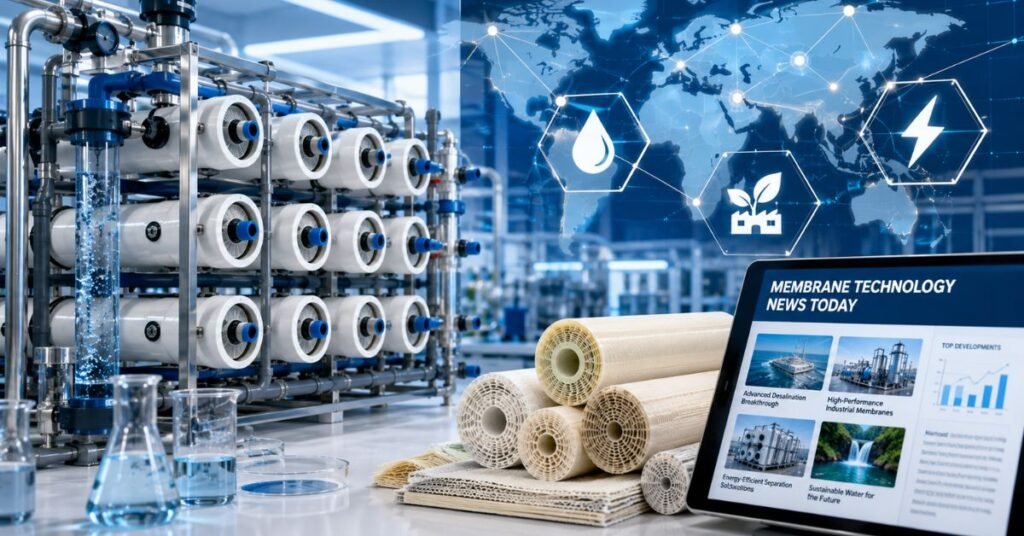
The most interesting developments in 2026 are not centered on one single invention. Instead, several research directions are progressing at the same time.
1. Advanced membranes for desalination
Desalination remains one of the most important areas for membrane innovation.
Reverse osmosis is already widely used, but researchers continue to work on improving salt rejection, water flow, energy efficiency, and resistance to fouling.
Recent research is also examining nanofiltration as a strategic part of desalination systems. Instead of treating every separation problem with one membrane, future systems may combine different membrane stages to achieve better results.
This approach could make desalination more flexible because different membranes can perform different jobs.
2. New nanoporous membrane structures
Another major development is greater control over membrane pores.
A membrane with highly controlled pores can potentially separate molecules with much greater precision. Research into crystalline nanopore structures has attracted attention because traditional polymer membranes can face limitations in selectivity and long term stability.
The goal is not simply to create smaller pores. The real goal is to create predictable transport pathways that allow useful molecules through while blocking unwanted ones.
3. Better resistance to membrane fouling
Fouling is one of the biggest practical problems in membrane systems.
During operation, unwanted materials can collect on the membrane surface or inside its pores. This can reduce water flow and increase operating costs.
Current research is therefore paying more attention to fouling models, monitoring, surface modification, and anti fouling membrane structures. Recent membrane research includes work on pore adsorption and real time biofouling monitoring.Stay updated with Membrane technology news today for the latest breakthroughs in water treatment and desalination.
A membrane may deliver strong results at first, but frequent clogging can make it impractical for long term commercial use.
That is why long term performance matters as much as laboratory performance.
How New Membranes Could Make Water Treatment More Efficient
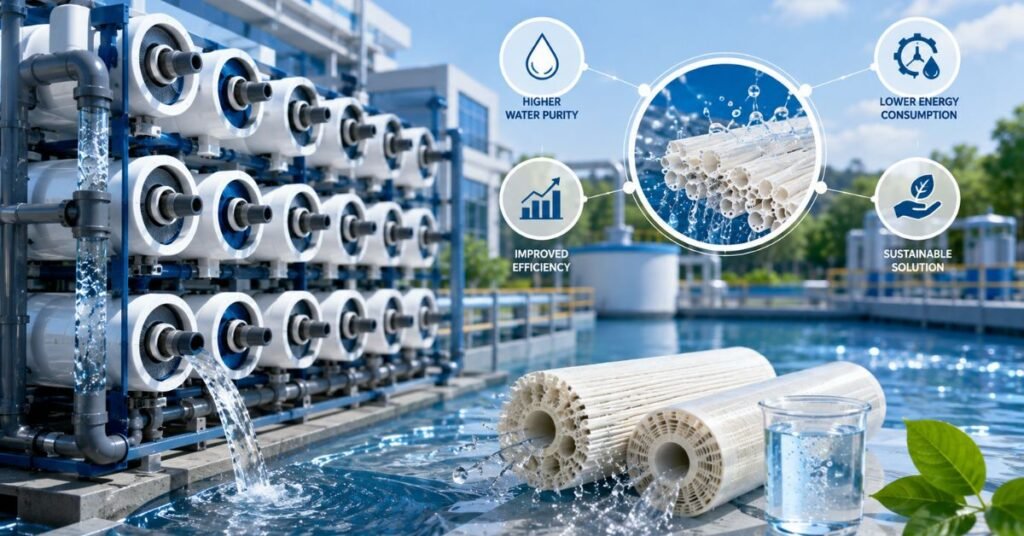
Water treatment is one of the clearest areas where membrane innovation can create real world value.
Municipal wastewater contains organic matter, nutrients, salts, microorganisms, and many other substances. Removing these materials can require several treatment stages.
Advanced membranes can provide a more controlled separation process.
Wastewater reuse is becoming more important
Water scarcity is increasing interest in wastewater recycling.
Instead of treating wastewater as something that must simply be discarded, modern systems can treat it as a potential source of reusable water.
Recent research into advanced membrane bioreactor systems is exploring new configurations for biological wastewater treatment, including microalgae based systems and gas permeable membrane processes. Researchers are also studying scale up and commercialization challenges.
This matters because a successful membrane system must work outside the laboratory.
It needs reliable operation, manageable maintenance, acceptable energy use, and a realistic path to commercial deployment.
Turning waste into useful membrane materials
One particularly interesting direction is the use of waste-derived materials.
A 2026 study reported a membrane approach using microalgae derived biochar for municipal wastewater treatment. This connects two environmental goals: waste valorization and water purification.
The concept is important because future membrane technology may increasingly focus on where materials come from as well as what they can do.
Membrane Technology News Today and the Push Toward Low-Energy Desalination
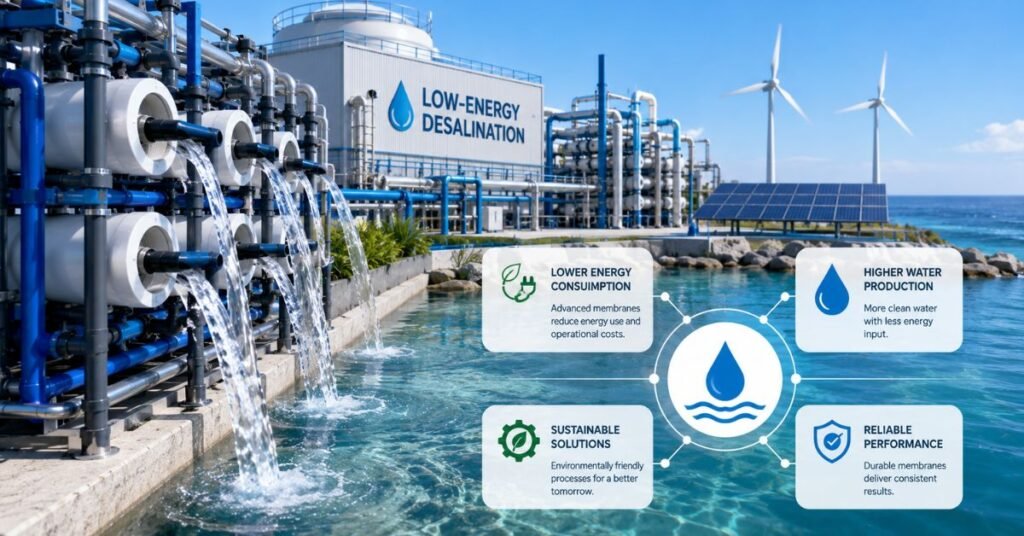
Energy consumption remains a major concern in desalination.
Membrane systems can be more energy-efficient than many thermal separation methods, but pressure, pretreatment, fouling, and brine management still affect the overall system.
New research is therefore looking at ways to improve the membrane itself and the complete treatment process.
Membranes that work under easier operating conditions
Researchers at KAUST reported a polymer membrane designed for desalination that operates at ambient temperature and pressure while targeting high salt rejection and lower energy demand. The technology was being evaluated at pilot scale, which is important because pilot testing provides a stronger indication of practical potential than laboratory testing alone.
This illustrates an important trend.
The future of membrane technology will not be decided only by the highest laboratory rejection rate. Technologies will need to demonstrate that they can operate reliably, economically, and at a meaningful scale.
A Stronger Role for Membranes in Industrial Recycling
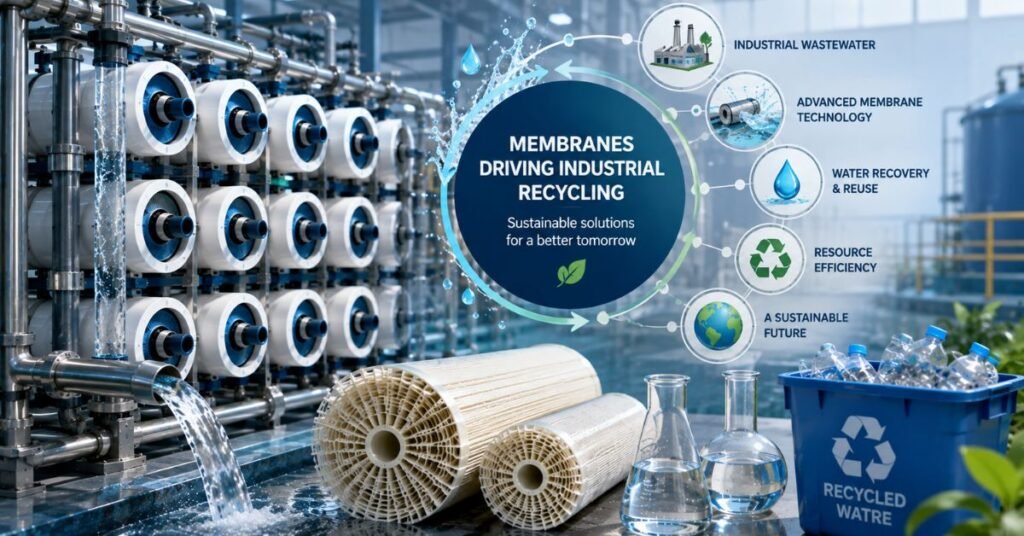
Membrane technology is also moving beyond traditional water treatment.
One notable 2026 development involves plastic recycling.
Researchers at Monash Engineering, working with CSIRO and the University of Texas at Austin, developed a nanocomposite membrane approach that can help separate water from ethylene glycol during PET chemical recycling. The purpose is to recover useful chemicals more efficiently instead of losing them during processing.
This is an important change in how membrane technology should be understood.
A membrane does not have to be used only for cleaning dirty water.
It can also help industries:
- Recover valuable chemicals
- Reduce process waste
- Improve material reuse
- Lower separation energy
- Support circular manufacturing
This creates opportunities for membrane systems in chemical processing, food production, pharmaceuticals, recycling, and resource recovery.
Comparing the Main Membrane Technologies
| Membrane Type | Main Purpose | Typical Separation Focus | Key Strength | Common Challenge |
| Microfiltration | Particle removal | Suspended solids and larger particles | Simple physical separation | Smaller contaminants can pass |
| Ultrafiltration | Fine filtration | Colloids, proteins, microorganisms | Strong water treatment option | Fouling |
| Nanofiltration | Selective separation | Divalent ions and small organic compounds | More selective than UF | Feed conditions affect performance |
| Reverse Osmosis | Desalination | Dissolved salts and many contaminants | High purification | Pressure and energy demand |
| Membrane Bioreactor | Wastewater treatment | Biological solids and treated water | Compact treatment system | Fouling and operating complexity |
| Membrane Distillation | Thermal membrane separation | Water vapor from saline streams | Useful for concentrated brines | Heat and membrane wetting |
| Gas Separation Membrane | Gas purification | Selected gases | Compact separation | Selectivity and durability |
The best membrane is therefore not automatically the one with the smallest pore size or highest rejection.
The right choice depends on the feed, target contaminant, operating pressure, temperature, required purity, maintenance plan, and total system cost.
Step by Step: How to Evaluate a New Membrane Technology
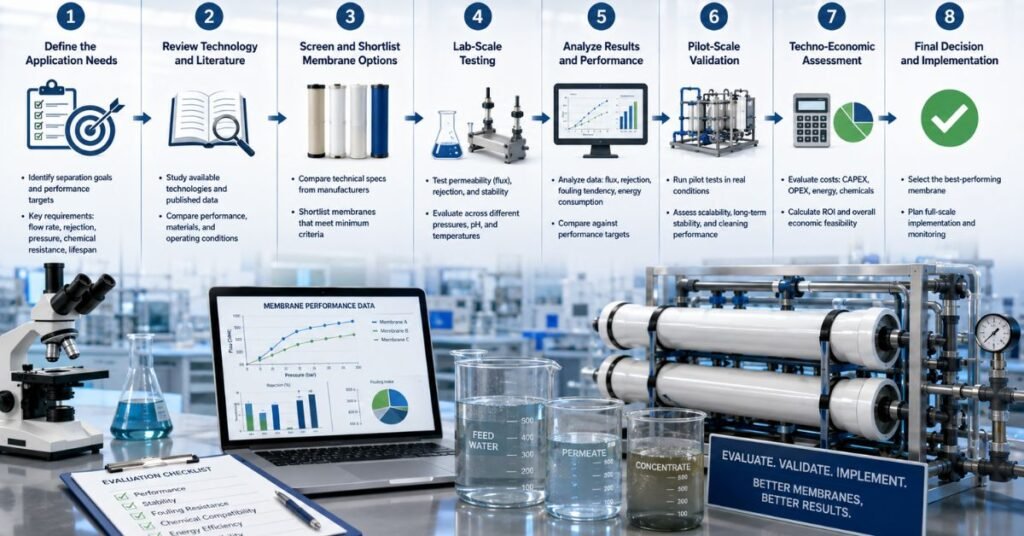
When you see a new membrane breakthrough in the news, do not judge it only by the headline.
Use this simple evaluation method.
Step 1: Identify the problem
First ask what problem the membrane is solving.
Is it desalination?
Wastewater?
Gas separation?
Chemical recovery?
Plastic recycling?
A membrane designed for one application may not be useful for another.
Step 2: Check what passes through
Look at the membrane’s selectivity.
A strong membrane should separate the target material without unnecessarily blocking useful flow.
Step 3: Look at permeability
Permeability tells you how efficiently the desired material can move through the membrane.
High selectivity with extremely low permeability may not be practical.
Step 4: Check fouling resistance
Ask how the membrane behaves after extended use.
Short laboratory tests do not always represent real industrial conditions.
Step 5: Look for scale up evidence
A membrane may work in a small laboratory sample but become difficult or expensive to manufacture at industrial scale.
Pilot projects are therefore important evidence.
Step 6: Consider the complete system
The membrane is only one part of a treatment system.
Pretreatment, pumps, cleaning, replacement, concentrate handling, monitoring, and energy use all influence the final result.
Real Life Example: Why Membrane Performance Is More Than a Laboratory Number
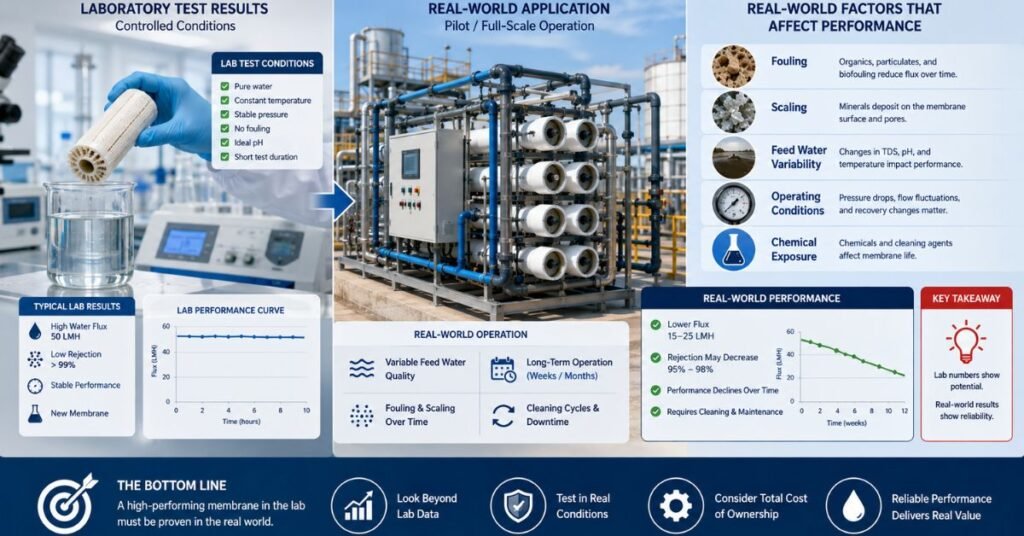
Imagine a factory wants to reuse wastewater.
A research team presents a new membrane that achieves excellent contaminant rejection in a laboratory.
At first, the technology looks perfect.
But the factory’s wastewater contains oils, suspended solids, changing pH levels, and organic material.
After several days, the membrane begins to foul.
Water flow falls.
Cleaning becomes more frequent.
Operating costs rise.
Now compare that with another membrane that has slightly lower rejection but remains stable for much longer and requires less cleaning.
The second membrane may provide greater value to the factory.
This example highlights an important lesson from current membrane research: real world performance requires a balance between selectivity, permeability, durability, fouling resistance, energy use, and cost.
What Could Be the Next Big Direction in Membrane Technology?
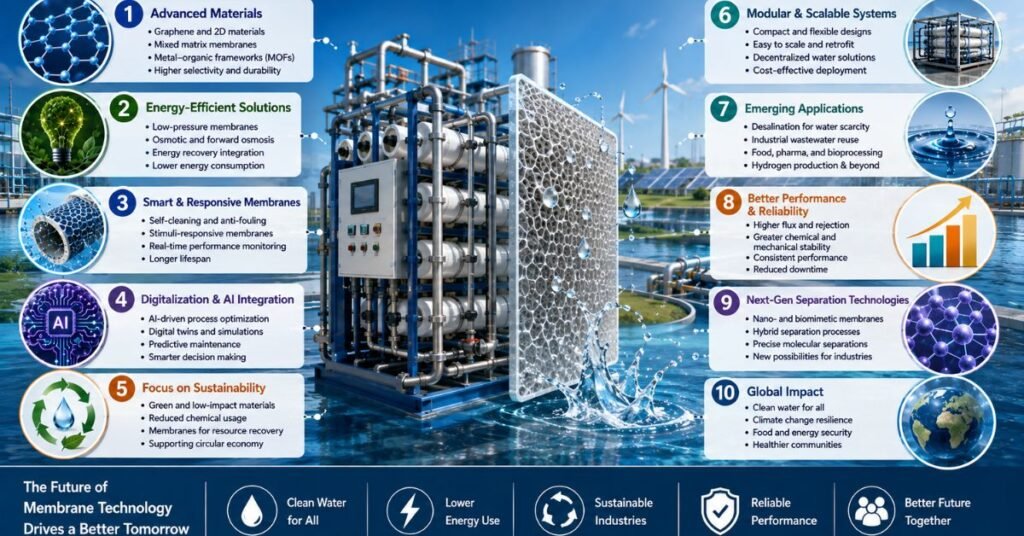
The next stage of membrane development is likely to focus on smarter and more integrated systems.
AI assisted membrane operation
AI can potentially help treatment plants analyze operating data and detect changes before they become serious problems.
A future membrane plant could monitor pressure, flow, temperature, conductivity, fouling indicators, and cleaning history.
Software could then identify unusual patterns and recommend maintenance.
AI does not replace the membrane.
It can make the entire system easier to monitor and manage.
More selective membranes
Researchers are also working toward membranes that distinguish between molecules with greater precision.
This is particularly valuable for lithium recovery, chemical separation, and advanced water treatment.
Current membrane research includes work on lithium-selective membrane structures, showing how membrane science is expanding into resource recovery as well as conventional filtration.
More sustainable materials
The use of bio-based materials, waste-derived materials, and recyclable structures could become more important.
This would shift membrane development toward a wider life-cycle view.
The question will become:
Can we make a membrane that performs well without creating another environmental problem?
Common Mistakes People Make When Reading Membrane Technology News
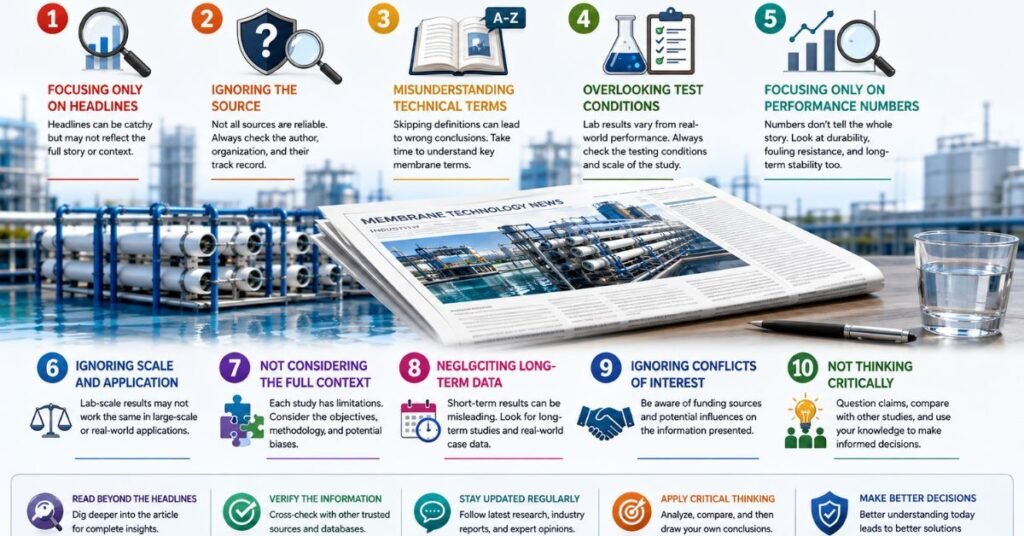
Mistake 1: Believing every “breakthrough” is ready for the market
A laboratory breakthrough is not automatically a commercial product.
Look for pilot testing, long term performance, manufacturing evidence, and real operating data.
Mistake 2: Looking only at rejection rate
A very high rejection number sounds impressive.
But if the membrane has low flow, high energy requirements, or rapid fouling, the overall system may still perform poorly.
Mistake 3: Ignoring fouling
Fouling can change the economics of an entire membrane plant.
Always consider how the membrane behaves over time.
Mistake 4: Assuming one membrane can solve every problem
Different contaminants require different separation strategies.
Microfiltration, ultrafiltration, nanofiltration, reverse osmosis, membrane distillation, and other systems have different roles.
Mistake 5: Ignoring scale
A membrane that works in a small experiment may require major engineering changes before commercial deployment.
Scale-up is one of the most important steps between scientific discovery and practical technology.
Membrane Technology News Today: What Businesses Should Watch
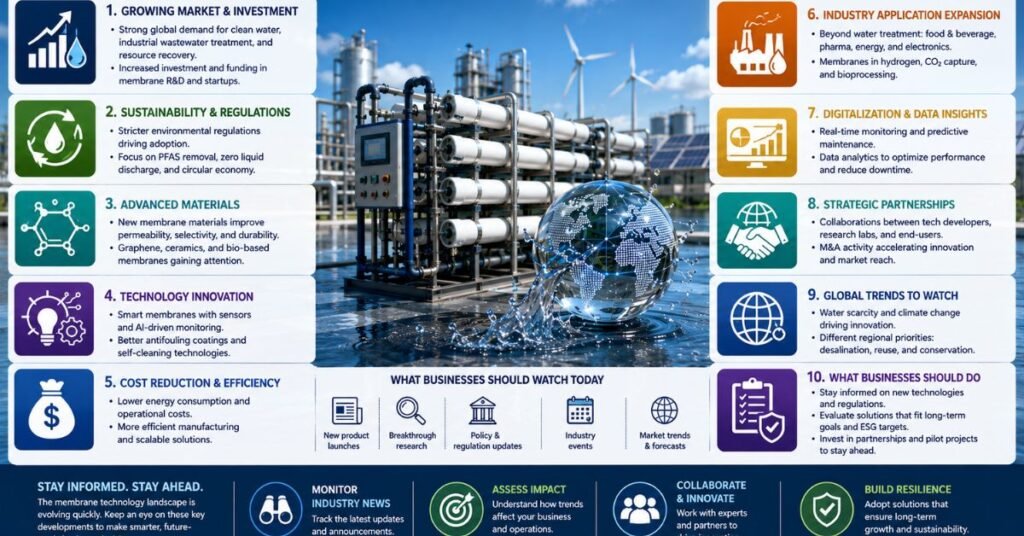
For businesses, the most valuable membrane developments are likely to be those that solve a measurable operating problem.
Water intensive industries may benefit from improved reuse systems.
Desalination operators may focus on lower-energy membranes and better brine treatment.
Chemical companies may use membranes for selective separation.
Recycling companies may use them to recover valuable compounds.
Food and pharmaceutical manufacturers may use highly selective membranes to improve purification.
The commercial opportunity therefore extends far beyond traditional water filtration.
The strongest technologies will probably be those that combine performance with reliability and realistic operating costs.
Author Note
This article is written as an educational technology update based on the direction of membrane research and industry developments reported during 2026.
One point is especially important when covering emerging technology: a research result should not automatically be presented as a finished commercial solution.
New membrane materials often require additional testing, pilot projects, durability studies, cost analysis, and manufacturing work before they can become widely deployed.
That distinction helps readers understand the difference between a promising scientific result and a technology that is ready for everyday industrial use.
Disclaimer
The information in this article is provided for general educational and informational purposes.
Membrane technologies can differ significantly depending on the application, feed conditions, membrane material, system design, operating pressure, temperature, and maintenance requirements.
Research developments discussed here should not be treated as guarantees of commercial performance. Always review technical specifications, independent testing, and professional engineering advice before making industrial, environmental, or investment decisions.
Conclusion
Membrane technology news today points toward a future where membranes do much more than remove contaminants from water. New research is connecting membrane science with desalination, wastewater reuse, chemical recovery, plastic recycling, resource extraction, and energy-efficient industrial separation.
The most important development is not a single membrane material. It is the wider shift toward selective, efficient, durable, and sustainable separation systems. Researchers are working to reduce fouling, improve pore control, lower energy use, increase stability, and make advanced membranes easier to scale. As these developments move from laboratories into pilot and commercial systems, membrane technology could become an even more important part of how industries manage water, materials, and energy.
FAQs
1. What is membrane technology?
Membrane technology uses a selective barrier to separate substances. It is widely used in water treatment, desalination, wastewater recycling, gas separation, food processing, pharmaceuticals, and industrial applications.
2. What is the latest trend in membrane technology?
Major trends include advanced nanoporous membranes, better anti-fouling designs, low-energy desalination, wastewater reuse, selective resource recovery, sustainable membrane materials, and smarter monitoring systems.
3. How does membrane technology help desalination?
Membranes can separate salts and other dissolved substances from water. Reverse osmosis is one of the most widely used membrane-based desalination methods.
4. Why is membrane fouling a problem?
Fouling happens when unwanted materials collect on or inside a membrane. It can reduce flow, increase cleaning requirements, raise energy use, and shorten membrane life.
5. Can membranes be used for recycling?
Yes. Membranes can help separate and recover useful chemicals during industrial recycling processes. Recent research has explored membrane-based separation in PET plastic recycling.
6. Are new membrane technologies ready for commercial use?
Some are already commercially established, while others are still in research or pilot stages. Laboratory results should not be confused with proven large-scale performance.
7. What is the future of membrane technology?
The future is likely to involve more selective materials, lower energy use, improved fouling control, sustainable materials, AI-assisted monitoring, resource recovery, and integrated treatment systems.