

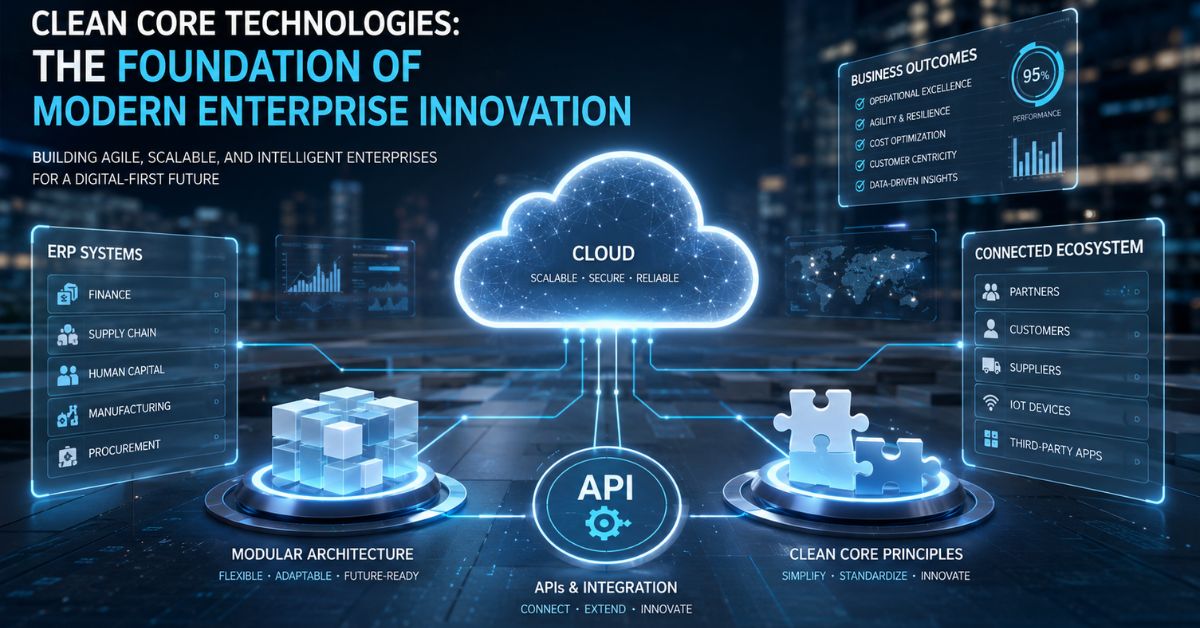
Clean Core Technologies play a vital role in helping modern businesses manage software systems, operations, customer relationships, finance, supply chains, and countless other processes. As organizations grow, their technology environments often become increasingly complex due to years of customizations, integrations, and modifications. While these changes may solve short term challenges, they can create long erm problems that slow innovation and increase maintenance costs.
This is where clean core technologies have become an important strategy for modern enterprises. Rather than continuously modifying core systems, organizations focus on keeping the core environment clean, stable, and standardized while extending functionality through modern development approaches.
The clean core approach helps businesses improve agility, simplify upgrades, enhance security, and support digital transformation initiatives. As companies continue adopting cloud platforms and intelligent technologies, maintaining a clean core has become a critical factor for long term success.
What Are Clean Core Technologies?
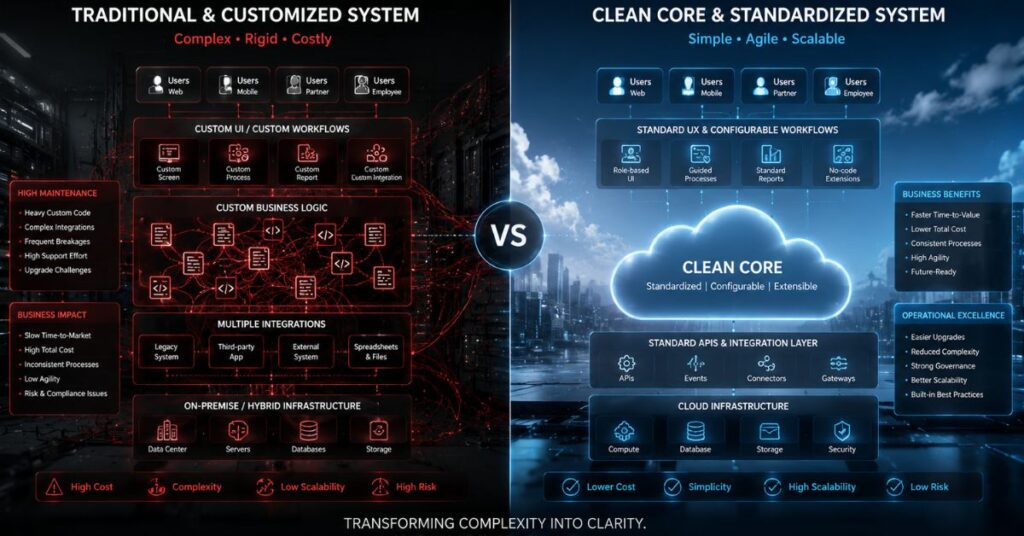
Clean core technologies represent a strategic approach to software and enterprise architecture where the core system remains as close as possible to standard vendor functionality. Instead of heavily modifying the foundation of a platform, organizations build extensions and custom features outside the core environment.
This approach allows businesses to maintain system integrity while still meeting unique operational requirements. By reducing unnecessary customizations, companies can benefit from faster upgrades, lower maintenance requirements, and improved compatibility with future innovations.
A clean core strategy is particularly important in enterprise software environments where long-term scalability and flexibility are essential.
Core Definition of Clean Core
A clean core refers to maintaining the original structure and functionality of a software platform while minimizing direct modifications to its underlying code. Organizations achieve this by using approved extension methods, APIs, and external applications rather than altering core components.
The objective is to preserve system stability while enabling innovation through controlled and scalable development practices.
How Clean Core Differs from Traditional Systems
Traditional enterprise systems often accumulate years of custom code and modifications. While these customizations may address specific business requirements, they frequently create upgrade challenges and increase operational complexity.
In contrast, clean core technologies encourage organizations to separate custom functionality from the main platform. This separation makes systems easier to maintain and significantly reduces technical debt over time.
Why the Concept Is Growing in Popularity
The rapid adoption of cloud computing, software as a service solutions, and digital transformation initiatives has increased the demand for more flexible technology environments.
Organizations now recognize that maintaining heavily customized systems can slow innovation and create unnecessary risks. Clean core strategies provide a practical solution that balances customization with long term sustainability.
Why Businesses Need Clean Core Technologies
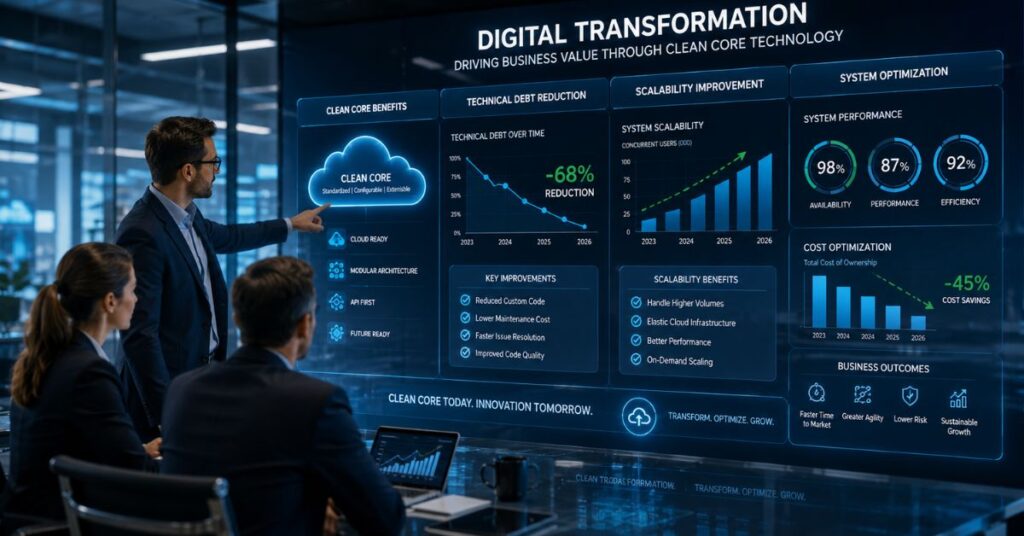
Technology systems are expected to evolve continuously to meet changing business needs. However, excessive customization often makes adaptation difficult and expensive. Clean core technologies help organizations overcome these challenges while maintaining operational efficiency.
Businesses that embrace clean core principles are often better positioned to respond to market changes, adopt new technologies, and improve overall performance.
The approach supports a more manageable and future-ready technology environment.
Reducing Technical Debt
Technical debt occurs when short-term development decisions create long-term maintenance burdens. Excessive modifications can make systems harder to update, troubleshoot, and optimize.
By maintaining a clean core, organizations reduce the accumulation of technical debt and improve the overall health of their technology ecosystem.
Improving System Stability
A heavily modified system may experience unexpected conflicts during updates or integrations. Clean core technologies reduce these risks by preserving the stability of the core platform.
Stable systems are easier to monitor, maintain, and support across different business functions.
Supporting Faster Innovation
When core systems remain standardized, organizations can adopt new features and technologies more quickly.
Development teams spend less time managing complex customizations and more time delivering innovative solutions that create business value.
Key Principles of Clean Core Technologies
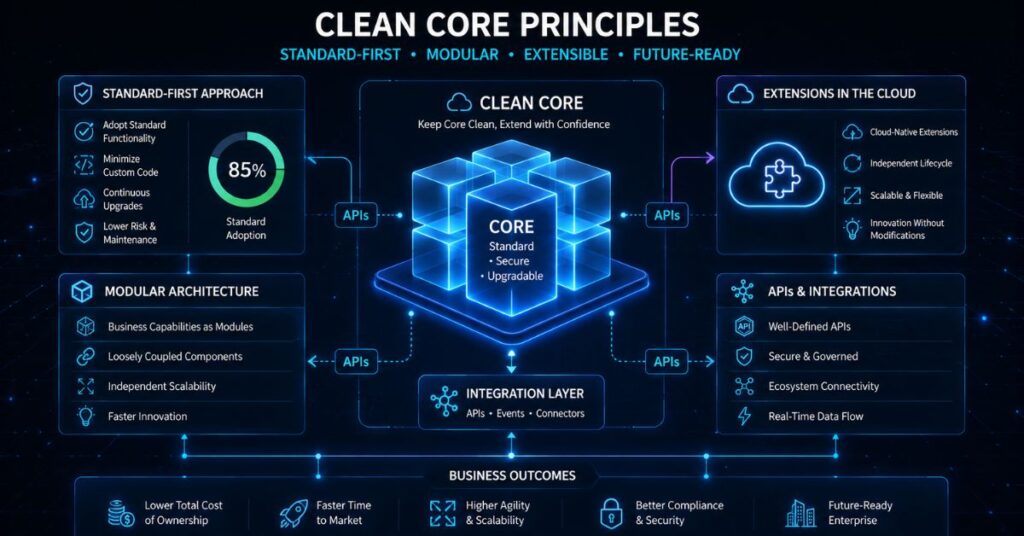
Successful clean core strategies are built on several foundational principles. These principles guide organizations toward sustainable technology management while maintaining flexibility for future growth.
Following these best practices helps ensure that systems remain scalable, secure, and efficient.
Understanding these principles is essential for organizations planning to modernize their technology infrastructure.
Standard-First Development Approach
The standard-first approach encourages businesses to use built-in platform capabilities whenever possible before considering custom development.
This strategy minimizes unnecessary modifications and helps maintain compatibility with future software updates.
Modular Architecture Design
Modular architecture divides applications into smaller, independent components that can be managed separately.
This structure improves flexibility and allows organizations to make changes without disrupting the entire system.
API Driven Integrations
Modern clean core environments rely heavily on APIs for communication between applications.
API-based integrations minimize direct connections to core systems, enabling greater flexibility and scalability across technology ecosystems.
Cloud Friendly Extensions
Instead of modifying the core platform, organizations build extensions using cloud-native tools and services.
This approach enables customization while preserving the integrity of the core environment.
Major Benefits of Clean Core Technologies
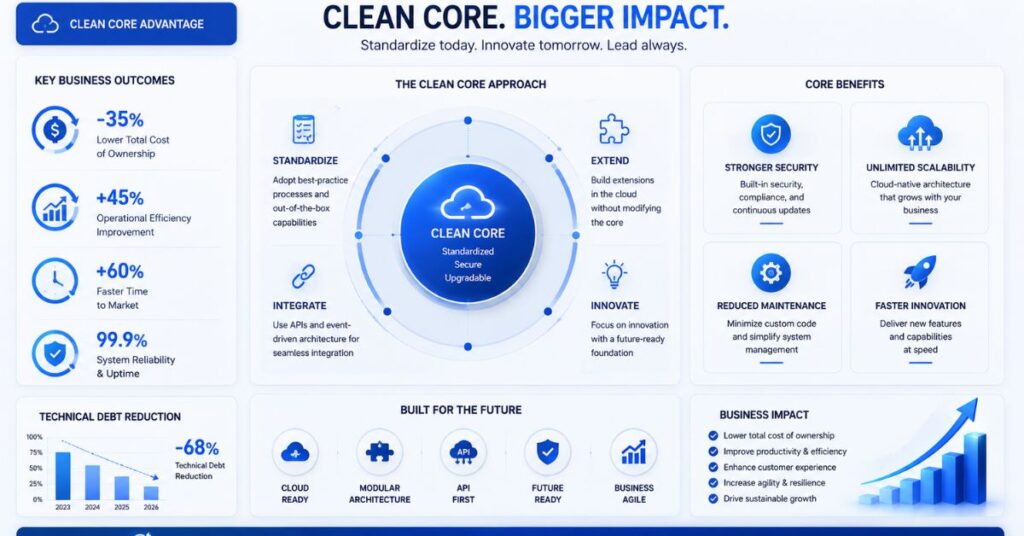
Organizations that implement clean core technologies often experience significant operational and strategic advantages. These benefits extend beyond technology management and can positively impact overall business performance.A clean core strategy supports efficiency, scalability, and long-term innovation.
It enables organizations to adapt quickly and maintain a strong position in changing market conditions.
Simplified Upgrades
Software vendors regularly release updates that improve functionality, security, and performance.
A clean core environment allows businesses to adopt these updates more easily because fewer customizations need to be tested or modified.
Enhanced Security and Compliance
Security threats continue to evolve, making regular updates essential.
Organizations with clean core systems can apply security patches more efficiently, reducing vulnerabilities and improving compliance with industry regulations.
Lower Maintenance Requirements
Maintaining extensive custom code requires significant time and resources.
By minimizing modifications, organizations reduce maintenance workloads and free technical teams to focus on strategic initiatives.
Better Scalability
As businesses grow, their technology systems must support increasing demands.
Clean core technologies provide a stable foundation that can scale effectively without introducing excessive complexity.
Clean Core Technologies in Modern ERP Systems
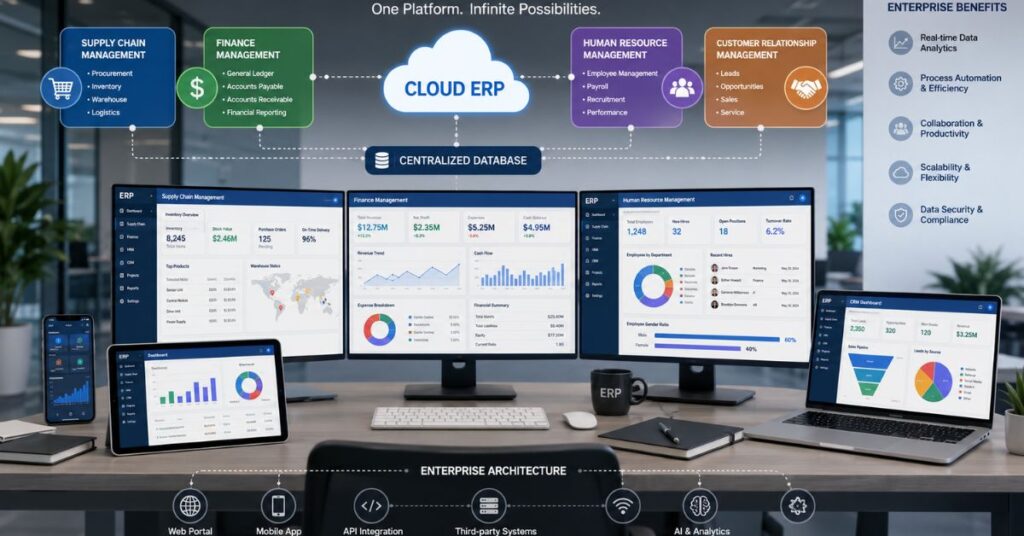
Enterprise Resource Planning systems are among the most common environments where clean core strategies are applied. ERP platforms support critical business functions, making stability and scalability especially important.
Many organizations are modernizing their ERP environments to improve efficiency and support digital transformation goals.
Clean core principles play a central role in this modernization process.
Clean Core ERP Strategy
A clean core ERP strategy focuses on preserving standard system functionality while implementing custom requirements through approved extension mechanisms.
This approach helps organizations maximize the value of their ERP investments while reducing long-term maintenance challenges.
Role of Cloud ERP Platforms
Cloud ERP platforms are designed to support continuous innovation through regular updates and new features.
Maintaining a clean core allows organizations to take full advantage of these enhancements without disrupting existing operations.
Business Process Optimization
Clean core technologies encourage businesses to evaluate and improve their processes rather than relying solely on software customization.
This often leads to more efficient workflows and better alignment with industry best practices.
Challenges of Implementing a Clean Core Strategy
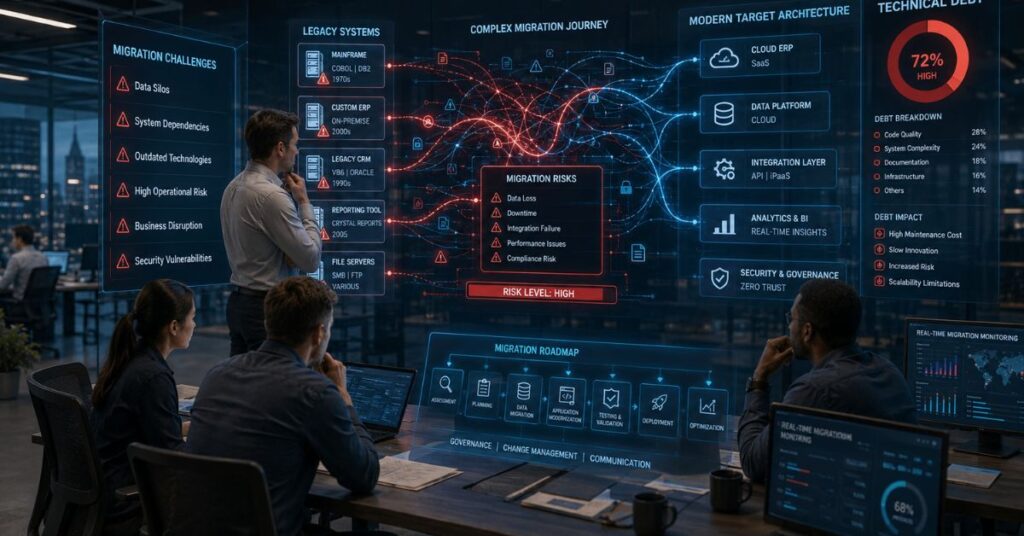
Although clean core technologies offer significant advantages, organizations may encounter challenges during implementation.Organizations must carefully plan their transition to avoid disruptions and maximize results.
Understanding potential obstacles helps businesses develop more effective adoption strategies.
Successful implementation requires both technical expertise and organizational commitment.
Managing Legacy Systems
Many organizations operate legacy systems that contain years of customizations and integrations.
Transitioning these environments to a clean core model can require significant analysis and planning.
Handling Existing Customizations
Not all customizations can be removed immediately.
Organizations must evaluate which modifications provide genuine business value and which can be replaced with standard functionality.
Change Management Challenges
Employees and stakeholders may be accustomed to existing processes and workflows.
Effective communication and training are essential for ensuring successful adoption of clean core principles.
Best Practices for Adopting Clean Core Technologies
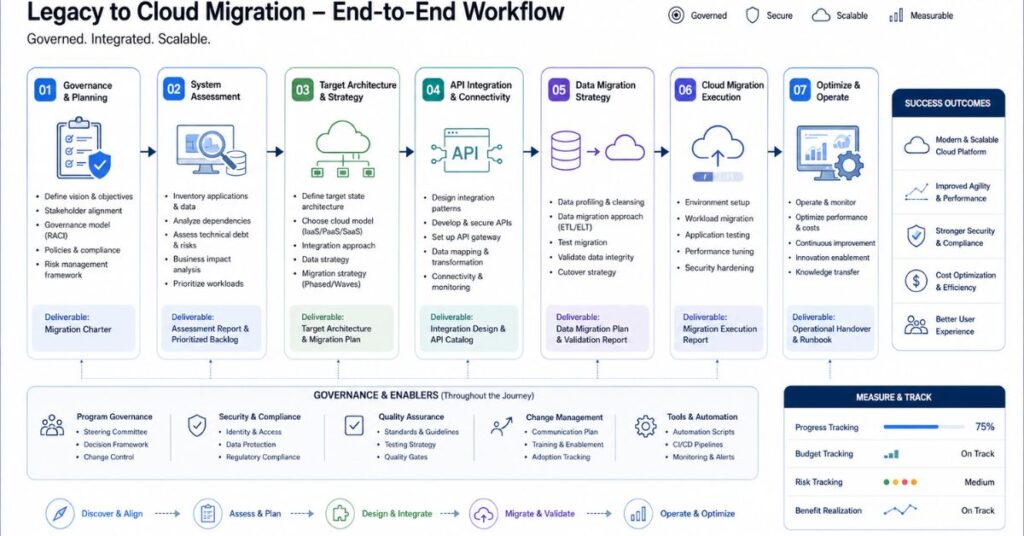
Organizations seeking to implement clean core technologies should follow a structured approach. Strategic planning and governance are essential for achieving long-term success.
A well-executed clean core strategy can deliver significant operational and financial benefits.
The following best practices can help organizations navigate the transition effectively.
Assess Your Existing Technology Landscape
Begin by evaluating current systems, customizations, integrations, and technical dependencies.
This assessment provides a clear understanding of areas that require improvement.
Eliminate Unnecessary Custom Code
Review existing modifications and identify opportunities to replace custom functionality with standard platform capabilities.
Reducing unnecessary code simplifies maintenance and improves system performance.
Create Strong Governance Policies
Governance frameworks help ensure that future development activities align with clean core principles.
Clear policies prevent uncontrolled customization and maintain long-term system integrity.
Use Modern Integration Methods
Adopt APIs, cloud services, and approved extension frameworks rather than direct modifications to core systems.
These methods provide greater flexibility while preserving platform stability.
Future Trends in Clean Core Technologies
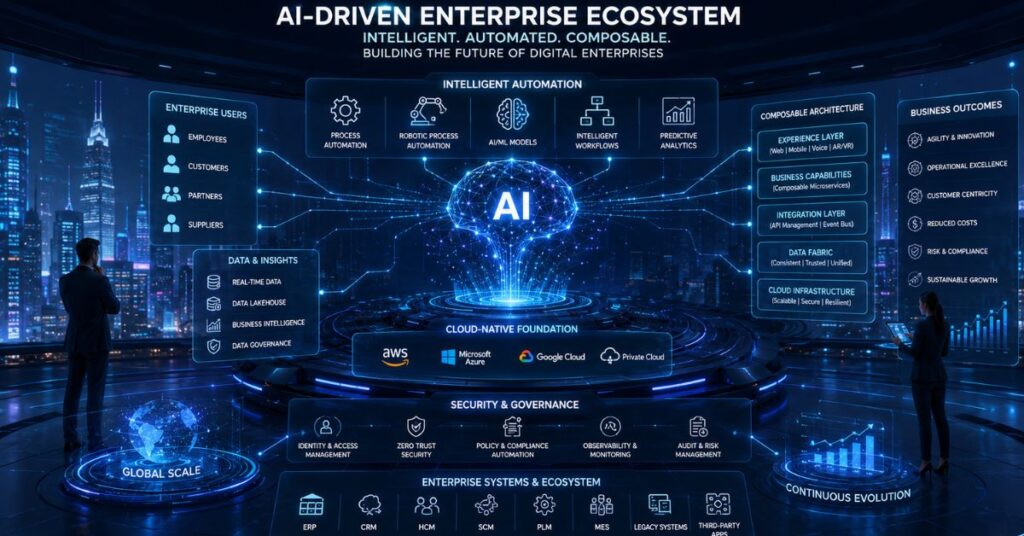
The future of enterprise technology is increasingly focused on flexibility, automation, and intelligent decision making. Clean core technologies are expected to remain a key component of this evolution.
Organizations that maintain standardized core systems will be better positioned to adopt emerging innovations.
Several trends are shaping the future of clean core strategies.
Artificial Intelligence and Automation
AI-powered solutions are becoming more integrated into enterprise environments.
A clean core foundation makes it easier to deploy intelligent technologies without disrupting existing operations.
Composable Enterprise Architecture
Composable architectures allow businesses to assemble technology solutions from modular components.
This approach aligns closely with clean core principles and supports greater agility.
Cloud Native Innovation
Cloud native platforms continue to drive innovation across industries.
Organizations with clean core environments can adopt new cloud capabilities more efficiently and with lower risk.
Conclusion
Clean core technologies have become an essential strategy for organizations seeking to balance innovation with stability. By minimizing direct modifications to core systems and embracing modern extension methods, businesses can reduce complexity, simplify upgrades, improve security, and support long-term scalability.
As digital transformation continues to accelerate, maintaining a clean core will play an increasingly important role in helping organizations adapt to changing business requirements. Companies that invest in clean core principles today are building a stronger foundation for future growth, efficiency, and technological advancement.
FAQs
What are clean core technologies?
Clean core technologies are approaches that keep enterprise software systems close to standard functionality while using external extensions and integrations for customization.
Why is a clean core strategy important?
A clean core strategy reduces technical debt, simplifies upgrades, improves security, and supports long term scalability.
What is clean core ERP?
Clean core ERP refers to maintaining standard ERP functionality while implementing custom requirements through approved extension methods rather than modifying core code.
How do clean core technologies reduce technical debt?
They minimize unnecessary customizations, making systems easier to maintain, update, and optimize over time.
Are clean core technologies only used in ERP systems?
No. Clean core principles can be applied across various enterprise applications, cloud platforms, and software environments.
What are the main benefits of clean core technologies?
Key benefits include simplified upgrades, improved security, lower maintenance costs, greater scalability, and faster innovation.
How can businesses start implementing clean core technologies?
Organizations should assess their current systems, remove unnecessary customizations, establish governance policies, and adopt modern integration approaches.