

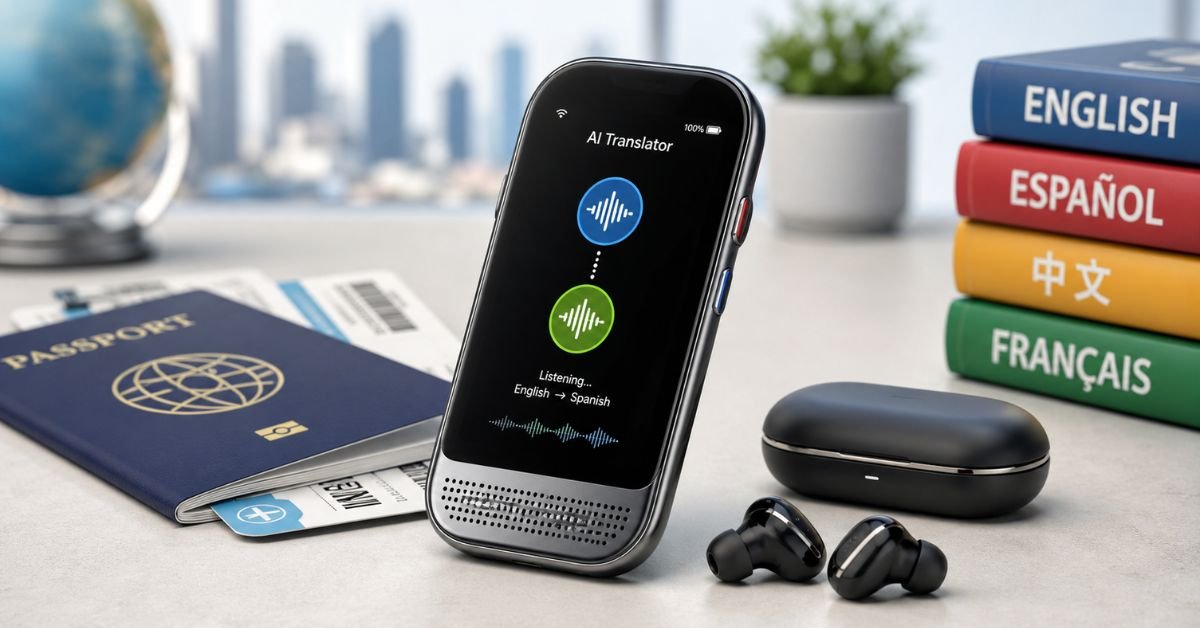
AI translator device news is becoming more important as translation technology moves from simple phone apps to dedicated earbuds, handheld devices, meeting systems, and smart displays. The biggest change is not just the number of languages a device supports. New systems are trying to make conversations faster, more natural, hands-free, and useful in real-world situations.
The latest AI translator device news also shows a shift toward devices that can handle more than one type of communication. Modern systems can support face-to-face conversations, phone calls, meetings, video content, and multilingual customer service. At the same time, privacy, internet dependence, translation accuracy, battery life, and human oversight remain important before treating any AI translator as a complete replacement for a professional interpreter.
Quick Summary: What Is Changing in AI Translation Devices?
- Translation devices are moving toward hands-free earbuds and wearable hardware.
- New products are combining translation with calls, meetings, multimedia, and AI assistance.
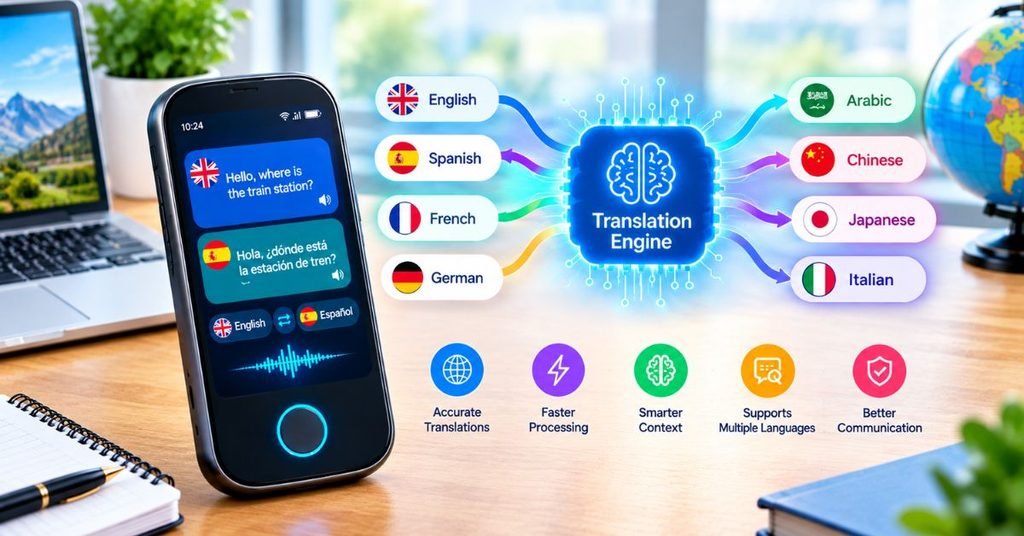
- Translation engines are becoming just as important as the physical device.
- Low latency matters because long pauses can make conversations feel unnatural.
- Offline translation is valuable when internet access is weak or unavailable.
- Noise reduction and better voice capture are becoming major selling points.
- Professional interpreters are still important for medical, legal, emergency, and high-risk communication.
- The best device depends on the situation rather than simply the number of supported languages.
Why AI Translation Hardware Is Getting More Attention in 2026
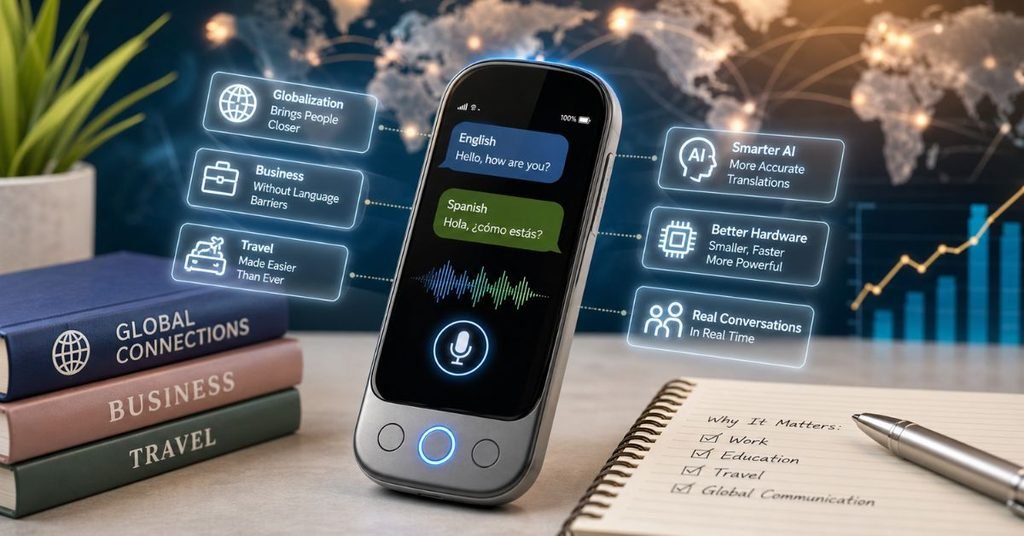
For years, translation devices were mainly small handheld gadgets that listened to a sentence and displayed or played the translated result. That basic idea is still useful, but the market is now expanding into several hardware formats.
Recent product activity shows a clear move toward wearable and scenario-specific translation. iFLYTEK launched AI Translation Earbuds in the U.S. in March 2026, while Timekettle used IFA 2026 to showcase newer W Series earbuds and the X1 Meeting system for larger multilingual environments.
From One Device to a Translation Ecosystem
The important development is that companies are no longer treating translation as a single feature.
A modern translation product may combine:
- Speech recognition
- AI translation
- Noise reduction
- Voice playback
- Call translation
- Meeting translation
- Transcription
- AI summaries
- Multimedia translation
- Language detection
This creates a different type of product. Instead of carrying a translator only when traveling, users can potentially use the same technology during meetings, customer conversations, online calls, lectures, and other multilingual situations.
The Biggest AI Translator Device News Trends to Watch
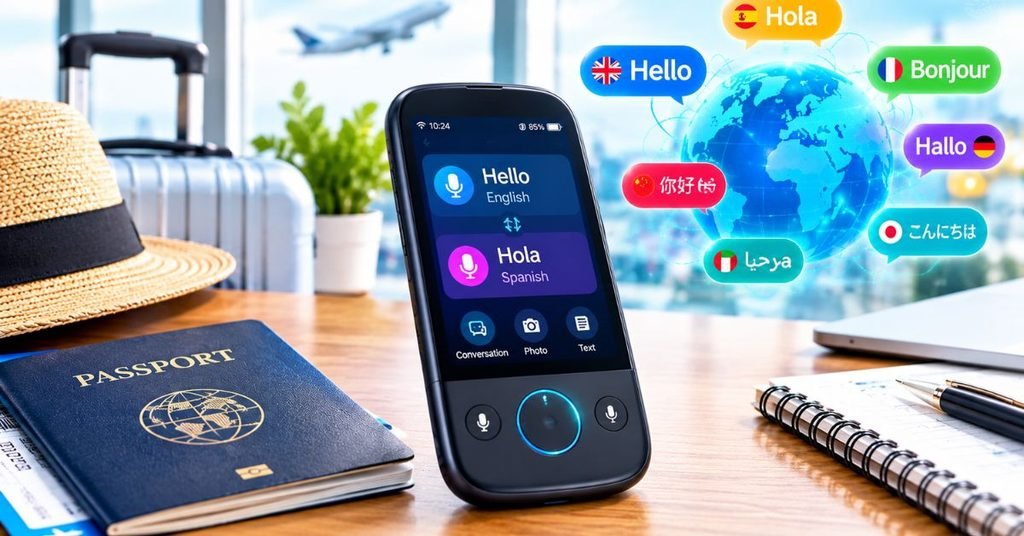
The most interesting developments are happening below the surface. A device may look like ordinary earbuds or a small screen, but its usefulness depends heavily on the AI system processing speech behind it.
1. Translation Earbuds Are Becoming More Practical
Translation earbuds are one of the strongest developments in the current market. They can reduce the need to hold a phone between two people and make conversations feel more direct.
Timekettle’s 2026 W4 Plus, for example, is designed for face to face communication while also extending translation to calls and multimedia content. Coverage of the product reports support for 52 languages and additional translation modes.
The practical advantage is simple: users can keep their hands free while listening to translated speech.
2. AI Is Moving Beyond Basic Voice Translation
The next generation is not only translating one sentence at a time. Devices are starting to combine translation with contextual tools.
Features such as specialized translation profiles, conversation memory, live summaries, and multimedia translation show how translation hardware is becoming part of a broader AI communication system.
This can be especially useful in professional environments where people need to understand not only individual sentences but also the wider conversation.
3. Noise Reduction Is Becoming Critical
Translation can fail before the translation model even gets a chance to work.
If a microphone cannot clearly capture the speaker’s voice, the speech-recognition system receives poor input. Background conversations, traffic, crowds, music, and distance can all create problems.
Newer products are therefore putting more attention on microphone design, noise reduction, and voice pickup. iFLYTEK, for example, describes the use of bone conduction and air-conduction sensors in its translation earbuds to improve speech capture in difficult environments.
How an AI Translator Device Actually Works
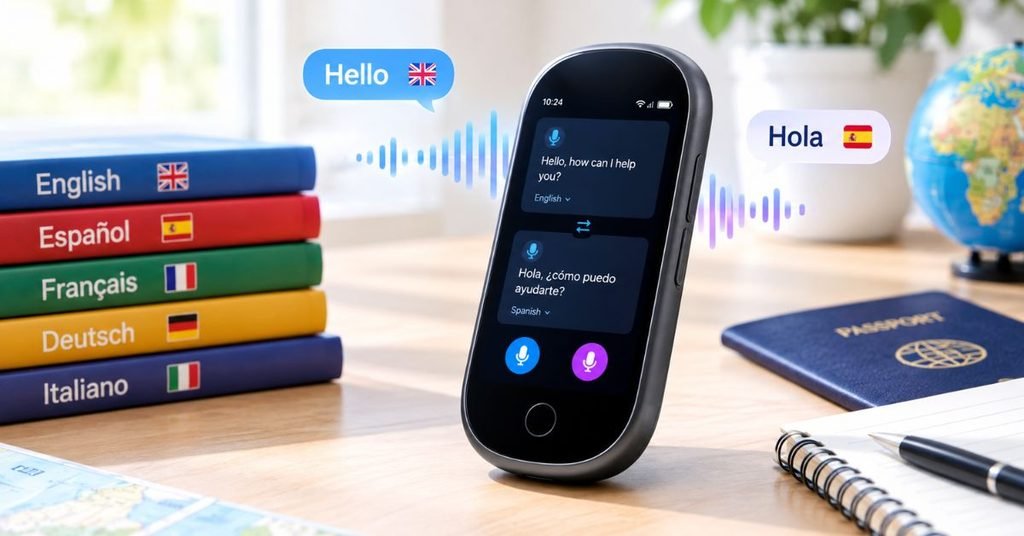
Understanding the process makes it easier to judge whether a product is genuinely useful.
A typical AI translation system follows several stages.
Step 1: Capture the Speaker’s Voice
The microphone records what the person says. This sounds simple, but this is one of the most important stages.
A crowded airport, busy street, restaurant, conference hall, or visitor center can produce very different audio conditions from a quiet room.
Step 2: Speech Recognition
The device converts spoken language into text or an internal representation that the AI can understand.
Good speech recognition should handle different speaking speeds, accents, pauses, and background noise.
Step 3: AI Translation
The system processes the meaning and converts it into another language.
This is where the translation engine matters. Two devices may have similar microphones and screens but produce different results because they use different AI models or language systems.
Step 4: Voice or Text Output
The translated result can then appear on a screen or be spoken through a speaker or earbuds.
The shorter the delay, the more natural the conversation can feel.
Why the Translation Engine Matters More Than the Device Design
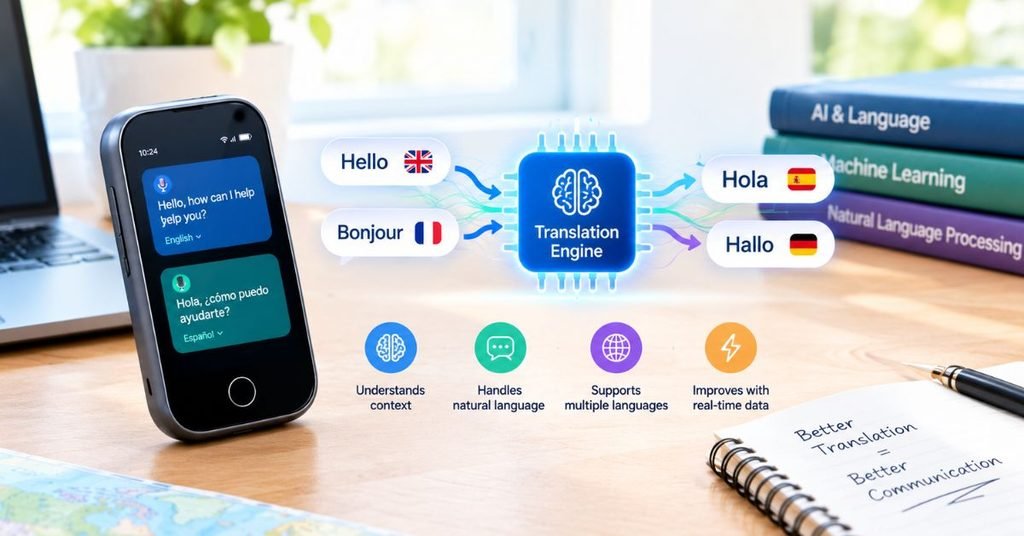
A common mistake is to judge a translator by its appearance, screen size, or number of buttons.
The physical hardware matters, but the AI engine can have a bigger impact on the final experience. Current industry analysis increasingly points to factors such as latency, offline capability, language depth, and the underlying translation engine when evaluating translation hardware.
Check These Five Technical Factors
- Latency: How long does the translation take?
- Recognition: Can it understand normal speech clearly?
- Language quality: Does it handle the languages you actually need?
- Offline support: Can basic translation work without a strong internet connection?
- Context handling: Can it understand a conversation rather than isolated words?
A device with 140 languages is not automatically better for you if your two required languages work poorly.
AI Translator Device News: Earbuds, Handhelds, Screens, and Meeting Systems
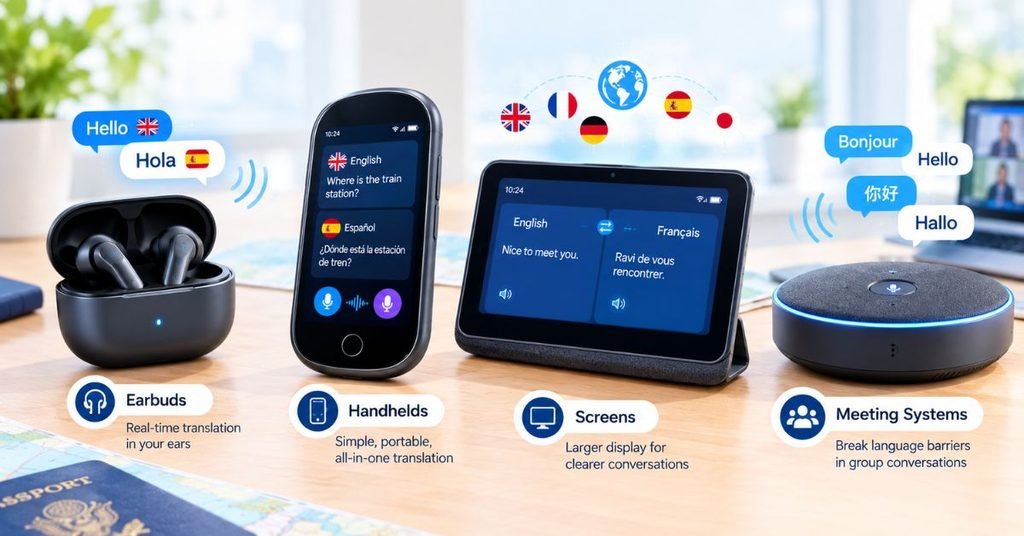
The current market can be divided into several useful categories.
| Device Type | Best For | Main Advantage | Main Limitation |
| Translation Earbuds | Travel and conversations | Hands-free use | Battery and pairing |
| Handheld Translator | Travel and basic communication | Easy to share | Requires holding a device |
| Dual-Screen Translator | Hotels and service desks | Both people can see the conversation | Less portable |
| Translation Meeting System | Conferences and teams | Supports larger groups | More expensive and complex |
| Translation App + Hardware | Everyday users | Flexible and familiar | Depends more on phone/software |
The important lesson from current AI translator device news is that there is no single hardware format for every situation. Companies are increasingly building products around specific communication problems rather than trying to create one universal device.
Where AI Translator Devices Can Be Useful
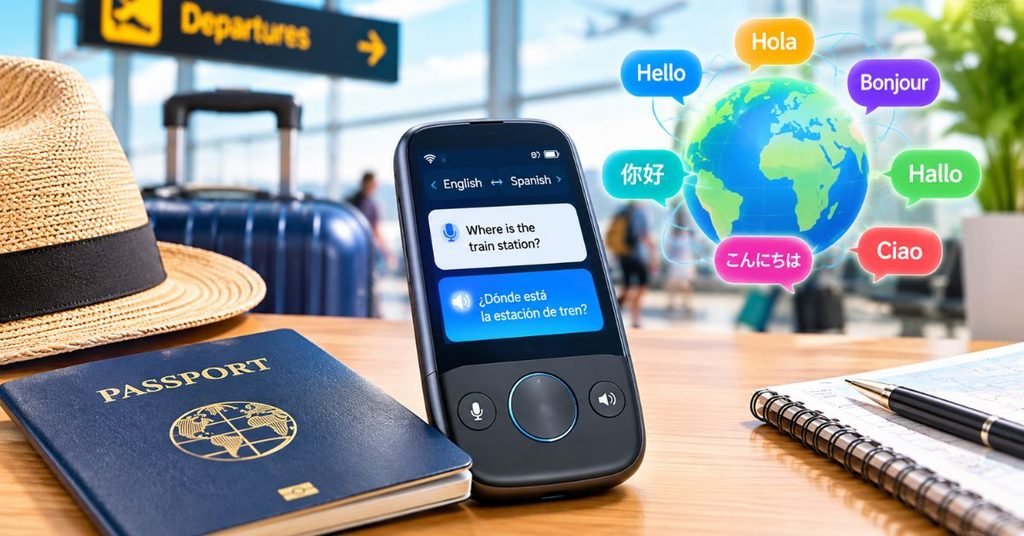
Translation hardware becomes more valuable when language barriers happen repeatedly.
Travel and Tourism
Travelers can use translation devices to ask questions, understand directions, communicate with hotel staff, or interact with local businesses.
The hands free design of earbuds can be useful when walking or carrying luggage, while a handheld or dual screen device may be easier when two people need to look at the same translated text.
Hotels and Visitor Centers
Front desks, tourist information counters, museums, airports, and public service desks can use translation hardware for routine conversations.
A dual-sided display can be particularly useful because both people can see the translated communication without passing a private smartphone back and forth.
International Business
Business meetings often require more than simple word-for-word translation.
A system that combines translation with transcription or summaries can help participants follow discussions and review important points afterward.
Timekettle’s X1 Meeting is an example of the industry’s move toward dedicated multilingual meeting systems rather than only individual translation earbuds. The company says its system can support multilingual meeting environments with participants joining through smartphones or computers.
Education and Events
Translation technology can also support lectures, international events, exhibitions, and training sessions.
However, organizers should test the system with real speakers before depending on it for important presentations.
What Makes a Good AI Translator Device in Real Life?
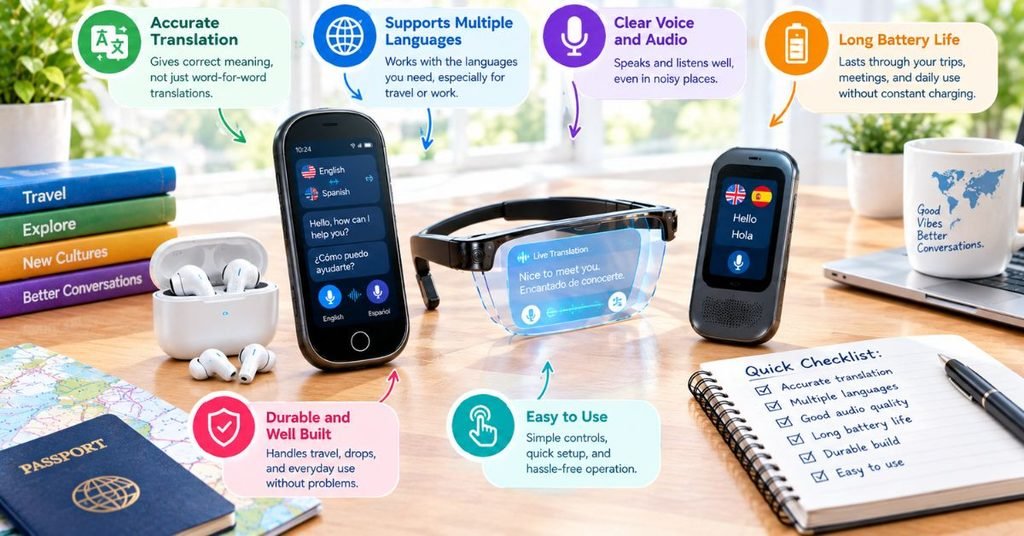
Specifications look impressive on a product page, but real-world usability matters more.
Test It in the Environment Where You Will Use It
A quiet bedroom is not the same as an airport or conference hall.
Before purchasing a device for professional use, test:
- Background noise
- Multiple speakers
- Different accents
- Fast speech
- Short conversations
- Longer conversations
- Internet failure
- Battery performance
- Language switching
This kind of testing gives you more useful information than simply counting supported languages.
Look at the Complete User Experience
A good translator should not force users through too many steps.
If a staff member needs to open an app, select a language, press several buttons, wait for processing, and then show the screen, the technology may interrupt the conversation.
The ideal workflow should feel close to normal communication.The latest ai translator device news shows that translation technology is moving beyond simple phone-based tools.
Privacy: The Issue Many Buyers Should Not Ignore
Translation devices can process highly personal conversations.
Depending on the product and its architecture, speech may be processed locally or sent to cloud systems. On device AI is receiving more attention because specialized smaller models can perform certain translation tasks locally, reducing the need to send conversation audio away from the device.
Questions to Ask Before Using One
- Does the device require a cloud connection?
- Is audio stored?
- How long is data retained?
- Can recordings be deleted?
- Does the manufacturer explain its privacy policy?
- Which features work offline?
- Is business or customer data used for AI training?
For sensitive conversations, these questions should be answered before deployment.
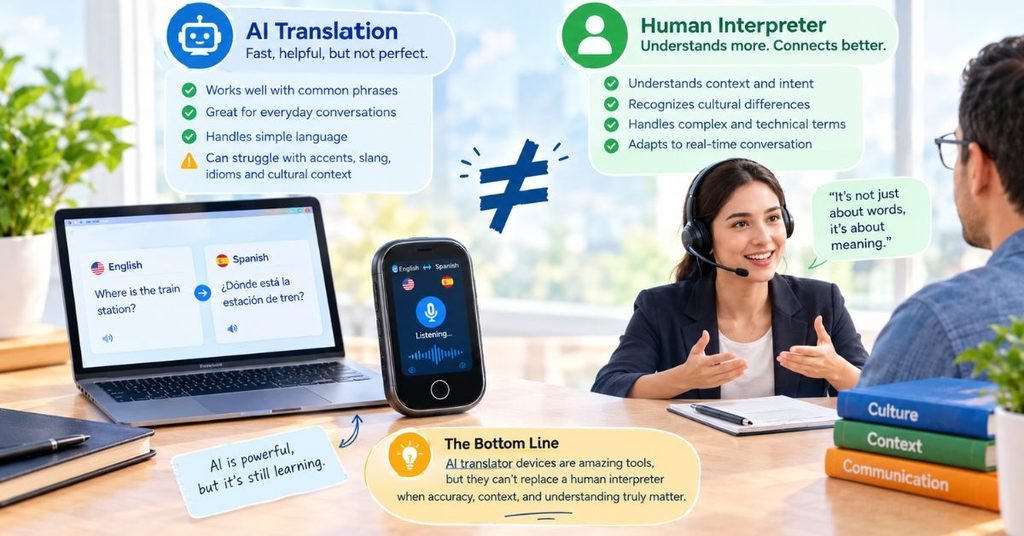
Accuracy Has Limits: AI Is Not the Same as a Human Interpreter
One of the most important points in current AI translator device news is that better technology does not mean perfect translation.
AI can be useful for routine conversations, but some situations require professional human interpretation.
Do Not Depend on AI Alone for High Risk Communication
Use additional human support for situations involving:
- Medical instructions
- Legal rights
- Emergency communication
- Immigration decisions
- Safety warnings
- Financial disputes
- Formal contracts
- Critical technical instructions
The reason is not that AI translation has no value. The issue is that a small translation error can have a very different impact depending on the situation.
Common Mistakes People Make When Choosing a Translator
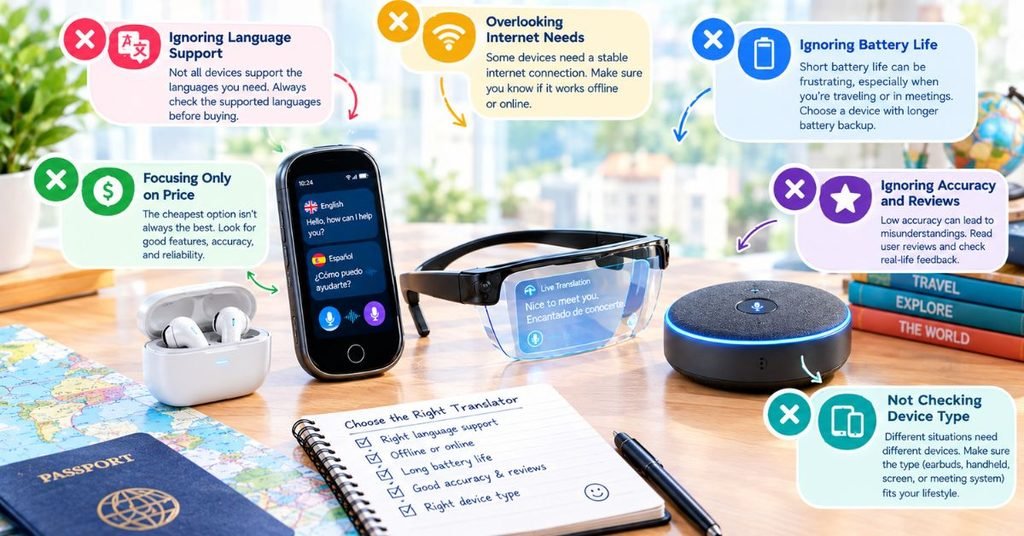
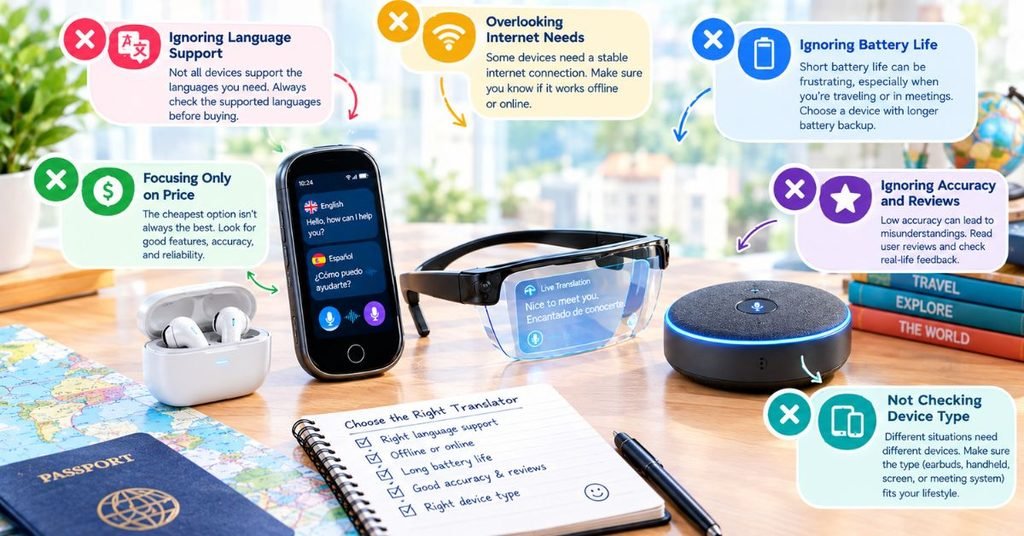
Buying decisions often focus on marketing numbers rather than actual needs.
Mistake 1: Choosing the Device With the Most Languages
More languages sound better, but supported language count does not tell you how well each language works.
Choose based on the languages, accents, and situations you actually need.
Mistake 2: Ignoring Internet Requirements
A device may support many languages online but offer fewer options offline.
If you travel frequently, offline capability can be extremely important.
Mistake 3: Assuming AI Means Perfect Accuracy
AI can misunderstand names, slang, accents, technical terms, or noisy speech.
Always consider the consequences of an incorrect translation.
Mistake 4: Ignoring Privacy
Never assume that a translation device automatically keeps conversations private.
Read the manufacturer’s data and storage information before using it for sensitive discussions.
Mistake 5: Testing Only in Quiet Places
A device that works perfectly in a quiet room may perform differently in a crowded environment.
Test before deployment.
A Simple 5-Step Method for Choosing the Right Device
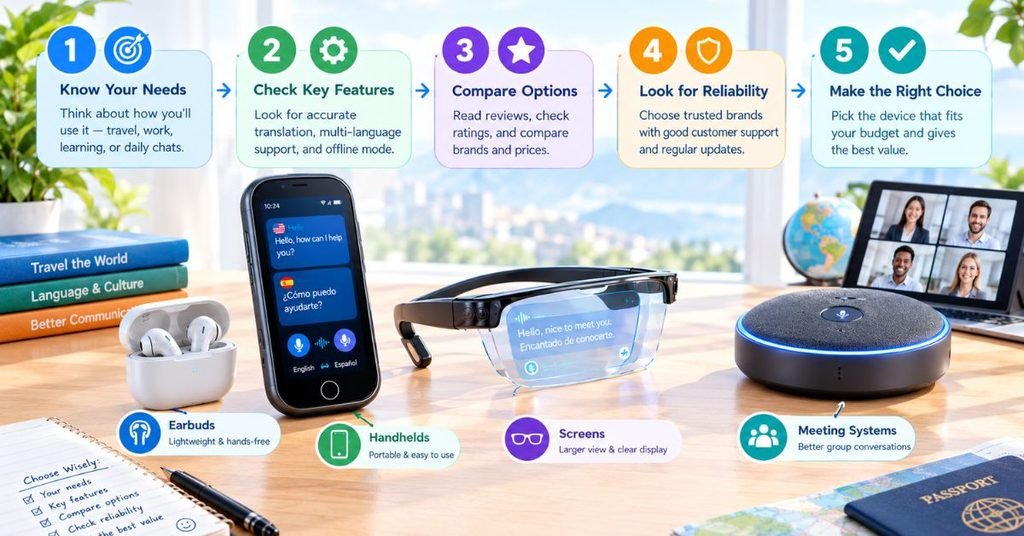
Instead of starting with a brand name, start with your communication problem.
Step 1: Define the Situation
Are you traveling, running a hotel desk, supporting customers, attending meetings, or organizing an event?
Step 2: Identify the Required Languages
Write down the main languages and any regional variations or accents you expect.
Step 3: Decide the Hardware Format
Choose between earbuds, handheld devices, dual-screen systems, or meeting equipment.
Step 4: Test Accuracy and Latency
Do not judge only from specifications. Test actual conversations.
Step 5: Check Privacy and Offline Features
Make sure the device fits your organization’s data and connectivity requirements.
Real-Life Example: A Tourist Information Desk

Imagine a tourist information desk where visitors arrive speaking English, Arabic, Chinese, Spanish, and several other languages.
A staff member does not need a translator to handle every conversation automatically. Instead, the device can support simple questions such as directions, opening times, ticket information, transportation guidance, and general visitor assistance.
For a routine request, a dual screen translator can make the conversation easier because both people can see the exchange.
But if the visitor has a medical emergency or needs to understand a legal requirement, the staff member should move to an appropriate human assisted process.
This shows the most practical role for AI translation: support communication rather than blindly replacing human expertise.
E-E-A-T: How to Evaluate AI Translator Claims
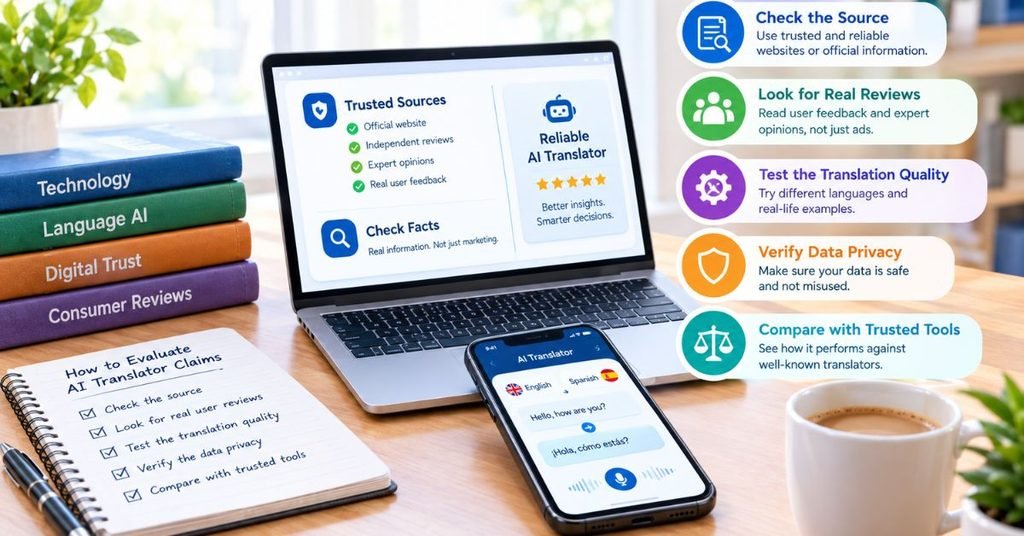
A strong technology article should not repeat product marketing without checking what the claim actually means.
When researching an AI translator, use four simple E-E-A-T questions:
Experience
Has the product been tested in real conversations and noisy environments?
Expertise
Does the company explain its speech recognition, translation, connectivity, and AI technology clearly?
Authoritativeness
Are product claims supported by credible demonstrations, testing, technical information, or independent coverage?
Trustworthiness
Does the manufacturer clearly explain pricing, limitations, privacy, data handling, and supported features?
This approach is more useful than choosing a product simply because its product page contains impressive AI terminology.
Multimedia Ideas to Make This Article More Useful
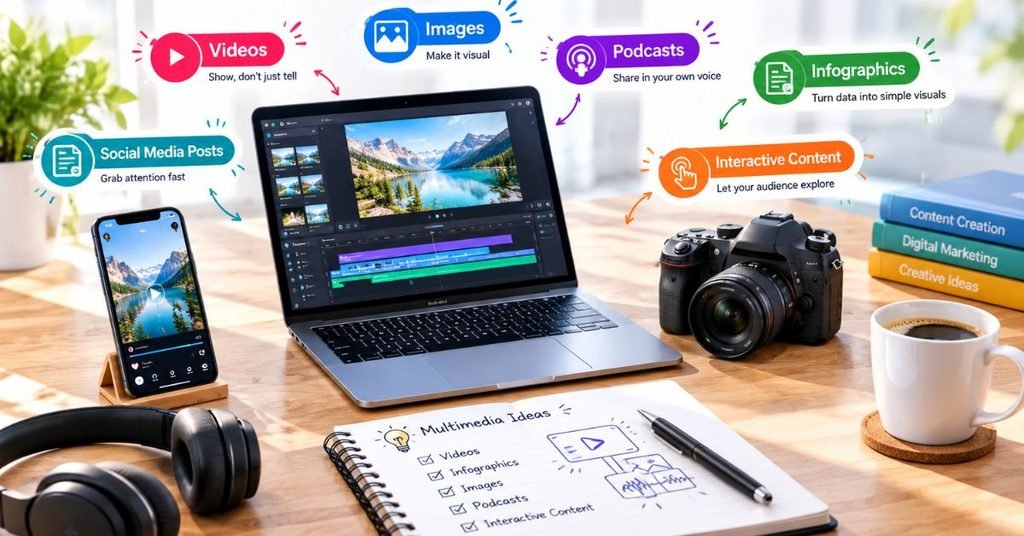
A technology article about translation hardware can become more engaging with practical visuals.
Recommended Visuals
- A diagram showing speech → recognition → AI translation → translated voice
- A comparison graphic of earbuds, handheld translators, and dual-screen devices
- A short video demonstrating translation in a noisy environment
- An interactive checklist for comparing offline support, latency, languages, and privacy
- A simple flowchart showing when to use AI translation and when to escalate to a human interpreter
These elements can help readers understand the technology without adding unnecessary technical complexity.
What the Future of AI Translation Devices May Look Like
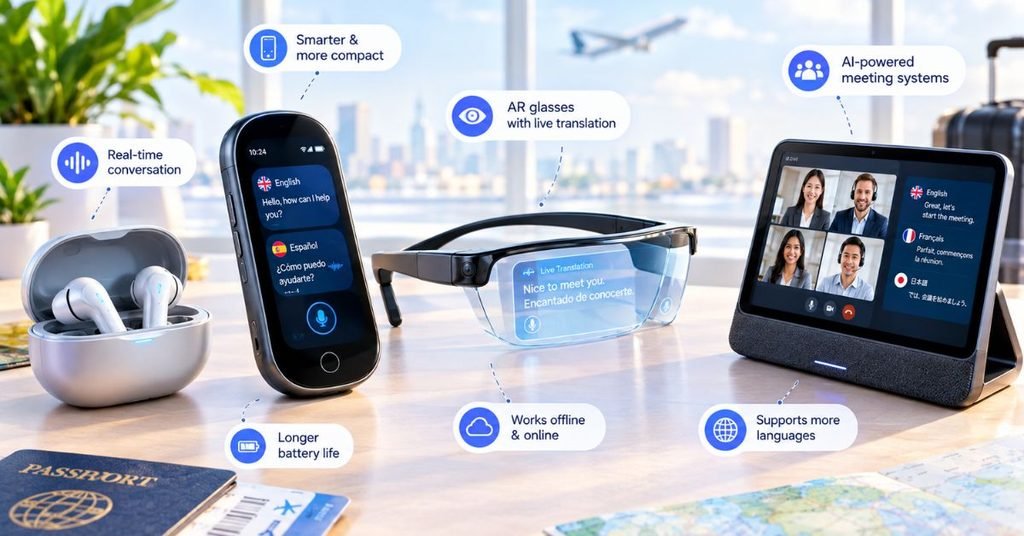
The direction is becoming clearer.
Instead of one universal translator, the market appears to be developing a family of specialized devices. Earbuds can handle personal conversations, handheld devices can support travel, dual-screen systems can help customer service teams, and meeting platforms can support larger multilingual groups.
Current developments also suggest that translation will increasingly connect with other AI functions such as summaries, transcription, specialized terminology, and multimodal communication. iFLYTEK has demonstrated a broader portfolio that includes translation earbuds, AI glasses, interpretation microphones, translation screens, and related AI communication tools.
The next major improvement may therefore not be simply “more languages.” It may be better context understanding, lower latency, stronger noise handling, more useful offline models, and smoother integration with everyday devices.
Author Note
I approached this topic from a practical technology-user perspective rather than treating every new AI translator as a breakthrough simply because it uses the word “AI.”
The most useful way to judge these products is to look at the complete experience: accuracy, speed, environment, privacy, connectivity, language support, and the consequences of an incorrect translation.
That approach helps readers separate genuinely useful innovation from features that only look impressive on a specification sheet.
Disclaimer
This article is for general informational and educational purposes. AI translator capabilities, supported languages, pricing, software features, and availability can change after publication. Product claims should be checked against the manufacturer’s latest information before making a purchase or deploying a device in a professional environment.
AI translation should not automatically be treated as a replacement for qualified interpreters in medical, legal, emergency, safety critical, or other high-consequence situations.
Conclusion
The latest AI translator device news shows that real-time translation is becoming a broader hardware category rather than a simple travel gadget. Earbuds, handheld translators, smart displays, and meeting systems are being designed for different communication needs, while AI models are improving speech recognition, translation speed, noise handling, and contextual features.
For buyers, the smartest approach is to focus less on impressive language counts and more on real world performance. Check latency, accuracy, offline support, privacy, microphone quality, battery life, and the exact environment where the device will be used. AI translation can remove many everyday language barriers, but the best results come when technology is used as a communication aid while human expertise remains available when accuracy truly matters.
FAQs
What is an AI translator device?
An AI translator device is hardware that uses speech recognition and AI translation technology to help people communicate across different languages. It may be designed as earbuds, a handheld device, a smart display, or a larger meeting system.
Are AI translator devices accurate?
Accuracy varies by device, language, accent, environment, internet connection, and AI model. They can be useful for everyday conversations, but important medical, legal, emergency, or safety-related communication may require a qualified human interpreter.
Do AI translator devices work without the internet?
Some devices offer offline translation for selected languages, while others rely heavily on cloud processing. Buyers should check exactly which languages and features work offline before traveling or using the device in areas with poor connectivity.
Are translation earbuds better than handheld translators?
Neither format is automatically better. Earbuds are useful for hands-free conversations, while handheld devices can make shared text or voice interaction easier.
Can an AI translator replace a human interpreter?
For simple everyday communication, AI can reduce the need for human help in some situations. However, it should not automatically replace professional interpreters where accuracy, confidentiality, legal meaning, medical information, or safety is critical.
What should I check before buying an AI translator?
Check the languages you need, translation speed, accuracy, offline support, microphone performance, battery life, privacy policy, data storage, connectivity requirements, and the device’s performance in your actual environment.
What is the biggest trend in AI translation devices in 2026?
One major trend is the move from basic handheld translation toward specialized ecosystems that include earbuds, meeting systems, smart displays, AI glasses, and other hardware. The technology is increasingly designed around specific communication situations rather than one device trying to do everything.