


Quick Summary / Snapshot
If you plan to buy a smartwatch, do not focus only on its design or brand. The best smartwatch offers health tools that help you understand your body every day. Modern smartwatch health tracking features can monitor your heart rate, sleep, blood oxygen, stress, workouts, and daily activity. Some advanced models also include ECG monitoring and fall detection to enhance user safety.This guide explains every important feature in simple words so you can choose a smartwatch that matches your lifestyle and health goals.
Introduction
Smartwatch health tracking features have changed the way people manage their health. A smartwatch is no longer just a device for checking notifications or telling time. It now helps users monitor important health information throughout the day. Whether you want to improve your fitness, sleep better, or keep an eye on your heart, the right smartwatch can provide useful insights with only a quick look at your wrist.
Many people feel confused because different brands advertise different health tools. Some watches focus on fitness, while others offer advanced health monitoring. This guide explains the most useful smartwatch health tracking features, how they work, and why they matter. You will also learn which features deserve your attention before buying your next smartwatch.
Why Smartwatch Health Tracking Features Matter

People are paying more attention to their health than ever before.Many people spend long hours sitting, working, or using digital devices. Small lifestyle changes often go unnoticed until they affect overall health. A smartwatch helps you notice these changes early by collecting useful health data every day.
Instead of waiting for yearly medical checkups, you can view your daily activity, sleep quality, heart rate, and workout progress whenever you want. This information encourages healthier habits and helps you stay consistent with your goals.
How Smartwatches Support Better Daily Habits
Modern smartwatches gently remind you to move after long periods of sitting. They encourage you to complete daily step goals, drink water, exercise regularly, and maintain healthy sleep habits. These reminders help many users build routines that become part of everyday life.
Health Data Helps You Make Better Decisions
Health tracking does not replace a doctor, but it helps you understand your body’s daily patterns. For example, you may notice poor sleep after stressful days or a higher heart rate during intense workouts. Understanding these patterns makes it easier to improve your daily routine.
Essential Smartwatch Health Tracking Features You Should Know
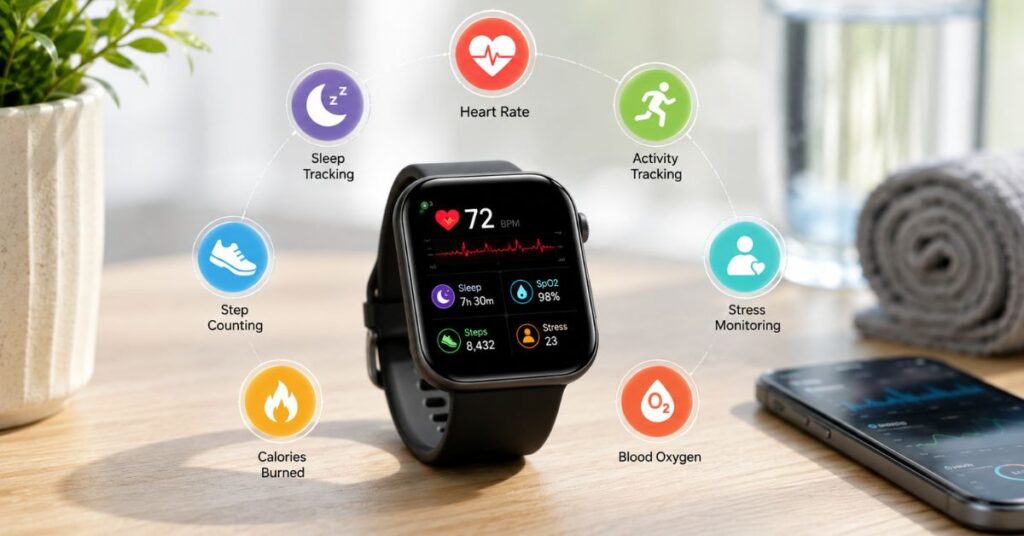
Every smartwatch includes different sensors and software. Some watches offer only basic tracking, while premium models include advanced health tools. Knowing the most valuable features helps you choose the right device without paying for functions you may never use.
Heart Rate Monitoring
Heart rate monitoring works throughout the day and during exercise. It measures how fast your heart beats and helps you understand workout intensity, recovery, and overall heart health. Many watches also alert users when their heart rate becomes unusually high or low.
Sleep Tracking
Sleep tracking records the time you spend sleeping and estimates different sleep stages. Reviewing this information helps users improve bedtime routines and understand how sleep affects energy levels.
Blood Oxygen Monitoring
Blood oxygen monitoring estimates the oxygen level in your blood. This feature becomes useful during intense exercise, high altitude travel, or when checking overall wellness trends. Although it provides helpful information, users should not treat it as a medical diagnosis.
Stress Monitoring
Stress monitoring estimates your stress level by analyzing heart rate changes and other body signals. Many smartwatches also recommend breathing exercises to help users relax during busy days.
Daily Activity Tracking
Activity tracking measures steps, calories burned, distance walked, and active minutes. These simple numbers help users stay motivated and maintain an active lifestyle without needing complicated fitness equipment.
Workout Tracking
Workout tracking automatically records exercises such as walking, running, cycling, swimming, yoga, and strength training. Many watches also generate detailed performance reports after each session, making it easier to monitor progress over time.
Advanced Smartwatch Health Tracking Features Worth Paying For

Basic tracking works well for most people, but advanced smartwatch health tracking features provide deeper insights into your health and fitness. These tools help users understand how their bodies respond to exercise, stress, recovery, and daily habits. Before spending more on a premium smartwatch, learn which features offer real value.
ECG Monitoring
An Electrocardiogram (ECG) feature records your heart’s electrical activity. Some smartwatches can identify signs of an irregular heartbeat and encourage users to seek medical advice if needed. While this feature cannot replace professional medical testing, it gives users an additional way to monitor their heart health.
Skin Temperature Tracking
Many new smartwatches measure changes in skin temperature while you sleep. These readings help identify patterns that may relate to recovery, illness, or changes in your daily routine. Some devices also use this data to improve sleep analysis and wellness reports.
Women’s Health Tracking
Women’s health tracking helps users record menstrual cycles, predict future periods, monitor symptoms, and estimate fertile windows. Keeping this information in one place makes it easier to understand monthly health patterns and plan daily activities.
VO₂ Max Estimation
VO₂ Max estimates how efficiently your body uses oxygen during exercise. Athletes and fitness enthusiasts often use this measurement to evaluate endurance and monitor long-term fitness improvements. Watching your VO₂ Max over time helps you understand whether your training plan is producing results.
Recovery and Readiness Score
Recovery tracking analyzes factors such as sleep quality, heart rate, stress, and physical activity. Many smartwatches generate a readiness score that helps users decide whether to train hard, perform light exercise, or take a recovery day.
Fall Detection and Emergency Alerts
Some premium smartwatches automatically detect hard falls. If the user does not respond within a short period, the watch can notify emergency contacts or local emergency services. This feature provides extra protection for older adults, hikers, and people who spend time alone.
How Smartwatch Sensors Work Together
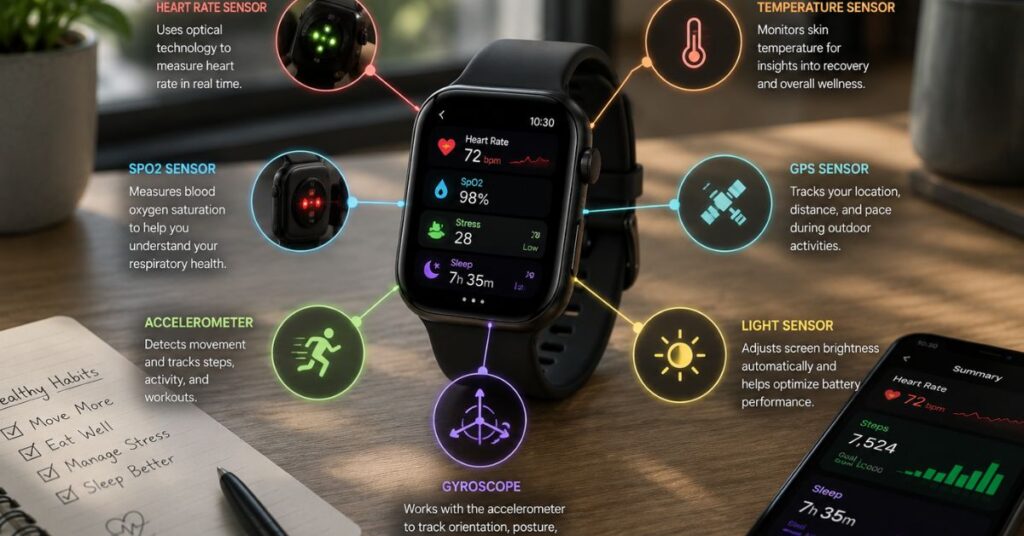
A smartwatch collects information from several sensors instead of relying on one measurement. Each sensor contributes different data that creates a more complete picture of your health.
For example, heart rate sensors monitor your pulse, motion sensors detect movement, GPS measures distance, and blood oxygen sensors estimate oxygen saturation. The smartwatch combines these readings to provide useful health reports and personalized recommendations.
Optical Heart Sensor
The optical sensor shines light into your skin and measures changes in blood flow. This process allows the smartwatch to estimate your heart rate throughout the day.
Motion Sensors
Accelerometers and gyroscopes detect movement, body position, and physical activity. They help count steps, identify workouts, and measure calories burned.
GPS Tracking
Built-in GPS records outdoor activities such as running, cycling, and hiking. It measures speed, distance, pace, and route without requiring your phone during the workout.
Choosing Smartwatch Health Tracking Features Based on Your Needs
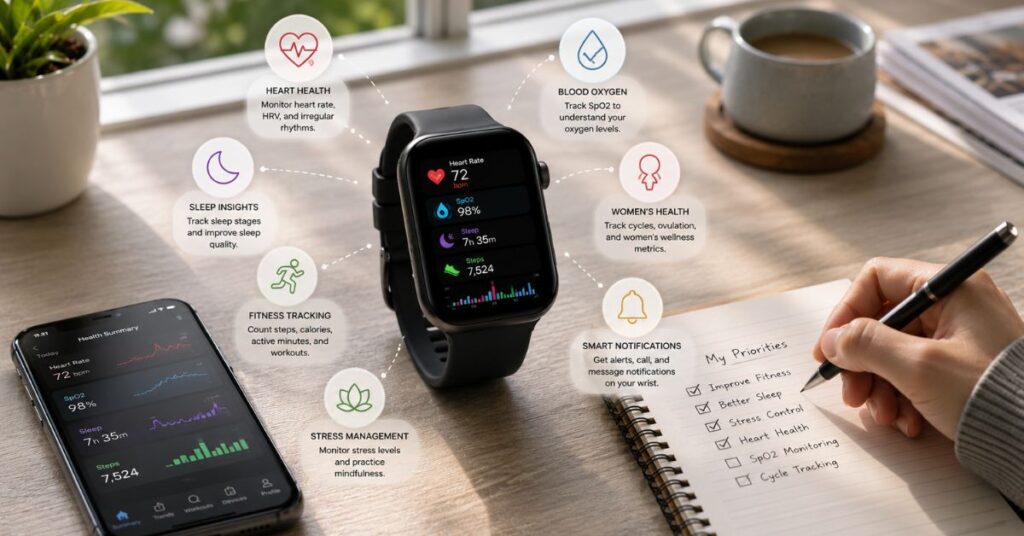
Not every user needs every available feature. Buying the right smartwatch becomes much easier when you focus on your personal lifestyle instead of choosing the model with the longest feature list.
For Everyday Users
People who simply want to stay active should prioritize:
- Heart rate monitoring
- Step counting
- Sleep tracking
- Activity reminders
- Water intake reminders
These features support healthier daily habits without making health tracking complicated.
For Fitness Enthusiasts
People who exercise regularly should consider watches that include:
- Built-in GPS
- Workout tracking
- VO₂ Max estimation
- Recovery analysis
- Training performance reports
These tools help improve workout quality and measure progress over time.
For Older Adults
Older users may benefit from smartwatches that offer:
- Fall detection
- Emergency SOS
- Heart rate alerts
- ECG monitoring
- Medication reminders
These features provide additional peace of mind for both users and their families.
Comparison of Popular Smartwatch Health Tracking Features
| Feature | Everyday Benefit | Best For |
| Heart Rate Monitoring | Tracks heart activity all day | Everyone |
| Sleep Tracking | Improves sleeping habits | Daily users |
| Blood Oxygen Monitoring | Monitors wellness trends | Active users |
| Stress Monitoring | Helps manage stress | Office workers |
| ECG | Detects irregular heart rhythm signs | Heart-conscious users |
| GPS Tracking | Records outdoor workouts | Runners and cyclists |
| VO₂ Max | Measures endurance level | Athletes |
| Recovery Score | Suggests rest or training | Fitness enthusiasts |
| Fall Detection | Improves personal safety | Seniors and solo travelers |
| Women’s Health Tracking | Tracks menstrual health | Women |
Real-Life Example: How Health Tracking Changed One Person’s Routine
Ali works as a software engineer and spends most of his day sitting in front of a computer. He believed he was active enough because he visited the gym a few times each week. After buying a smartwatch, he discovered that he walked fewer than 3,000 steps on most working days and slept less than six hours every night.
He started following his smartwatch reminders to move every hour, walk after lunch, and maintain a regular bedtime. Within two months, his average daily steps increased to over 8,000, his sleep improved, and he felt more energetic during work. The smartwatch did not create these improvements on its own, but it gave him the information needed to build healthier habits.
Common Mistakes People Make When Using Smartwatch Health Tracking Features

Purchasing a smartwatch is just the beginning of your experience. Many people never use its health tools correctly, so they miss valuable insights. Avoiding these common mistakes helps you get accurate data and better results from your device.
Ignoring the Fit of the Watch
A smartwatch should fit snugly on your wrist. If it is too loose, the sensors may collect inaccurate heart rate and blood oxygen readings. A comfortable but secure fit improves tracking accuracy.
Relying Only on Smartwatch Data
Smartwatch health tracking features provide useful information, but they cannot replace professional medical advice. If your watch repeatedly shows unusual readings or you experience symptoms, consult a healthcare professional instead of relying only on wearable data.
Skipping Software Updates
Manufacturers regularly improve tracking accuracy through software updates. Ignoring these updates may prevent your smartwatch from delivering its best performance and newest health features.
Not Wearing the Watch Consistently
Health insights become more meaningful when the smartwatch collects data over time. Wearing it only during workouts gives you an incomplete picture of your sleep, activity, stress, and recovery patterns.
Focusing on One Metric Only
Many users watch only their daily step count. A better approach is to review multiple health metrics together, such as heart rate, sleep quality, activity level, stress, and recovery. Looking at the complete picture helps you make smarter lifestyle decisions.
Tips to Get the Most from Smartwatch Health Tracking Features
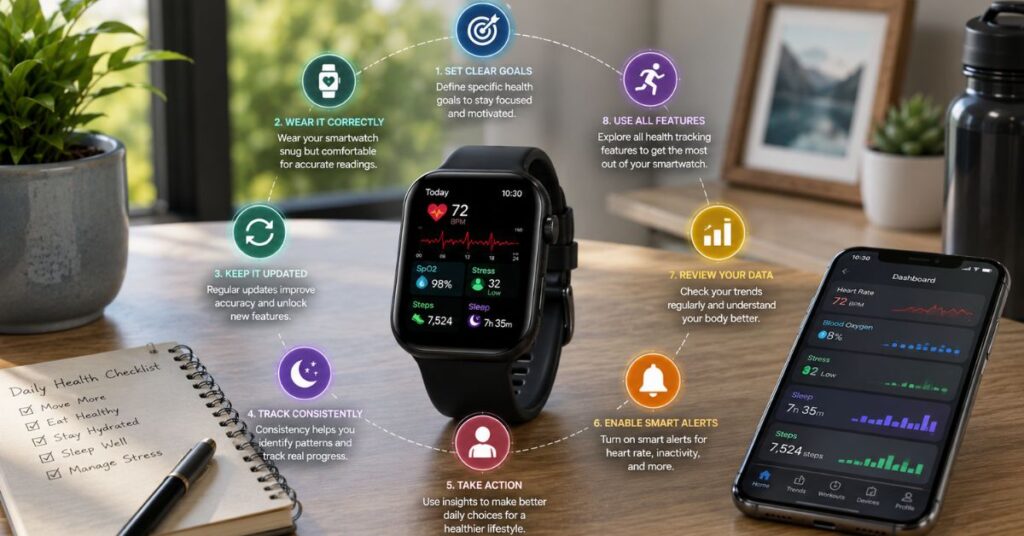
Using your smartwatch correctly allows you to benefit from every important feature. Small daily habits can improve both the accuracy of the data and your overall health.
Wear Your Smartwatch Every Day
Daily use creates a larger health history. This allows your smartwatch to recognize trends instead of showing only isolated readings.
Set Realistic Health Goals
Start with goals that fit your current lifestyle. Increase your daily steps gradually, improve your sleep schedule, and build healthy routines over time instead of trying to change everything at once.
Review Weekly Health Reports
Most smartwatch apps provide weekly summaries. These reports help you identify improvements and areas that still need attention.
Use Multiple Health Features Together
Combine sleep tracking, heart rate monitoring, activity tracking, and stress monitoring to understand how your daily habits affect your overall wellness.
Keep the Sensors Clean
Dust, sweat, and skin oils can reduce sensor accuracy. Clean your smartwatch regularly with a soft cloth to maintain reliable health readings.
The Future of Smartwatch Health Tracking Features
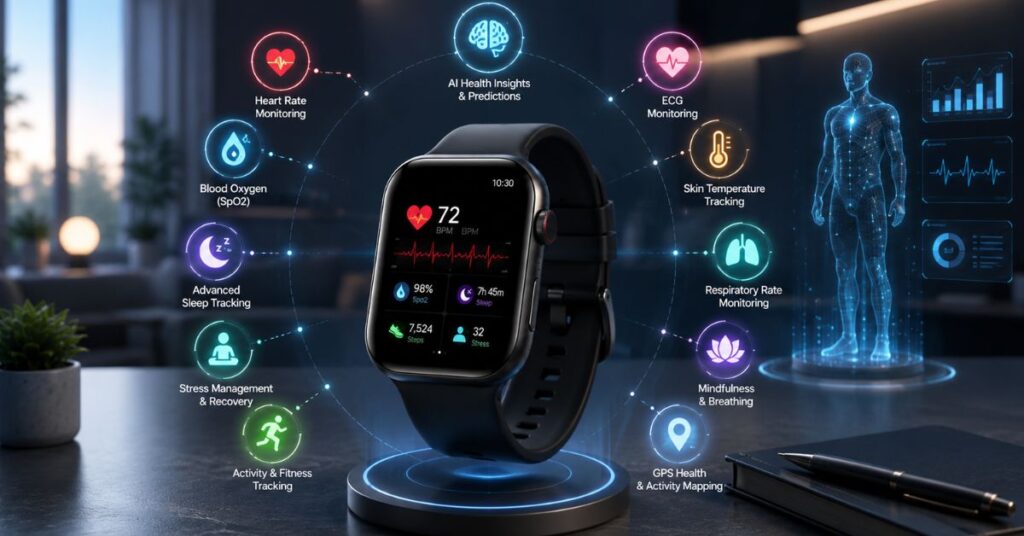
Smartwatch technology continues to improve every year. New sensors and smarter software are making wearable devices more useful for everyday health monitoring.
Future smartwatches are expected to deliver even more accurate measurements, improved sleep analysis, better recovery recommendations, and stronger AI-powered health insights. Some companies are also working on non-invasive ways to monitor additional health metrics without requiring medical equipment.
Although wearable technology continues to evolve, healthy habits remain the most important factor. A smartwatch works best as a guide that supports better decisions rather than replacing medical care or a healthy lifestyle.
Author Note
This guide explains smartwatch health tracking features using simple language and practical examples. The goal is to help readers understand which features provide real value before buying a smartwatch. Every recommendation focuses on everyday use instead of marketing claims, making it easier to choose a device that matches your personal needs.
Disclaimer
The information in this article is provided for educational purposes only. Smartwatch health tracking features can help you monitor wellness trends, but they do not diagnose, treat, or prevent medical conditions. Always seek advice from a qualified healthcare professional if you have concerns about your health or receive unusual readings from your smartwatch.
Conclusion
Smartwatch health tracking features have transformed modern wearable technology into a practical health companion. From heart rate monitoring and sleep tracking to stress analysis, GPS, ECG, and recovery insights, these tools help users understand their daily habits and make informed lifestyle choices. Choosing the right smartwatch becomes much easier when you focus on the features that match your personal goals instead of buying a device with functions you may never use.
The most valuable smartwatch is not always the most expensive one. It is the watch that encourages you to stay active, sleep better, monitor your progress, and build healthier routines over time. Use your smartwatch consistently, review your health reports regularly, and combine its insights with healthy daily habits to get the greatest long-term benefit.
FAQs
1. What are smartwatch health tracking features?
Smartwatch health tracking features are built-in tools that monitor health and fitness information such as heart rate, sleep, steps, calories burned, stress levels, blood oxygen, and workouts.
2. Are smartwatch health tracking features accurate?
Most modern smartwatches provide reliable estimates for everyday health monitoring. However, they should not replace professional medical equipment or medical advice.
3. Which smartwatch health tracking feature is the most useful?
Heart rate monitoring and sleep tracking are among the most valuable features because they provide daily insights that help users improve overall health.
4. Can a smartwatch detect heart problems?
Some smartwatches include ECG and irregular heart rhythm notifications. These features may identify possible issues, but only a healthcare professional can diagnose heart conditions.
5. Do I need GPS in a health smartwatch?
Built in GPS is helpful if you regularly run, cycle, hike, or walk outdoors because it accurately records distance, pace, and routes.
6. Is blood oxygen monitoring important?
Blood oxygen monitoring helps users understand wellness trends, especially during exercise or high-altitude activities. It should not be used as a medical diagnosis.
7. Are smartwatch health tracking features worth paying for?
Yes. If you want to improve your fitness, monitor your health, and build better daily habits, smartwatch health tracking features provide useful information that supports long term wellness.