


Quick Summary / Snapshot
An information technology strategist helps businesses use technology to solve problems, improve productivity, reduce costs, and prepare for future growth. This role combines technical knowledge with business planning. Instead of focusing only on IT systems, an information technology strategist creates long-term technology plans that support company goals. In this guide, you will learn the essential skills, responsibilities, career path, common mistakes, and practical strategies that make a successful IT strategist.
Introduction
Every modern business depends on technology, but buying the latest software is not enough. Companies need someone who understands both business goals and technology. That is where an information technology strategist becomes valuable.
An information technology strategist develops long-term technology strategies that strengthen business operations, reduce potential risks, and support sustainable growth. Whether a company is moving to cloud services, improving cybersecurity, or introducing artificial intelligence, the strategist ensures every technology investment supports business success.
This guide explains the role in simple language. You will discover the skills required, career opportunities, real-life examples, and practical methods used by experienced technology strategists.
Essential Skills Every Information Technology Strategist Needs

Technology changes every year, but the skills of a successful information technology strategist remain focused on one goal: helping businesses grow through smart decisions. Technical knowledge alone is not enough. A strategist also needs leadership, planning, communication, and business understanding.
Below are the most important skills every professional should develop.
Building Experience with Enterprise-Level Technology Projects
Large organizations use hundreds of applications, databases, cloud services, and business systems. Managing these environments requires practical experience rather than theory alone.
Working on enterprise projects teaches an information technology strategist how different systems connect, how departments depend on each other, and how technology decisions affect the entire organization.
Key learning areas include:
- Enterprise software implementation
- Cloud migration planning
- Data integration
- Infrastructure modernization
- Business continuity planning
Real project experience also improves decision making because every organization has different challenges and priorities.
Using Agile and Modern Project Management Methods
Technology projects rarely follow a straight path. Requirements change, business priorities shift, and new risks appear during development.
Modern strategists understand different project management methods, including Agile, Scrum, Kanban, and Hybrid approaches. Instead of following one method for every project, they choose the approach that best matches business needs.
Benefits include:
- Faster project delivery
- Better teamwork
- Reduced project delays
- Continuous improvement
- Higher customer satisfaction
An experienced strategist also monitors project performance regularly instead of waiting until the end.
Leading Successful Digital Transformation
Digital transformation means improving business processes through technology rather than simply replacing old software.
An information technology strategist identifies areas where automation, cloud computing, artificial intelligence, or data analytics can create measurable improvements.
Successful digital transformation usually focuses on:
- Improving customer experience
- Increasing employee productivity
- Reducing operational costs
- Enhancing security
- Supporting business growth
Instead of implementing technology because it is popular, successful strategists always connect every initiative to a business objective.
Managing Technology Vendors and Strategic Partners
Few companies build every technology solution internally. Most businesses depend on software providers, cloud companies, cybersecurity vendors, and consulting partners.
Choosing the wrong vendor can increase costs and delay important projects.
A professional strategist carefully evaluates vendors by comparing:
| Evaluation Factor | Why It Matters |
| Security standards | Protects business data |
| Product scalability | Supports future growth |
| Customer support | Reduces downtime |
| Integration capability | Works with existing systems |
| Total ownership cost | Controls long-term expenses |
Strong vendor relationships often create better pricing, faster support, and improved service quality.
Communicating Business Value to Stakeholders
Technology projects receive approval only when decision-makers understand their value.
An information technology strategist translates technical ideas into business language. Instead of discussing servers or databases, they explain how technology increases revenue, reduces costs, or improves customer satisfaction.
Effective communication includes:
- Executive presentations
- Business reports
- Technology roadmaps
- Cost-benefit analysis
- Performance dashboards
Clear communication builds confidence and helps projects receive executive support.
Managing Risks Before They Become Problems
Every technology project involves uncertainty. Security threats, budget issues, changing business priorities, and technical failures can delay progress.
Successful strategists identify risks early instead of reacting after problems appear.
A practical risk management process includes:
- Identifying possible risks
- Measuring business impact
- Planning preventive actions
- Monitoring progress
- Updating recovery plans regularly
Organizations that prepare for risks recover faster and reduce financial losses.
Developing a Results Driven Strategy
Technology should always produce measurable business value.
Instead of focusing on technical achievements alone, an information technology strategist measures business outcomes.
Common performance indicators include:
- Reduced operating costs
- Improved customer satisfaction
- Faster project delivery
- Better cybersecurity performance
- Increased employee productivity
- Higher return on technology investment
Tracking measurable results helps organizations continuously improve future technology decisions instead of relying on assumptions.
Communication Skills That Make an Information Technology Strategist Successful

Technical knowledge helps an information technology strategist design solutions, but communication turns those solutions into successful business outcomes. A strategist works with executives, employees, vendoTechnical knowledge helps an information technology strategist design solutions, but communication turns those solutions into successful business outcomes. A strategist works with executives, employees, vendors, developers, and customers. Each group has different expectations and technical knowledge.
Strong communication reduces misunderstandings, speeds up decision-making, and helps organizations adopt new technology with confidence.
Explaining Technical Ideas in Simple Business Language
Many business leaders are not interested in technical terms. They want to understand how technology will improve profits, reduce costs, or solve business problems.
A successful information technology strategist avoids complex language and explains every recommendation in simple words.
For example, instead of saying:
“We need to migrate workloads to a hybrid cloud infrastructure.”
A strategist might explain:
“Moving our systems to the cloud will lower maintenance costs, improve security, and allow employees to work from anywhere.”
Simple communication helps executives make faster and better decisions.
Presenting Technology Plans to Executives with Confidence
Executives invest in technology only when they clearly understand its value.
An information technology strategist prepares presentations that focus on business goals instead of technical details.
A strong executive presentation should answer questions like:
- Why is this investment needed?
- What business problem will it solve?
- What are the expected benefits?
- How much risk is involved?
- How will success be measured?
Confident presentations build trust and improve approval rates for technology projects.
Improving Collaboration Across Different Departments
Technology affects almost every department, including finance, marketing, sales, human resources, operations, and customer service.
Each department has different priorities.
An information technology strategist creates collaboration by:
- Listening to department requirements
- Understanding daily business challenges
- Aligning technology with company goals
- Encouraging regular feedback
- Solving problems together
Cross-functional teamwork reduces delays and increases project success.
Keeping User Experience at the Center of Every Decision
Technology should make work easier, not more difficult.
Before introducing new software or systems, an information technology strategist studies how employees and customers will use them.
Important user experience considerations include:
- Easy navigation
- Fast performance
- Mobile accessibility
- Clear instructions
- Reliable security
- Minimal training requirements
When users enjoy using a system, businesses achieve better productivity and higher customer satisfaction.
Solving Conflicts Between Business and IT Teams
Business teams often want faster delivery, while IT teams focus on security and system stability.
An experienced strategist understands both perspectives and finds practical solutions that satisfy everyone.
Common conflict resolution techniques include:
- Setting shared business goals
- Prioritizing important tasks
- Holding regular planning meetings
- Using data instead of opinions
- Encouraging open communication
Balanced decisions create stronger relationships between technical and business teams.
Writing Clear Reports, Roadmaps, and Documentation
Documentation keeps projects organized and prevents confusion.
A professional information technology strategist creates documents that are simple, accurate, and easy to update.
Important documents include:
| Document Type | Purpose |
| IT Strategy Roadmap | Shows long-term technology direction |
| Risk Assessment | Identifies possible business risks |
| Project Status Report | Tracks progress and milestones |
| Budget Plan | Controls technology spending |
| System Documentation | Helps future maintenance |
| Performance Report | Measures business results |
Good documentation improves accountability and supports better decision-making.
Leading Organizational Change with Less Resistance
Employees often hesitate when new technology changes their daily work.
Instead of forcing change, successful strategists explain the benefits, provide training, and involve employees throughout the process.
Effective change management includes:
- Explaining why change is necessary
- Providing practical training
- Answering employee questions
- Collecting feedback regularly
- Improving systems based on user experience
Organizations that involve employees early experience smoother technology adoption.
Building Trust Through Strong Leadership
Leadership is more than giving instructions.
A successful information technology strategist inspires confidence by making informed decisions, accepting responsibility, and supporting team members during challenges.
Strong leadership qualities include:
- Honesty
- Accountability
- Strategic thinking
- Problem-solving
- Adaptability
- Emotional intelligence
- Continuous improvement
Teams naturally follow leaders who communicate clearly and remain calm under pressure.
Real-Life Example: How Strategic IT Planning Improved Business Performance
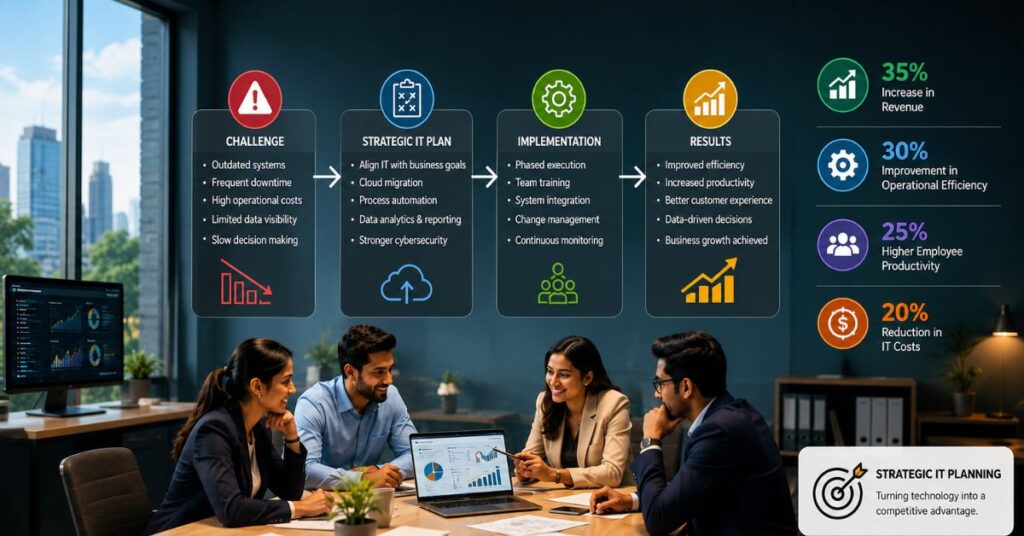
A mid-sized retail company struggled with slow reporting, outdated software, and frequent system downtime. Employees spent hours manually preparing reports, while customers experienced delays during online purchases.
The company hired an information technology strategist to evaluate its technology environment. Instead of replacing every system immediately, the strategist created a phased improvement plan.
The strategy included:
- Moving business applications to cloud services
- Automating inventory management
- Strengthening cybersecurity policies
- Integrating sales and customer databases
- Training employees on new software
Within one year, the company experienced noticeable improvements:
- Faster reporting across departments
- Lower IT maintenance costs
- Better customer satisfaction
- Reduced security incidents
- Higher employee productivity
This example shows that successful technology strategies focus on solving business problems rather than simply adopting new technology.
Future Proof Skills for Modern Information Technology Strategists

Technology evolves quickly. Businesses that fail to adapt often lose their competitive advantage. An information technology strategist must stay informed about emerging technologies while making decisions that support long-term business goals. Future-ready strategists combine technical expertise with business planning to prepare organizations for constant change.
Staying Updated with AI, Cloud, and Cybersecurity Trends
Artificial intelligence, cloud computing, and cybersecurity are shaping modern businesses. A successful strategist continuously studies these technologies and evaluates whether they can improve business operations.
Instead of adopting every new trend, a strategist carefully determines which technologies provide real business value.
Areas worth monitoring include:
- Artificial Intelligence (AI)
- Cloud Computing
- Cybersecurity
- Automation
- Internet of Things (IoT)
- Data Analytics
- Edge Computing
Regular learning helps businesses remain competitive while avoiding unnecessary technology investments.
Understanding Data Privacy, Compliance, and Governance
Every organization handles sensitive information such as customer records, financial data, and employee details. Protecting this information is one of the most important responsibilities of an information technology strategist.
A strong compliance strategy includes:
- Data protection policies
- Access control management
- Security monitoring
- Backup and disaster recovery
- Compliance with industry regulations
- Regular security audits
Strong governance builds customer trust and reduces legal and financial risks.
Investing in Continuous Learning and Professional Certifications
Technology never stands still. Professionals who stop learning quickly fall behind.
Successful information technology strategists improve their skills by:
- Reading industry reports
- Attending technology conferences
- Completing professional certifications
- Practicing new technologies
- Learning from real business projects
- Following trusted technology communities
Continuous learning improves confidence and opens new career opportunities.
Adapting Strategies as Business Needs Change
Business goals can change because of market competition, customer expectations, or economic conditions.
Instead of following a fixed technology plan, an information technology strategist regularly reviews business priorities and adjusts strategies when needed.
A flexible strategy helps organizations:
- Respond faster to market changes
- Reduce unnecessary spending
- Improve operational efficiency
- Support business growth
- Stay ahead of competitors
Flexibility allows businesses to remain prepared for future challenges.
Balancing Innovation with Risk Management
Innovation creates opportunities, but every new technology introduces some level of risk.
Before investing in a solution, an information technology strategist evaluates:
| Innovation Question | Business Benefit |
| Does it solve a real problem? | Better return on investment |
| Is it secure? | Reduced cybersecurity risk |
| Can it grow with the business? | Long-term scalability |
| Is employee training required? | Faster adoption |
| What is the total cost? | Better financial planning |
Balanced decision-making protects the business while encouraging innovation.
Creating Long Term Technology Roadmaps
Technology investments should support business goals for several years rather than solving only today’s problems.
A technology roadmap provides a clear direction by identifying:
- Current technology status
- Business objectives
- Future upgrades
- Budget planning
- Expected timelines
- Performance measurements
Roadmaps help organizations avoid random technology purchases and improve long-term planning.
Leading Teams During Uncertainty and Change
Unexpected challenges such as cyberattacks, market disruptions, or system failures require calm leadership.
An experienced information technology strategist supports teams by:
- Setting clear priorities
- Communicating honestly
- Making timely decisions
- Encouraging collaboration
- Reviewing lessons learned after each project
Strong leadership helps organizations recover more quickly during difficult situations.
Making Data Driven Strategic Decisions
Businesses today collect and process massive amounts of data from their daily operations.
Instead of making decisions based on assumptions, an information technology strategist uses business data to identify opportunities, measure performance, and improve future planning.
Important business metrics include:
- Project completion rates
- Customer satisfaction scores
- IT operating costs
- Security incident reports
- Employee productivity
- System availability
Using accurate data leads to smarter business decisions.
Common Mistakes That Hold Back an Information Technology Strategist
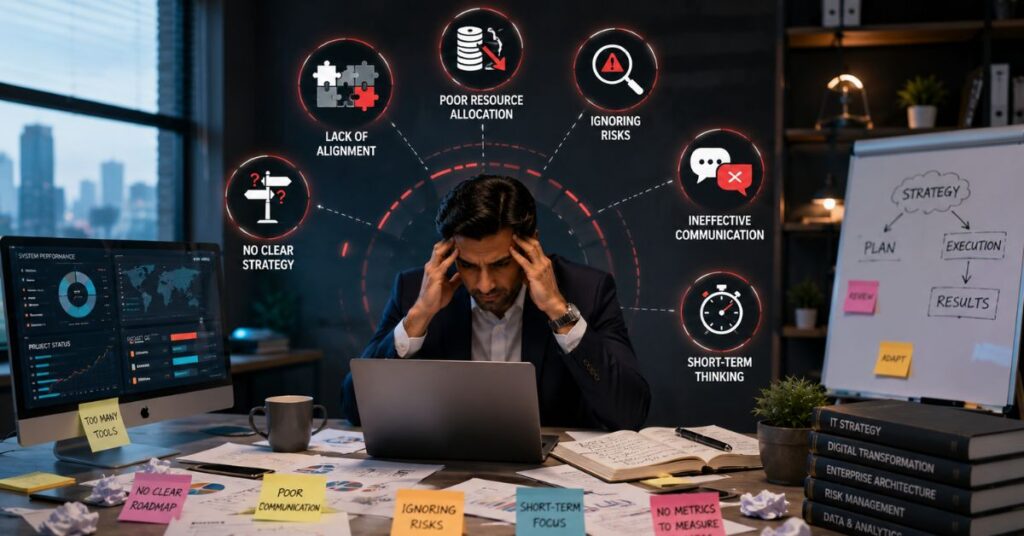
Even experienced professionals can make mistakes that reduce business value. Avoiding these common issues improves both project success and organizational growth.
Focusing Only on Technology Instead of Business Goals
Technology should always support business objectives. Buying expensive software without solving a real business problem often wastes time and money.
Ignoring Cybersecurity During Planning
Security should be included from the beginning of every project instead of being added later.
Poor Communication with Leadership
Using technical language without explaining business benefits makes it difficult for executives to support technology investments.
Skipping Employee Training
Even the best software can fail if employees do not understand how to use it correctly.
Not Measuring Project Success
Without measurable goals, businesses cannot determine whether a technology investment delivered value.
Resisting New Technologies
Ignoring useful innovations can reduce competitiveness and limit future business growth.
Author Note
As someone who has studied technology strategy and modern business transformation, I believe successful IT leadership is not about using every new technology. It is about selecting the right technology at the right time to solve real business challenges.
The most effective information technology strategist combines technical expertise, communication skills, business understanding, and continuous learning. These qualities create long-term value for both organizations and customers.
Disclaimer
The information shared in this guide is designed to help readers understand the topic and make informed decisions.Technology strategies vary based on business size, industry, budget, and organizational goals. Readers should evaluate their specific business requirements or consult qualified technology professionals before making major IT investment decisions.
Conclusion
An information technology strategist plays a vital role in helping organizations make smart technology decisions that support long-term business success. From digital transformation and cybersecurity to vendor management and strategic planning, this role combines technical expertise with business leadership. Companies that invest in a clear technology strategy are better prepared to improve productivity, reduce risks, and remain competitive.
Whether you are planning to become an information technology strategist or looking to strengthen your organization’s technology direction, success depends on continuous learning, practical experience, and effective communication. By applying the strategies covered in this guide, you can build technology plans that create measurable business value and support future growth.
(FAQs)
1. What does an information technology strategist do?
An information technology strategist develops long-term technology plans that align IT investments with business goals, improve efficiency, reduce risks, and support organizational growth.
2. Which skills are most important for an information technology strategist?
A successful information technology strategist combines business knowledge, technical expertise, leadership, communication, cybersecurity awareness, project coordination, and strategic decision-making skills.
3. Is coding required to become an information technology strategist?
Not always. While technical knowledge is valuable, the role focuses more on business strategy, leadership, technology planning, and decision-making than daily software development.
4. What industries hire information technology strategists?
Information technology strategists work in healthcare, finance, retail, manufacturing, education, government, logistics, and technology companies.
5. How can someone start a career as an information technology strategist?
Begin with experience in IT, system administration, cybersecurity, project management, or business analysis. Develop leadership skills, earn professional certifications, and gain experience managing technology projects.
6. Why is digital transformation important for businesses?
Digital transformation improves efficiency, reduces operational costs, enhances customer experience, strengthens security, and helps businesses remain competitive.
7. How often should an IT strategy be updated?
Most organizations should review their IT strategy at least once a year or whenever significant business, technology, or market changes occur.