


A successful online store needs a strong strategy, seamless user experience, and effective marketing to drive consistent sales. A modern ecommerce website development guide helps businesses create scalable, secure, and high performing stores that deliver exceptional customer experiences. Whether you plan to launch a B2C shop, a B2B portal, or a multi vendor marketplace, the right development strategy can determine your long-term success.
Today’s ecommerce landscape continues to evolve rapidly. Customers expect lightning-fast websites, seamless mobile experiences, secure transactions, and personalized shopping journeys. Businesses that invest in proper planning, architecture, and optimization gain a significant competitive advantage. This guide explains every critical step involved in ecommerce website development, from platform selection to deployment and ongoing optimization.
Understanding the Modern Ecommerce Landscape

Modern ecommerce development extends far beyond creating product pages. Businesses must choose the right technology, build scalable systems, and deliver frictionless user experiences.
SaaS vs. Open-Source vs. Headless Commerce
Choosing the right platform forms the foundation of every ecommerce project.
| Platform Type | Advantages | Limitations | Best For |
| SaaS (Shopify, BigCommerce) | Fast setup, managed hosting, automatic updates | Limited customization | Small to medium businesses |
| Open-Source (WooCommerce, Magento) | Full control, extensive customization | Requires technical management | Growing businesses |
| Headless Commerce | Maximum flexibility, superior performance | Higher development complexity | Enterprise brands |
SaaS platforms provide a complete solution. Businesses can launch quickly because these platforms include hosting, security, and automatic updates.
Open source platforms provide greater flexibility. Developers can customize features and create unique shopping experiences.
Headless commerce keeps the frontend separate from the backend.This architecture allows brands to deliver content across websites, mobile apps, kiosks, and other digital channels through API integrations.
Defining Core Business Models (B2C, B2B, Marketplace)
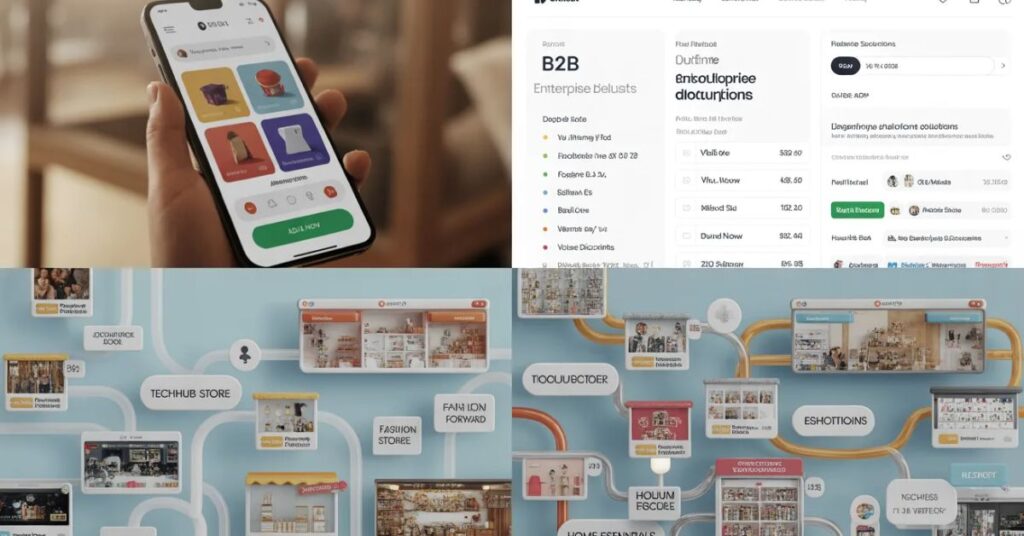
Different business models require different development approaches.
B2C Ecommerce
Business-to-consumer stores focus on individual shoppers. These websites prioritize speed, product discovery, customer reviews, and streamlined checkout experiences.
B2B Ecommerce
B2B ecommerce platforms require advanced functionality such as:
- Bulk ordering
- Custom pricing
- Customer specific catalogs
- Purchase order systems
- ERP integration
A strong B2B ecommerce web development framework helps businesses manage complex buying processes efficiently.
Multi-Vendor Marketplaces
Marketplace development involves additional complexity because multiple sellers operate on one platform.
Essential marketplace features include:
- Vendor dashboards
- Commission management
- Seller verification
- Independent inventory control
- Multi vendor payment distribution
The Step by Step Ecommerce Website Development Guide
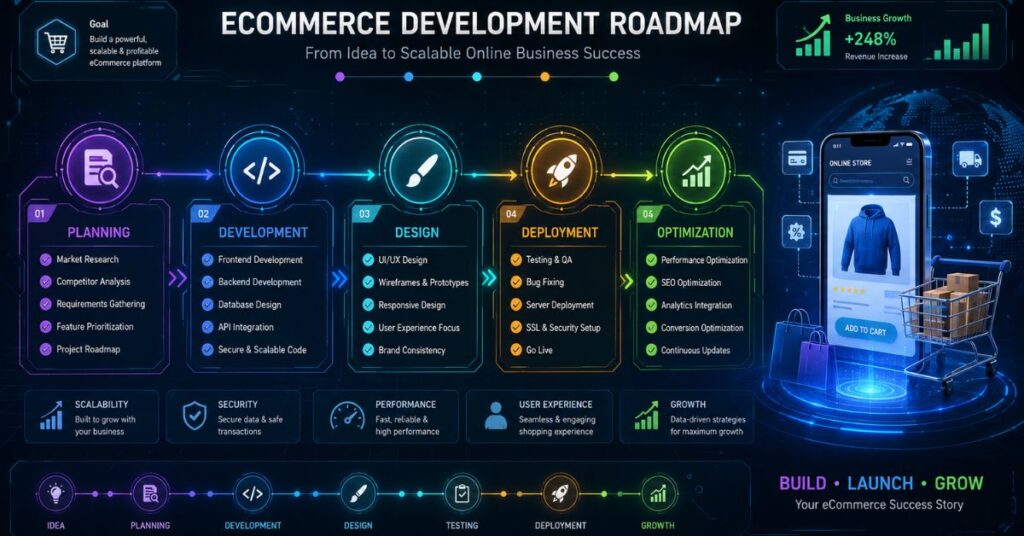
Successful ecommerce projects follow a structured development process. Skipping any phase often creates expensive problems later.
Phase 1: Discovery, Competitor Research, and Scope Definition
Every ecommerce website development guide should begin with strategic planning.
Start by defining:
- Business objectives
- Revenue goals
- Customer personas
- Product categories
- Technical requirements
Next, analyze competitors. Examine their:
- Site architecture
- Navigation structure
- Checkout process
- Mobile experience
- Performance metrics
Create a Product Requirement Document (PRD) that outlines every feature, integration, and workflow before development begins.
The Core to Edge Feature Prioritization Methodology
Many businesses waste resources by building unnecessary features during the first launch.
Our Core to Edge methodology separates features into two categories:
Core Survival Features
- Product catalog
- Search functionality
- Shopping cart
- Secure checkout
- Payment processing
Edge Growth Features
- AI recommendations
- Loyalty programs
- Advanced personalization
- Gamification
- Predictive analytics
This approach helps brands launch faster while maintaining flexibility for future expansion.
Phase 2: UI/UX Wireframing and User Journey Mapping

User experience directly impacts conversion rates.
Design teams should create wireframes before writing code. Wireframes define:
- Navigation hierarchy
- Product page layouts
- Checkout flow
- Mobile interactions
A mobile first ecommerce design strategy improves usability because most online shoppers now browse on smartphones.
Key UX principles include:
- Clear call to action buttons
- Simple navigation menus
- Fast search functionality
- Intuitive filtering systems
- Minimal checkout steps
Every click should move users closer to a purchase.
Phase 3: Choosing Your Tech Stack and Database Architecture
Technology decisions affect scalability, maintenance costs, and performance.
Frontend Technologies
Popular frontend frameworks include:
- React
- Next.js
- Vue.js
- Angular
Modern frameworks improve page speed and create highly interactive shopping experiences.
Backend Technologies
Common backend options include:
- Node.js
- PHP
- Python
- Java
- .NET
The ideal choice depends on project complexity and team expertise.
SQL vs. NoSQL Databases
| Feature | SQL | NoSQL |
| Structure | Fixed schema | Flexible schema |
| Scalability | Vertical | Horizontal |
| Transactions | Strong consistency | High scalability |
| Best For | Structured product data | Massive datasets |
Many large ecommerce businesses combine both approaches to maximize performance.
Database optimization becomes essential for large ecommerce sites when product catalogs grow to thousands of SKUs.
Phase 4: Core Feature Development and API Integrations
This phase transforms planning into functionality.
Essential ecommerce features include:
- Product management
- Customer accounts
- Shopping cart
- Wishlist
- Order tracking
- Inventory management
API integrations connect external services to the ecommerce platform.
Payment Gateway Integration
Popular payment gateways include:
- Stripe
- PayPal
- Authorize.net
- Square
Secure payment processing builds customer trust and improves conversion rates.
Shipping API Integration
Shipping integrations automate:
- Rate calculations
- Label generation
- Tracking updates
- Delivery notifications
Tax Automation
Tax compliance becomes more complex as businesses expand into new regions.
Businesses can simplify tax management with automation APIs:
- Sales tax calculations
- VAT management
- International tax compliance
Inventory Management System Integration
Inventory Management Systems (IMS) help businesses:
- Track stock levels
- Prevent overselling
- Manage warehouses
- Forecast inventory demand
IMS integration improves operational efficiency significantly.
Phase 5: Quality Assurance, Load Testing, and Deployment
Many ecommerce failures occur during launch because businesses skip testing.
Quality assurance should cover:
- Functional testing
- Mobile testing
- Browser compatibility
- Security testing
- Performance testing
Load Testing
Load testing simulates heavy traffic conditions.
Developers should test:
- Black Friday traffic surges
- Simultaneous checkouts
- Large product searches
- API response times
Deployment Planning
A structured deployment plan should include:
- Backup creation
- Rollback procedures
- Monitoring systems
- Performance tracking
Proper deployment minimizes downtime and protects revenue.
Boosting Ecommerce Performance, Security, and Conversions

Launching a website marks the beginning, not the end, of ecommerce optimization.
Technical SEO and Core Web Vitals for E-commerce
Search visibility depends heavily on technical performance.
Google evaluates websites using Core Web Vitals:
Largest Contentful Paint (LCP)
LCP measures loading performance.
Improve LCP by:
- Compressing images
- Using CDNs
- Optimizing server response times
- Implementing lazy loading
Interaction to Next Paint (INP)
INP measures responsiveness.
Improve INP by:
- Reducing JavaScript execution
- Optimizing scripts
- Eliminating unnecessary code
Cumulative Layout Shift (CLS)
CLS measures visual stability.
Reduce layout shifts by:
- Defining image dimensions
- Reserving ad space
- Avoiding dynamic content shifts
Strong Core Web Vitals improve rankings and user experience simultaneously.
Security Protocols and PCI DSS Compliance
Security remains a top priority for every ecommerce business.
A comprehensive ecommerce website security checklist should include:
- SSL certificates
- Two factor authentication
- Firewall protection
- Malware scanning
- Secure hosting
- Regular backups
PCI DSS Compliance Requirements
PCI DSS compliance protects customer payment data.
Businesses should:
- Encrypt payment information
- Restrict data access
- Monitor security logs
- Conduct regular vulnerability scans
Effective security practices increase customer trust and help reduce legal risks.
Expert Insight
Lead software architects consistently emphasize security by design principles. Instead of adding security after development, teams should integrate protection into every stage of the development lifecycle.
Ecommerce Platform Development Cost
Development costs vary depending on project complexity.
| Project Type | Estimated Cost |
| Small SaaS Store | $1,000 – $10,000 |
| Custom Ecommerce Website | $10,000 – $50,000 |
| Enterprise Ecommerce Platform | $50,000 – $250,000+ |
| Headless Commerce Solution | $75,000 – $500,000+ |
Major cost factors include:
- Design complexity
- Custom features
- Third-party integrations
- Platform choice
- Team location
- Maintenance requirements
Businesses should focus on long term value instead of selecting the lowest cost option.
Real World Ecommerce Migration Case Study
A mid-market retail company struggled with slow page speeds on its legacy ecommerce platform.
The company migrated to a headless commerce architecture and implemented a modern frontend framework.
Results after deployment:
- Page load times improved by 1.8 seconds
- Mobile conversion rates increased by 22%
- Bounce rates decreased by 17%
- Organic traffic increased significantly
The migration demonstrated how modern architecture can directly influence business performance.
Common Pitfalls in Ecommerce Development

Many ecommerce projects fail because teams repeat avoidable mistakes.
Over-Engineering the Minimum Viable Product (MVP)
Businesses often attempt to launch with every possible feature.
This approach creates:
- Development delays
- Higher costs
- Increased complexity
- Longer testing cycles
Launch with essential functionality first. Add advanced features after validating market demand.
Ignoring Mobile Responsiveness and Touch UX
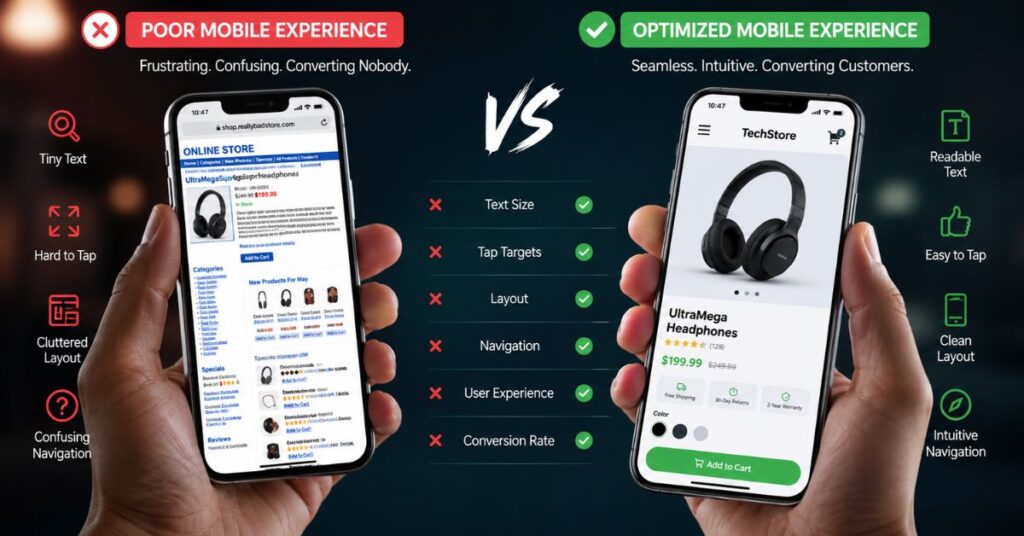
Mobile traffic dominates ecommerce.
Poor mobile experiences create:
- Abandoned carts
- Lower conversion rates
- Reduced customer satisfaction
Developers should optimize:
- Touch targets
- Mobile navigation
- Checkout forms
- Product images
A mobile-first strategy consistently delivers better business outcomes.
Conclusion
A successful ecommerce website requires much more than attractive design. Businesses must build a strong foundation through careful planning, platform selection, scalable architecture, security implementation, and performance optimization. Following a structured ecommerce website development guide helps companies avoid costly mistakes while creating a seamless shopping experience that drives growth.
As ecommerce competition continues to increase, businesses that prioritize user experience, technical SEO, mobile performance, and security will gain a significant advantage. Start with core functionality, invest in scalable technology, and continuously optimize your store based on customer behavior. The sooner you implement a strategic development roadmap, the faster you can build a profitable and sustainable online business.
FAQs
What is an ecommerce website development guide?
An ecommerce website development guide provides a structured roadmap for planning, designing, developing, launching, and optimizing an online store. It covers platform selection, architecture, security, integrations, and performance optimization.
What Is the Time Required to Build an Ecommerce Website?
Simple ecommerce stores may take 4–8 weeks, while custom ecommerce platforms often require 3–12 months depending on complexity, integrations, and testing requirements.
What is the best platform for scalable ecommerce growth?
The best platform depends on business needs. Shopify works well for rapid growth, WooCommerce offers flexibility, and headless commerce provides maximum scalability for enterprise organizations.
How much does custom ecommerce development cost?
Custom ecommerce development typically costs between $10,000 and $250,000 or more. Project scope, integrations, architecture, and customization requirements influence the final investment.
Why is PCI-DSS compliance important?
PCI-DSS compliance protects customer payment information, reduces security risks, and helps businesses meet industry standards for secure online transactions.
Should I choose open source or SaaS ecommerce platforms?
Choose SaaS platforms for faster deployment and easier management. Choose open-source platforms when you require extensive customization and greater control over your infrastructure.
What features should every ecommerce website include?
Every ecommerce website should include product management, secure checkout, customer accounts, inventory tracking, search functionality, mobile responsiveness, and reliable payment gateway integration.