

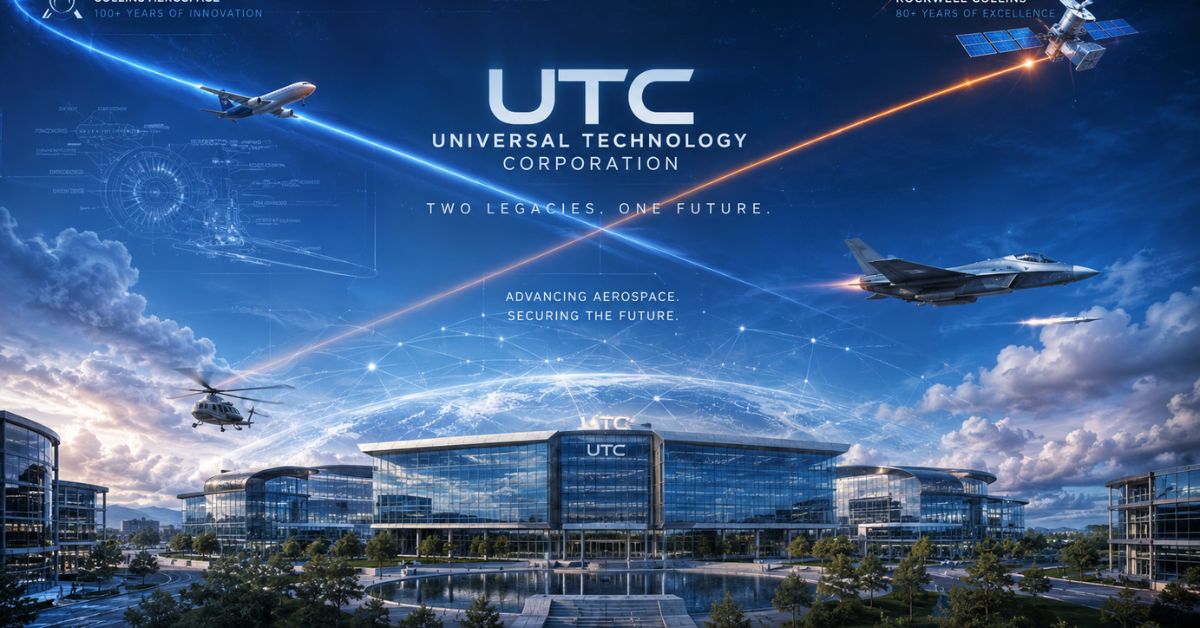
Many researchers, defense professionals, and aviation enthusiasts search for universal technology corporations when exploring aerospace and defense organizations. However, this search term often creates confusion because it can refer to two very different entities. Some users actually seek information about United Technologies Corporation (UTC), while others want details about the defense-focused Universal Technology Corporation based in Dayton, Ohio.
This confusion affects search results, business research, and historical analysis. Understanding the distinction helps readers find accurate information and gain a deeper understanding of the aerospace and defense industry. Both organizations contributed significantly to technological advancement, but they operated in different markets and followed different corporate paths.
This comprehensive guide explores the history, evolution, technical capabilities, government partnerships, and modern status of Universal Technology Corporation. You will also learn how the organization influenced aerospace research, military innovation, and advanced manufacturing technologies.
The Two Faces of Universal Technology Corporation
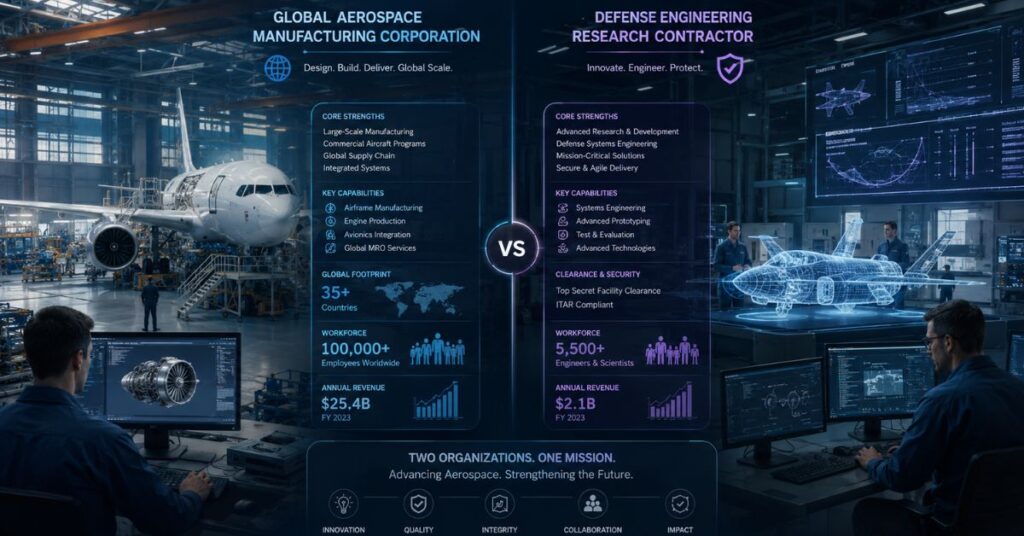
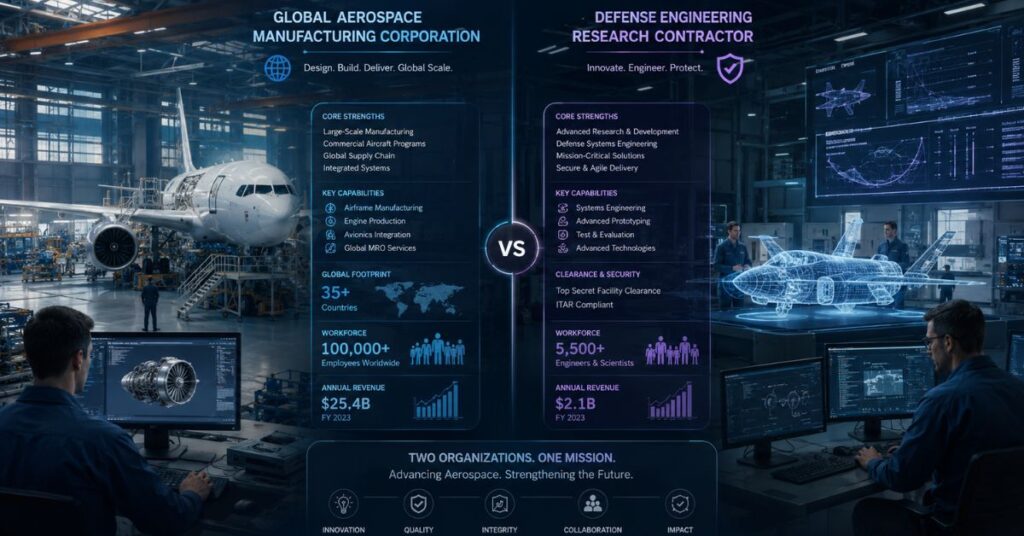
The phrase universal technology corporation often leads users toward two separate organizations. Search engines frequently mix these entities because both worked within aerospace and defense environments.
Before exploring their histories, it helps to understand the major differences between them. One operated as a global aerospace conglomerate, while the other focused on engineering research and defense support services. Their missions, scale, and corporate structures differed dramatically.
Understanding these differences prevents misinformation and helps researchers identify the correct organization for their needs.
Understanding the Search Confusion
Many people mistakenly use Universal Technology Corporation when they actually mean United Technologies Corporation. Similar naming patterns contribute to this confusion.
Others specifically search for the Dayton based defense contractor that worked closely with military research laboratories and government agencies.
Quick Comparison Table
| Attribute | United Technologies Corporation (UTC) | Universal Technology Corporation (ARCTOS Legacy) |
| Headquarters | Farmington, Connecticut | Dayton, Ohio |
| Business Type | Public Aerospace Conglomerate | Defense Engineering Contractor |
| Main Focus | Aerospace Manufacturing | Research and Development |
| Government Clients | NASA, Military Branches | AFRL, U.S. Air Force |
| Key Brands | Pratt & Whitney, Collins Aerospace | Engineering and Research Services |
| Current Status | Became RTX Corporation | Became ARCTOS |
History of United Technologies Corporation
Many searches for universal technology corporation actually relate to the historical journey of United Technologies Corporation. This aerospace giant shaped aviation, manufacturing, and defense technology for decades.
The company began as United Aircraft Corporation in 1934. Over time, it expanded beyond aviation and entered multiple industrial sectors. Strategic acquisitions fueled rapid growth and transformed the company into one of America’s largest industrial organizations.
Its influence reached commercial aviation, military aerospace, building systems, and advanced engineering.
Early Foundations
United Aircraft Corporation started with a strong focus on aviation technology. The company invested heavily in aircraft engines and aerospace innovation.
Its brands quickly gained recognition for quality, performance, and engineering excellence.
Transformation Into United Technologies Corporation
In 1975, leadership renamed the company United Technologies Corporation. The new name reflected a broader technological vision.
The organization expanded into multiple industries while maintaining strong aerospace roots.
Major Acquisitions and Growth
UTC acquired several major companies during its expansion period.
Key acquisitions included:
- Goodrich Corporation
- Rockwell Collins
- Aerospace component manufacturers
- Industrial technology firms
These acquisitions strengthened UTC’s global position.
Formation of RTX Corporation
In 2020, United Technologies Corporation merged with Raytheon Company.
This historic merger created RTX Corporation. At the same time:
- Carrier became an independent company
- Otis became an independent company
- Aerospace assets joined RTX
This transaction marked the end of UTC as a standalone organization.
Universal Technology Corporation: The Dayton Defense Contractor
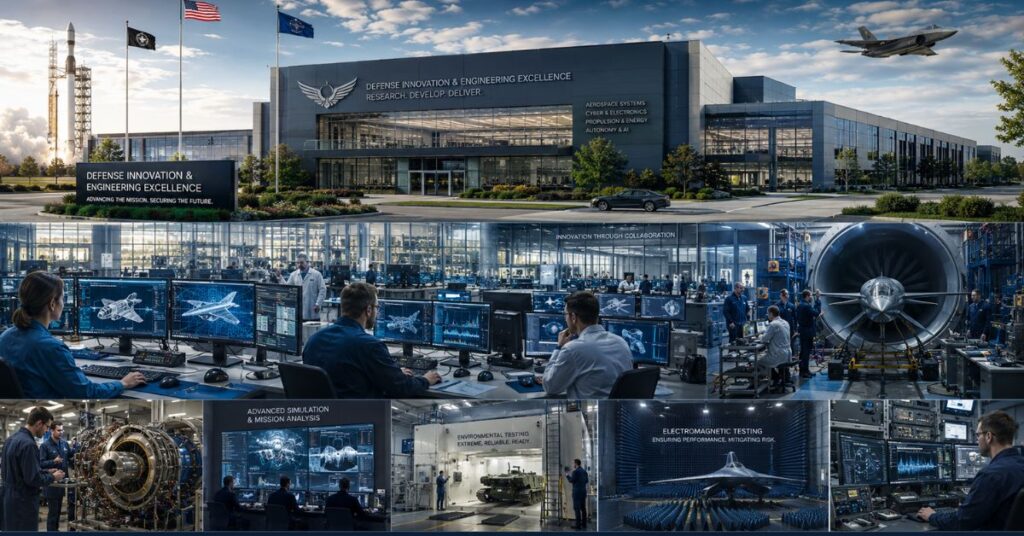
While UTC dominated commercial aerospace, the Dayton based universal technology corporation focused on specialized defense engineering and research support.
The company established itself near Wright Patterson Air Force Base, one of America’s most important military research centers. This location allowed close collaboration with defense scientists, engineers, and government agencies.
The organization built a reputation for solving complex technical challenges involving aerospace systems, advanced materials, and military infrastructure.
Foundation and Early Growth
Universal Technology Corporation launched operations in Dayton, Ohio.
The company focused on:
- Engineering research
- Technical consulting
- Defense support programs
- Scientific innovation
Its expertise attracted government contracts and long term military partnerships.
Strategic Position Near Wright Patterson AFB
Its Dayton location fostered collaboration and innovation.
Wright Patterson Air Force Base houses numerous research facilities, laboratories, and defense organizations.
This proximity created opportunities for collaboration and innovation.
Evolution Into ARCTOS
Universal Technology Corporation later merged with Advanced Core Concepts (ACC).
The merger combined engineering expertise with broader defense support capabilities.
The resulting organization now operates under the ARCTOS brand.
Core Technical Competencies of Universal Technology Corporation
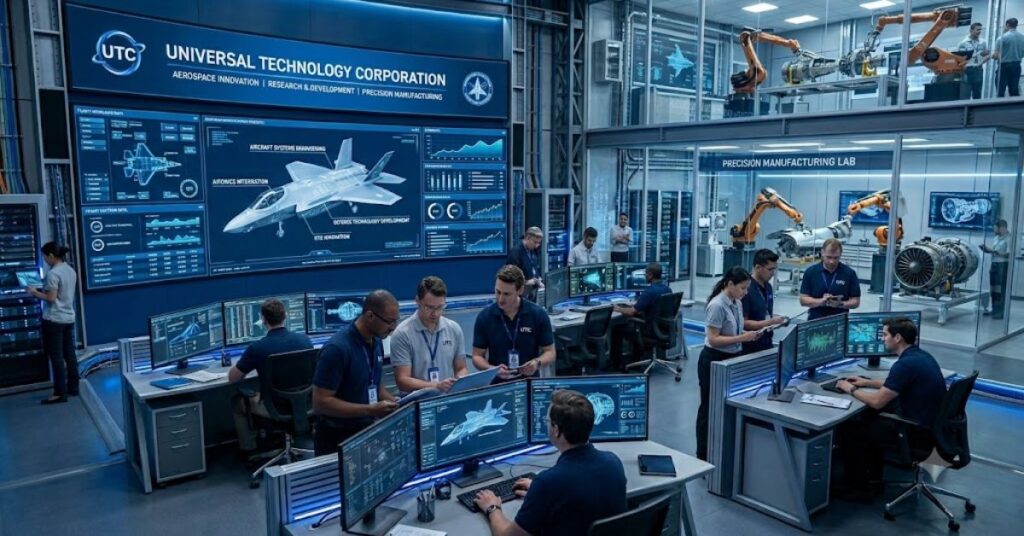
The success of universal technology corporation came from its ability to solve highly specialized engineering challenges. The company supported military programs that required advanced technical knowledge and practical implementation strategies.
Its teams worked across multiple scientific disciplines and contributed to defense modernization efforts.
The company’s research portfolio covered manufacturing, aerospace engineering, logistics, infrastructure, and materials science.
Materials Science and Manufacturing Research
Materials research represented one of the organization’s strongest capabilities.
Engineers studied:
- Advanced alloys
- Composite materials
- Structural durability
- Manufacturing processes
These efforts improved performance and reliability across military systems.
Additive Manufacturing Expertise
The company became a leader in defense-related additive manufacturing.
Research initiatives included:
- Metal 3D printing
- Structural testing
- Fatigue analysis
- Quality assurance systems
These programs helped military organizations evaluate next generation manufacturing methods.
Aerospace Systems Engineering
Universal Technology Corporation supported numerous aerospace programs.
Its engineering teams analyzed:
- Aircraft performance
- Propulsion systems
- Structural components
- Flight testing requirements
This work supported both operational and developmental platforms.
Universal Technology Corporation and AFRL Partnerships
A major factor behind the growth of universal technology corporation involved its close relationship with the Air Force Research Laboratory (AFRL).
AFRL serves as the primary scientific research organization for the United States Air Force and Space Force. The laboratory oversees numerous programs that influence future military technologies.
Universal Technology Corporation supported these efforts through research management, technical analysis, and engineering implementation.
Understanding AFRL
AFRL focuses on developing future military capabilities.
Research areas include:
- Aerospace systems
- Directed energy
- Materials science
- Artificial intelligence
- Space technologies
These programs require collaboration with industry partners.
Materials and Manufacturing Directorate Support
The company contributed to AFRL’s Materials and Manufacturing Directorate.
This work involved:
- Material testing
- Process optimization
- Performance validation
- Engineering analysis
These activities helped accelerate defense innovation.
Building Research Coalitions
Universal Technology Corporation often coordinated projects involving:
- Universities
- Private companies
- Government laboratories
- Defense agencies
This collaborative approach increased research efficiency and technological advancement.
Wright Patterson Air Force Base and Regional Impact
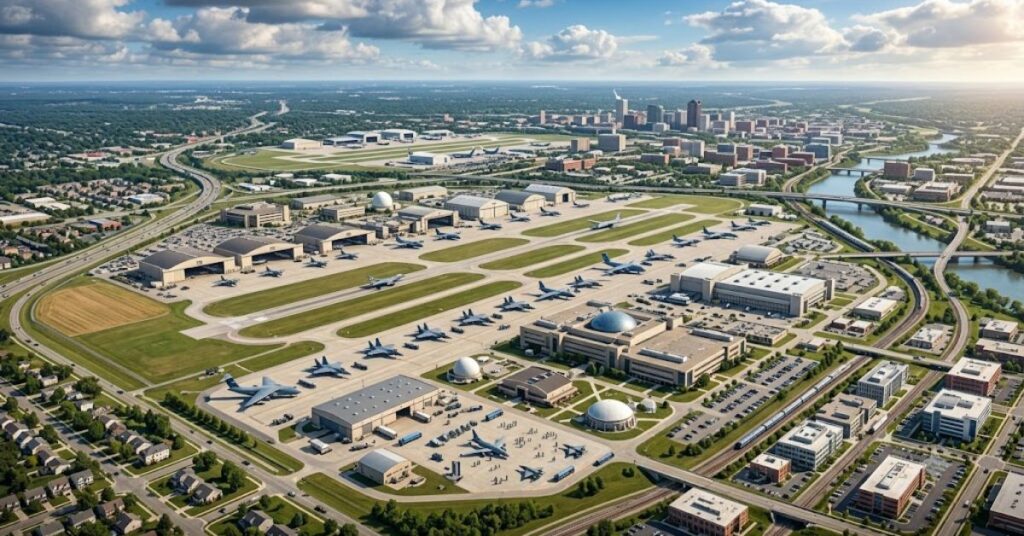
The Dayton region became a major innovation hub because of Wright Patterson Air Force Base. Universal Technology Corporation benefited significantly from this ecosystem.
The base attracts engineers, scientists, contractors, and defense organizations from across the country.
This environment creates opportunities for research, employment, and technological development.
Economic Contributions
Defense contractors contribute billions of dollars to the regional economy.
Their activities support:
- High skilled jobs
- Local businesses
- Research institutions
- Technology startups
Technology Development Ecosystem
The region encourages collaboration among:
- Government agencies
- Universities
- Contractors
- Research centers
This network accelerates innovation.
Long Term Industry Influence
Organizations such as Universal Technology Corporation helped establish Dayton as a recognized aerospace and defense center.
Their contributions continue to influence modern defense programs.
Case Study: Improving Additive Manufacturing Reliability
Universal Technology Corporation demonstrated its expertise through practical engineering solutions.
One notable challenge involved structural weaknesses in aerospace components produced through additive manufacturing.
The company developed innovative methods that improved component reliability and operational performance.
The Challenge
A defense customer identified micro fractures in titanium components.
These flaws reduced durability during high vibration operations.
The Solution
Engineers implemented:
- Thermal monitoring systems
- Infrared sensing technologies
- Process optimization tools
- Automated cooling controls
The Results
The improvements produced:
- Better structural integrity
- Longer fatigue life
- Improved certification outcomes
- Greater operational reliability
Case Study: Agile Airbase Engineering Solutions
Military planners require rapid deployment capabilities in remote environments.
Universal Technology Corporation developed engineering solutions that reduced deployment times and improved operational readiness.
These innovations supported expeditionary airfield operations.
The Challenge
Military teams needed faster runway deployment systems.
Traditional methods required significant resources and transportation capacity.
The Engineering Approach
The company created:
- Modular runway systems
- Composite matting technologies
- Soil evaluation tools
- Digital monitoring platforms
The Outcome
Testing showed:
- Faster deployment timelines
- Reduced equipment weight
- Improved logistics efficiency
- Enhanced operational flexibility
What Happened to Universal Technology Corporation?

Many users ask what happened to the universal technology corporation and whether the company still exists.
The answer involves corporate evolution rather than closure. The company expanded its capabilities through strategic integration and eventually became part of a larger organization.
Understanding this transition helps researchers interpret modern contract records and corporate references.
Merger With Advanced Core Concepts
The merger combined complementary capabilities.
The organizations united expertise in:
- Engineering
- Logistics
- Cybersecurity
- Defense support services
Birth of ARCTOS
The merger created ARCTOS.
The new organization offers broader capabilities while preserving technical expertise developed over decades.
Current Industry Presence
ARCTOS continues supporting government customers through advanced technical services and defense solutions.
Its operations reflect the legacy established by Universal Technology Corporation.
Common Mistakes People Make When Researching Universal Technology Corporation
Many writers and researchers make avoidable mistakes when discussing this topic.
These errors create confusion and reduce content accuracy.
Confusing UTC With Universal Technology Corporation
Many articles incorrectly attribute Pratt & Whitney or Collins Aerospace to Universal Technology Corporation.
These brands belonged to UTC.
Ignoring the ARCTOS Transition
Some researchers treat Universal Technology Corporation as a current operating entity.
Modern references should acknowledge the ARCTOS transition.
Overlooking Government Research Context
Defense contractors often work within highly regulated environments.
Writers should understand compliance requirements before discussing technical programs.
Using Outdated Corporate Information
Corporate structures change over time.
Always verify mergers, acquisitions, and rebranding events before publishing content.
Additional Industry Insights and Future Trends
The legacy of Universal Technology Corporation remains relevant because defense technology continues evolving rapidly.
Modern military programs rely heavily on advanced materials, digital engineering, additive manufacturing, and rapid deployment capabilities.
Many of these priorities align closely with the company’s historical expertise.
Growth of Additive Manufacturing
Military organizations continue expanding additive manufacturing programs.
Benefits include:
- Faster production
- Lower costs
- Improved customization
- Reduced supply chain risks
Expansion of Aerospace Research
Defense agencies continue investing in:
- Hypersonic systems
- Advanced propulsion
- Space technologies
- Autonomous platforms
Importance of Public Private Partnerships
Future innovation depends on collaboration among:
- Government agencies
- Universities
- Contractors
- Technology firms
This model reflects the approach used successfully by Universal Technology Corporation.
Conclusion
Universal Tech represents a unique chapter in American aerospace and defense history. The term refers both to the globally recognized United Technologies Corporation and the highly specialized Dayton-based defense contractor that evolved into ARCTOS. Understanding the distinction helps researchers, industry professionals, and technology enthusiasts navigate aerospace history with greater accuracy.
The legacy of Universal Technology Corporation continues through advanced manufacturing research, aerospace engineering innovation, and defense modernization efforts. As military organizations pursue next-generation technologies, the engineering principles, research methods, and collaborative strategies pioneered by these organizations will continue shaping future aerospace and defense advancements.
FAQs
What is Universal Technology Corporation?
Universal Tech usually refers to the Dayton based defense engineering contractor that later became ARCTOS. Some users also mistakenly use the term when referring to United Technologies Corporation.
Is Universal Tech the same as United Technologies Corporation?
No. United Technologies Corporation operated as a major aerospace conglomerate, while Universal Tech functioned as a defense engineering and research contractor.
Where was Universal Tech located?
The corporationoperated primarily from Dayton, Ohio, near Wright-Patterson Air Force Base.
What services did Universal Techprovide?
The company provided engineering research, aerospace systems support, additive manufacturing expertise, materials science services, and defense-related technical consulting.
What happened to Universal Technology Corporation?
The company merged with Advanced Core Concepts and became part of ARCTOS.
Did Universal Tech work with the Air Force?
Yes. The company supported numerous programs connected to the Air Force Research Laboratory and other military organizations.
Does Universal Technology Corporation still exist today?
The organization no longer operates under its original name. Its legacy and capabilities continue through ARCTOS.
Suggested Author Bio Template
[Muskan] serves as a defense technology analyst and aerospace industry researcher with more than 15 years of experience studying military procurement programs, aerospace engineering developments, and Department of Defense innovation initiatives. [Muskan] specializes in defense contractor analysis, advanced manufacturing technologies, aerospace history, and military research ecosystems, including programs associated with Wright-Patterson Air Force Base and the Air Force Research Laboratory.